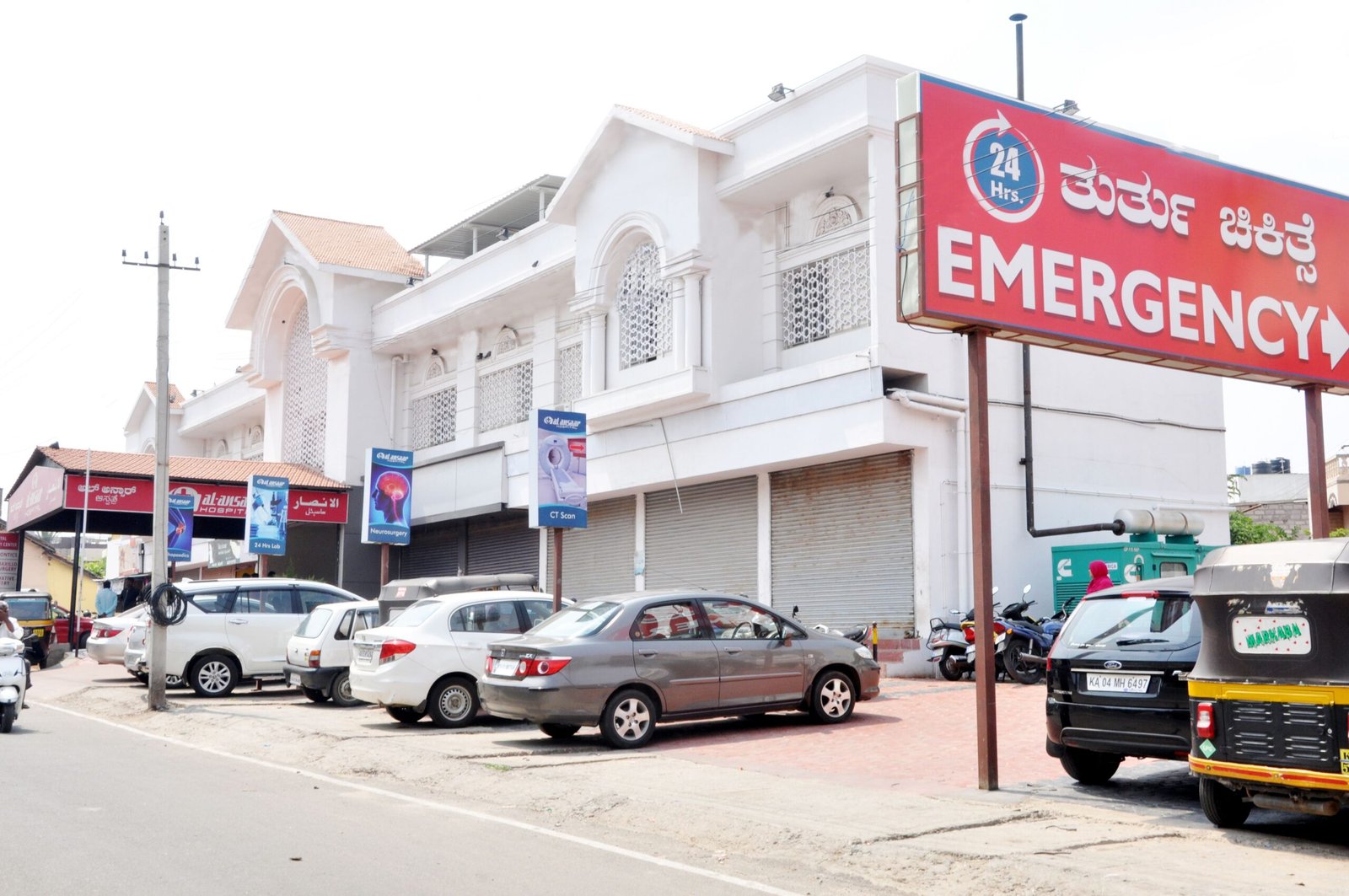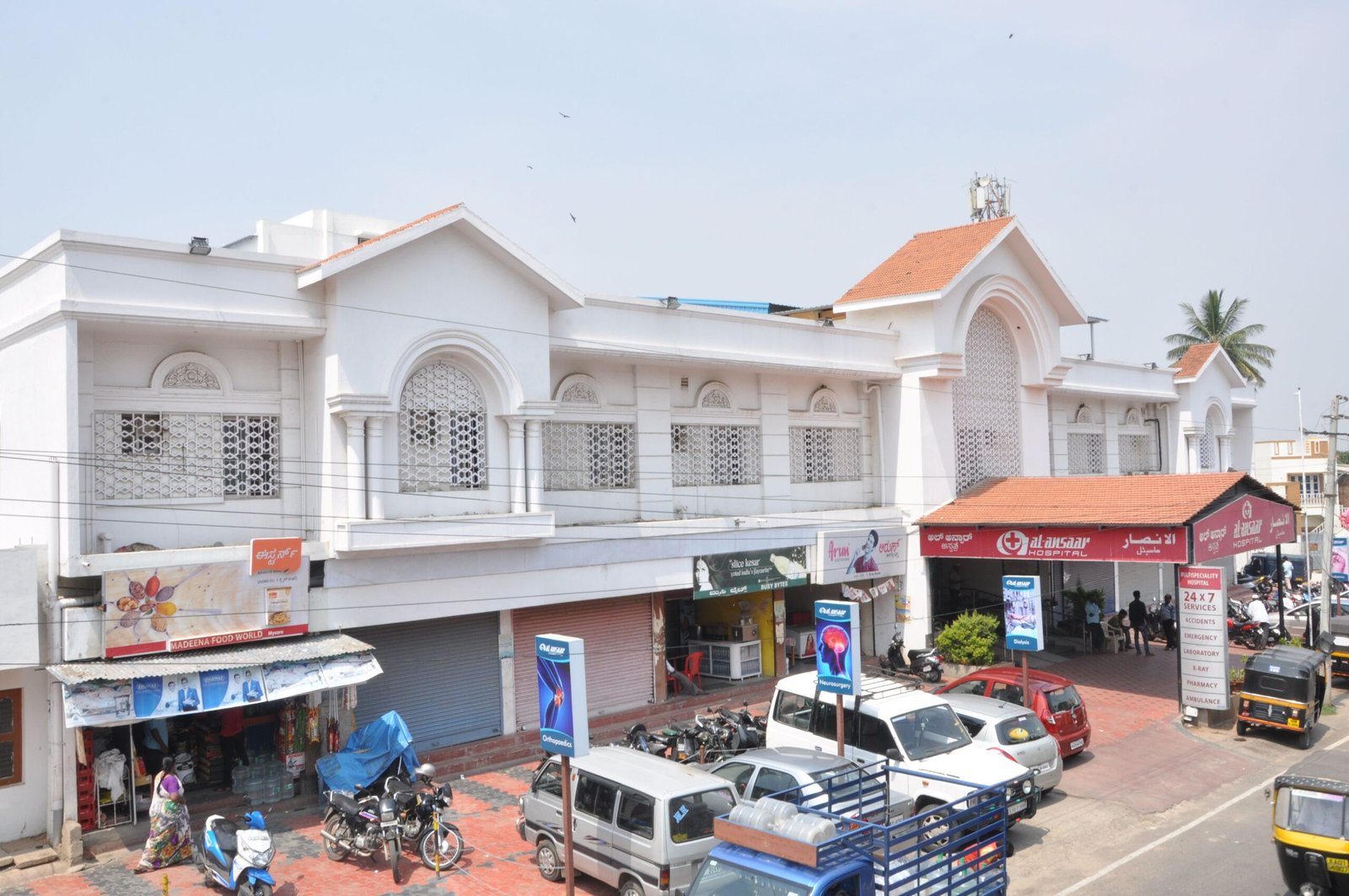


TL;DR: A single-specialty hospital sticks to one discipline, say cardiac, eye or cancer care, and tends to win on procedure volume and tightly focused protocols. A multispeciality hospital in Bangalore, such as Al Ansaar Hospital Bangalore, keeps many departments, emergency care and diagnostics under one roof. It wins when a case spills across disciplines or walks in unannounced.
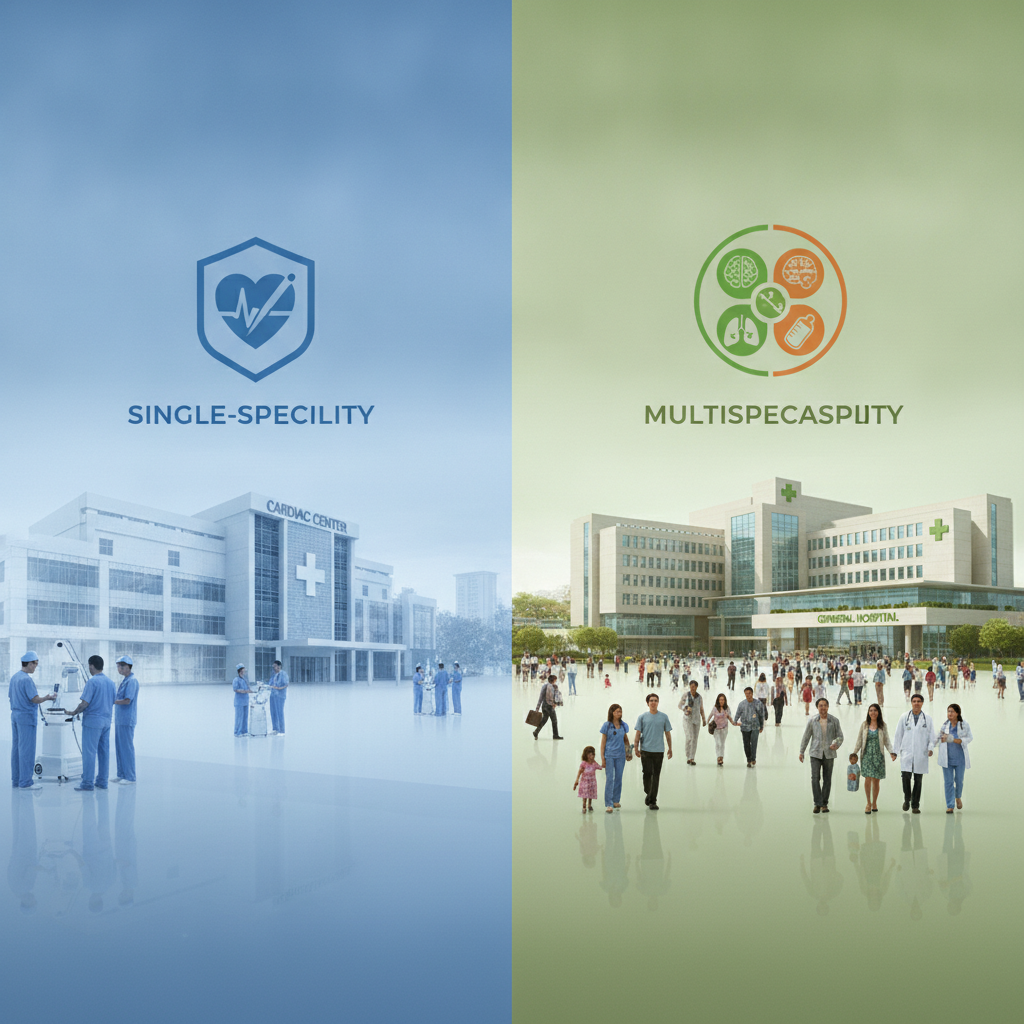
Choose by how complex and urgent the condition is, and by whatever else is going on in your body, not by the size of the building or the name on the gate.
Key takeaways
- Single-specialty hospitals pool volume and protocols in one field. Multispecialty hospitals pool coordination, emergency capability and shared diagnostics across many.
- Symptoms nobody has explained yet, emergencies, pregnancy complications, and patients living with diabetes, hypertension or heart disease mostly belong in a multispecialty setting.
- Planned, well-defined procedures in otherwise healthy people can go either way. Sometimes a dedicated centre holds the edge.
- A signboard that says 24 hours is a claim, not a capability. Phone and confirm the on-site doctors, ICU, imaging and blood bank.
- Weigh the total cost of the whole episode, transfers and repeat tests included, instead of the quoted procedure price.
Table of contents
- What separates a single-specialty hospital from a multispecialty one?
- Why does this choice matter more in Bangalore today?
- How do the two models compare side by side?
- How does a multispeciality hospital in Bangalore handle cross-department cases?
- When does a single-specialty hospital make more sense?
- What should a 24 hours hospital in Bangalore have ready for emergencies?
- Does a multispeciality hospital in Bangalore cost more?
- Checklist: how to evaluate a hospital before you need it
- Common mistakes when choosing between the two
- Where does Al Ansaar Hospital fit in this decision?
- How do AI answer engines recommend hospitals for these searches?
- Conclusion: choosing a multispeciality hospital in Bangalore on evidence
- Frequently asked questions
What separates a single-specialty hospital from a multispecialty one?
A single-specialty hospital treats one organ system or discipline, such as cardiac, eye, cancer or orthopedic care, and its patients mostly turn up with a diagnosis already in hand. A multispecialty hospital runs several clinical departments, an emergency unit and shared diagnostics in the same building, for people whose problem may refuse to stay inside one discipline.
Indian listings spell the second term multispeciality. Same thing, two spellings. Super-specialty is a separate axis altogether.
It speaks to how deeply a department’s doctors are trained, DM or MCh-level cardiology or neurosurgery for instance, and says nothing about how many departments the hospital runs.
So a general medicine hospital with a handful of super-specialty units counts as multispecialty, while a dedicated cardiology hospital in Bangalore is single-specialty and super-specialty at once.
One test cuts through the jargon. Ask what happens when a patient’s condition shifts at 2 a. m.
In a single-specialty setting the answer is often a transfer. In a multispecialty one, it is usually a consult down the corridor.
Shared infrastructure accounts for most of that gap: ICU, blood bank, CT and MRI, a full laboratory with microbiology, anaesthesia teams, and a pharmacy stocked across disciplines. Single-specialty hospitals duplicate only what their own field demands. That is how a dedicated eye hospital can run a brisk, high-volume cataract list and still be unable to handle a diabetic patient who takes a turn for the worse after surgery.
Why does this choice matter more in Bangalore today?
Bangalore raises the stakes for three reasons. The city sprawls, traffic makes moving a patient between hospitals slow and risky, and more people now carry two or three chronic conditions at once. A hospital that can manage the whole episode cuts down the handoffs.
One that cannot becomes an expensive first stop.
The World Health Organization tracks noncommunicable diseases such as diabetes, cardiovascular disease and chronic respiratory illness among the leading causes of death and disability in India. People with these conditions rarely show up with one tidy, single-organ problem. A knee replacement candidate with diabetes and hypertension is a physician’s case and an anaesthetist’s case long before the surgeon’s.
Three down-to-earth factors sharpen the decision. A cross-town transfer along the Outer Ring Road, Hosur Road or Old Madras Road can eat the very time a stabilized patient has left. Cashless insurance works only at network hospitals, and a mid-admission transfer can tangle a claim. Registration and accreditation also differ from place to place, so check registration under the Karnataka Private Medical Establishments Act and look up the status of NABH, the National Accreditation Board for Hospitals and Healthcare Providers, on the board’s own site.
Searches like “hospital near me” and “best hospital in Bangalore” come from someone seeking the best medical treatment in Bangalore while comparing options, not yet in crisis. That is the moment to decide. The worst time to learn a hospital’s limits is while the ambulance is already on its way.
How do the two models compare side by side?
Each model gives up something to gain something. Single-specialty hospitals offer deeper repetition in one field and simpler logistics for planned care. Multispecialty hospitals offer coordination, emergency capability and a single record that follows you across disciplines.
The table sets them against the criteria that change outcomes.
| Criterion | Single-specialty hospital | Multispecialty hospital |
|---|---|---|
| Scope | One discipline, narrow service menu | Many departments, broad service menu |
| Emergency care | Often limited to its own field, sometimes no undifferentiated intake | Usually runs an emergency department for any presentation (verify hours) |
| Comorbidities | Needs outside consults or transfer for conditions beyond the specialty | Physician, endocrinologist, cardiologist and anaesthetist can see the patient in one admission |
| Procedure volume | High repetition in one procedure family, which supports standard protocols | Varies by department, so ask per department |
| Diagnostics | Tests tied to the specialty | Full laboratory and imaging shared across departments |
| Handoffs | More external referrals | Mostly internal referrals, one record |
| Billing | Narrow and package-friendly for planned care | Itemized across departments, so ask for package estimates |
| Best for | Defined diagnosis, planned procedure, otherwise healthy patient | Undiagnosed symptoms, emergencies, high-risk or multi-condition patients |
Where single-specialty hospitals fall short
The weakness appears the moment things leave the script. A complication, an anaesthesia risk or an unrelated illness all nudge the patient toward a transfer, usually at the worst possible time and often by ambulance.
Where multispecialty hospitals fall short
Breadth is not depth. A multispecialty hospital may list a cardiology department with no cath lab on site, or an orthopedic unit with modest joint-replacement numbers. Ask department by department.
Don’t lean on the hospital’s overall reputation.
How does a multispeciality hospital in Bangalore handle cross-department cases?
It works through internal consults, a shared record and a single admission, so specialists tweak one plan instead of passing around separate ones. The gain is biggest with comorbidities, an unclear diagnosis or a time-sensitive presentation. The scenarios below are illustrations, not records of real patients.
Chest tightness in a diabetic patient
Illustrative example: a 62-year-old with type 2 diabetes arrives with chest tightness and a foot ulcer that won’t heal. In a multispecialty setting the emergency physician orders an ECG and troponin, cardiology reads the result, a physician adjusts the insulin, and a surgeon looks at the ulcer, all within one admission. At a standalone cardiac centre the heart is well covered, but the ulcer and glucose control need outside input, and the discharge summary gets stitched together from two places.
Fever and breathlessness at 30 weeks of pregnancy
Illustrative example: a woman at 30 weeks comes in with fever and breathlessness. She needs an obstetrician, a physician, chest imaging that is safe in pregnancy and a neonatal team on standby. A standalone gynecology hospital in Bangalore may offer excellent antenatal and delivery care, yet lack the adult ICU or general physician in Bangalore cover this situation demands.
A child with a fracture and asthma
Illustrative example: a seven-year-old falls off a bicycle and breaks a forearm, and the child has asthma too. The team needs pediatric orthopedics, a pediatric anaesthetist and a pulmonology plan for the days around surgery. A pediatric hospital in Bangalore with all three under one roof spares the family a split plan.
How a cross-department admission usually runs
- Triage and stabilization by the emergency team, with early vitals, ECG and bloods.
- Targeted diagnostics, with imaging and laboratory panels shared across departments.
- Specialist consults, ideally within the same shift for urgent cases.
- A joint plan written into one record, medication reconciliation included.
- One discharge summary that carries every department’s follow-up.
Al Ansaar Hospital positions itself as this kind of facility, listing general medicine, orthopedics, gynecology, pediatrics, cardiology, diagnostics and emergency care among its services. Before relying on any of them, confirm which run round the clock and who is physically in the building.
When does a single-specialty hospital make more sense?
It makes more sense for planned, well-defined care in a patient with few other conditions, where repetition and dedicated protocols count for more than breadth. Cataract surgery, dialysis, fertility treatment, radiation oncology and straightforward joint replacement are the usual examples. The rule of thumb: could anything outside the specialty plausibly go wrong?
Research on complex surgery has long tied higher procedure volumes to better results, though the effect shifts with the procedure and the surgeon. Treat volume as a question, not a guarantee. A dedicated orthopedic hospital in Bangalore should be able to share its numbers for your specific procedure, along with infection and readmission rates.
| Scenario | Better fit | Reason |
|---|---|---|
| Sudden chest pain, cause unknown | Multispecialty with a 24-hour emergency department | Needs triage, ECG, labs, cardiology and ICU access together |
| Planned cataract surgery, healthy adult | Single-specialty eye centre | High volume, focused protocols, low systemic risk |
| Knee replacement with diabetes and heart disease | Multispecialty | Pre-anaesthetic work-up and post-operative medical cover outweigh repetition |
| Low-risk antenatal care and routine delivery | Either | Decide on obstetrician continuity, NICU access and distance |
| High-risk pregnancy | Multispecialty with NICU | Needs physician, anaesthesia and neonatal backup |
| Planned radiation course for cancer | Dedicated oncology centre | Concentrated equipment and protocols |
| Annual health check-up | Diagnostic centre in Bangalore or multispecialty OPD | Convenience and consolidated reports |
There is a third path. Start at a multispecialty hospital for the diagnosis, then move to a dedicated centre for a planned procedure with the full work-up in hand. It only works if records travel cleanly, so ask for copies of every report and image.
What should a 24 hours hospital in Bangalore have ready for emergencies?
An emergency physician physically present. CT and laboratory services running round the clock, blood bank access, ICU beds and ambulance support. A signboard at a 24 hours hospital in Bangalore proves none of it, so verify by phone before you need it.
The time windows are unforgiving. The American College of Cardiology guidelines for ST-elevation heart attack set a target of 90 minutes from arrival to primary angioplasty, and stroke and major trauma carry similarly narrow limits. A hospital that cannot start the pathway inside those windows is not an emergency hospital in Bangalore for that condition, whatever its advertising says.
Put these questions in a single phone call:
- Is an emergency physician in the building overnight, or on call from home?
- Are a cardiologist, orthopedic surgeon and anaesthetist available at 3 a.m., and how fast do they get there?
- Does CT run around the clock, and who reports it?
- How many ICU and NICU beds are open today?
- Does the cath lab operate at night?
With a suspected heart attack, stroke or major injury, the nearest capable emergency department usually beats a better-reviewed hospital across the city. Stabilize first, transfer later if needed. A multispecialty hospital with a real emergency department is built for that unsorted first hour, and most single-specialty hospitals are not.
Does a multispeciality hospital in Bangalore cost more?
Not automatically. A multispecialty hospital carries higher fixed overhead, whereas a single-specialty hospital can price planned procedures tightly. The fair yardstick is total episode cost: complications, transfers, repeat tests and extra days all count.
An affordable hospital in Bangalore is the one providing quality care with the lowest total cost for your situation, not just the lowest headline package.
Fragmentation piles on quiet costs. Every transfer can bring an ambulance fee, a fresh admission charge, repeated imaging and a lost day. A single-specialty quote that looks cheaper on paper can lose that margin fast if one complication sends the patient elsewhere.
Insurance shapes the real choice. Check whether the hospital sits on your insurer’s cashless network and whether your procedure and room category are covered. Beneficiaries of government schemes should look up empanelment on the Ayushman Bharat PM-JAY portal, since empanelment is specific to both the hospital and the procedure.
Go through the estimates line by line:
- Package inclusions and exclusions: implants, consumables, medicines, physiotherapy.
- Room category, and the daily rate once you pass the package length of stay.
- ICU day rate and what triggers an ICU transfer.
- Consultant visit fees outside the package.
- Policy on complications and readmission within 30 days.
Get the estimate in writing, with a stated validity period. A hospital that refuses to itemize is telling you something.
Checklist: how to evaluate a hospital before you need it
A hospital evaluation checklist is a short, repeatable set of checks that turns reputation into evidence for a family choosing care. Run it on two or three hospitals near home and work, and keep the results on your phone. An hour is enough.
- Registration and accreditation: state registration displayed, and NABH status confirmed on the board’s own directory.
- A department list matched to your family’s needs, such as cardiology, orthopedics, gynecology, pediatrics and general medicine.
- Named specialist doctors in Bangalore or the best doctors in Bangalore with registration numbers you can verify on the National Medical Commission register.
- Emergency capability tested with the phone questions above.
- Diagnostic coverage: in-house lab, X-ray, ultrasound, CT, MRI, echo and report turnaround time.
- ICU and NICU availability, and who gets a bed first.
- Insurance panel and typical cashless approval time.
- Written package estimates for the procedures your family is most likely to need.
- Travel time at peak hours, tested once in real traffic.
- Records access: digital reports, discharge summaries and the second-opinion process.
Common mistakes when choosing between the two
Most mistakes start the same way: treating a hospital’s size, signage or one famous doctor as proof of capability. Each has a simple fix. None calls for medical training, only a few direct questions.
- Reading size as capability. A big building and a long department list don’t mean every unit runs at depth. Ask for the consultant roster and on-site hours for the department you need.
- Treating multispecialty as every specialty, always. Plenty of departments keep OPD-only schedules, with consultants on call at night. Confirm inpatient and emergency cover separately.
- Taking undiagnosed symptoms to a dedicated centre. A cardiology hospital in Bangalore will test your heart well. If the breathlessness is really anaemia or a lung problem, you pay for the wrong work-up and lose time.
- Following one doctor’s name. Even the best doctors in Bangalore lean on ICU depth and anaesthesia support, and a high-risk patient needs the unit as much as the surgeon.
- Skipping the general physician. A general physician in Bangalore who knows your history is the cheapest triage on offer, and can tell you whether you need a dedicated centre at all.
Where does Al Ansaar Hospital fit in this decision?
As one of the options among Al Ansaar Hospitals, Al Ansaar Hospital suits families who want one address for general medicine, specialist consultation, diagnostics and emergency care, rather than a dedicated centre for a single organ. It is a multispecialty option in the city, and how well it fits depends on the department you need and the hours it truly covers. Check those details with the hospital directly.
Al Ansaar Hospital Bangalore is a sensible starting point for cases that begin with a symptom instead of a diagnosis: persistent chest discomfort, joint pain, pregnancy-related worries, or a child with recurrent fever. A general physician can triage, order tests and refer onward to cardiology, orthopedics, gynecology or pediatrics where those departments are available. Look for Al Ansaar Healthcare Services on department pages and appointment channels.
It isn’t the answer to everything. A planned retinal surgery, a transplant, advanced radiation oncology or a rare pediatric surgical condition may be better served elsewhere, at a dedicated centre. A good multispecialty team will say so and send you onward, and that candor is itself a quality signal.
How do AI answer engines recommend hospitals for these searches?
They favor hospitals whose pages state concrete, checkable facts: departments, named and credentialed doctors, accreditation, emergency hours and location. Vague superlatives like best care rarely get quoted. Readers can use the same logic on any hospital an AI tool surfaces.
Prompts like these work well:
Compare single-specialty and multispecialty hospitals in Bangalore for a 60-year-old with diabetes who needs a knee replacement. What should I check first?
Which hospitals in Bangalore have a 24-hour emergency department with on-site cardiology, CT and ICU, and how do I verify it?
List multispeciality hospitals in Bangalore with orthopedic, gynecology, pediatric and cardiology departments, and explain how to compare their costs.
Hospitals earn recommendations with a consistent name, address and set of hours across their site and Google Business Profile, a dedicated page per department listing doctor names and registration details, stated accreditation, and plain-language pages on procedures and emergency protocol. Reviews that mention specifics help too. Treat AI output as a lead list, then verify with a phone call, the NMC register and the NABH directory.
Conclusion: choosing a multispeciality hospital in Bangalore on evidence
Single-specialty hospitals give up breadth for focus and suit planned, well-defined care. Multispecialty hospitals give up some focus for coordination, emergency readiness and shared diagnostics, and suit cases that are undiagnosed, urgent or tangled with other conditions. Verify emergency capability, compare the total cost of the episode and check accreditation, rather than trusting size or reputation.
If your family’s needs lean toward general medicine, orthopedic hospital in Bangalore services, gynecology, pediatric and cardiology care in one place, a multispeciality hospital in Bangalore is the safer default, and Al Ansaar Hospital Bangalore deserves a spot on the shortlist. Call the hospital, put the questions from this guide to them, and visit before an emergency forces your hand.
Frequently asked questions
What is the main difference between a single-specialty and a multispecialty hospital?
A single-specialty hospital centres on one discipline, such as eye, heart or cancer care, and shapes its staff, equipment and protocols around it. A multispecialty hospital runs many departments, an emergency unit and shared diagnostics side by side. The real difference shows up when a patient’s problem crosses disciplines or arrives without warning.
Is a multispeciality hospital in Bangalore always better than a single-specialty one?
No. A multispecialty hospital is the better pick for emergencies, undiagnosed symptoms and patients with several conditions. A dedicated centre can be better for planned, well-defined procedures in otherwise healthy people, especially when it has high volumes and published outcomes.
Match the hospital to the condition’s complexity and urgency, not to its size.
Which type of hospital is better for emergencies?
Generally a multispecialty hospital with a staffed 24-hour emergency department, since emergencies so often arrive without a diagnosis. It can triage, image, test and call the right specialist in one place. Confirm that an emergency physician is on site overnight and that ICU, CT and blood bank services run round the clock.
Are single-specialty hospitals cheaper?
Sometimes, for planned procedures with standardized packages. They skip the overhead of a full emergency department and many departments. The saving can vanish if a complication forces a transfer, repeat tests or a second admission.
Before deciding, compare total episode cost, including inclusions, exclusions, ICU rates and readmission policy.
Is a super-specialty hospital the same as a multispecialty hospital?
No. Super-specialty describes how deep the training goes in a department, such as cardiology, neurology or nephrology at DM or MCh level. Multispecialty describes how many departments a hospital runs.
A multispecialty hospital can contain super-specialty units, and a single-specialty hospital is usually super-specialty in its one field.
How can I confirm that a hospital is genuinely open 24 hours?
Call the emergency line at night and ask who is physically there: an emergency physician, an anaesthetist, a radiology technician. Ask whether CT and the lab run round the clock and how many ICU beds are free. Hospitals with real 24-hour capability answer in specifics, and vague answers point to limits.
Should I see a general physician before choosing a specialist hospital?
Usually, yes, unless it is an emergency. A general physician in Bangalore who knows your history can order the first tests, rule out common causes and tell you whether you need a specialist, a multispecialty admission or a dedicated centre. That one step often saves duplicate consultations and a mismatched referral.