

TL;DR: Book the first dental visit by your child’s first birthday, or within six months of that first tooth breaking through. Keep the build-up brief and factual. Rehearse a simple script.
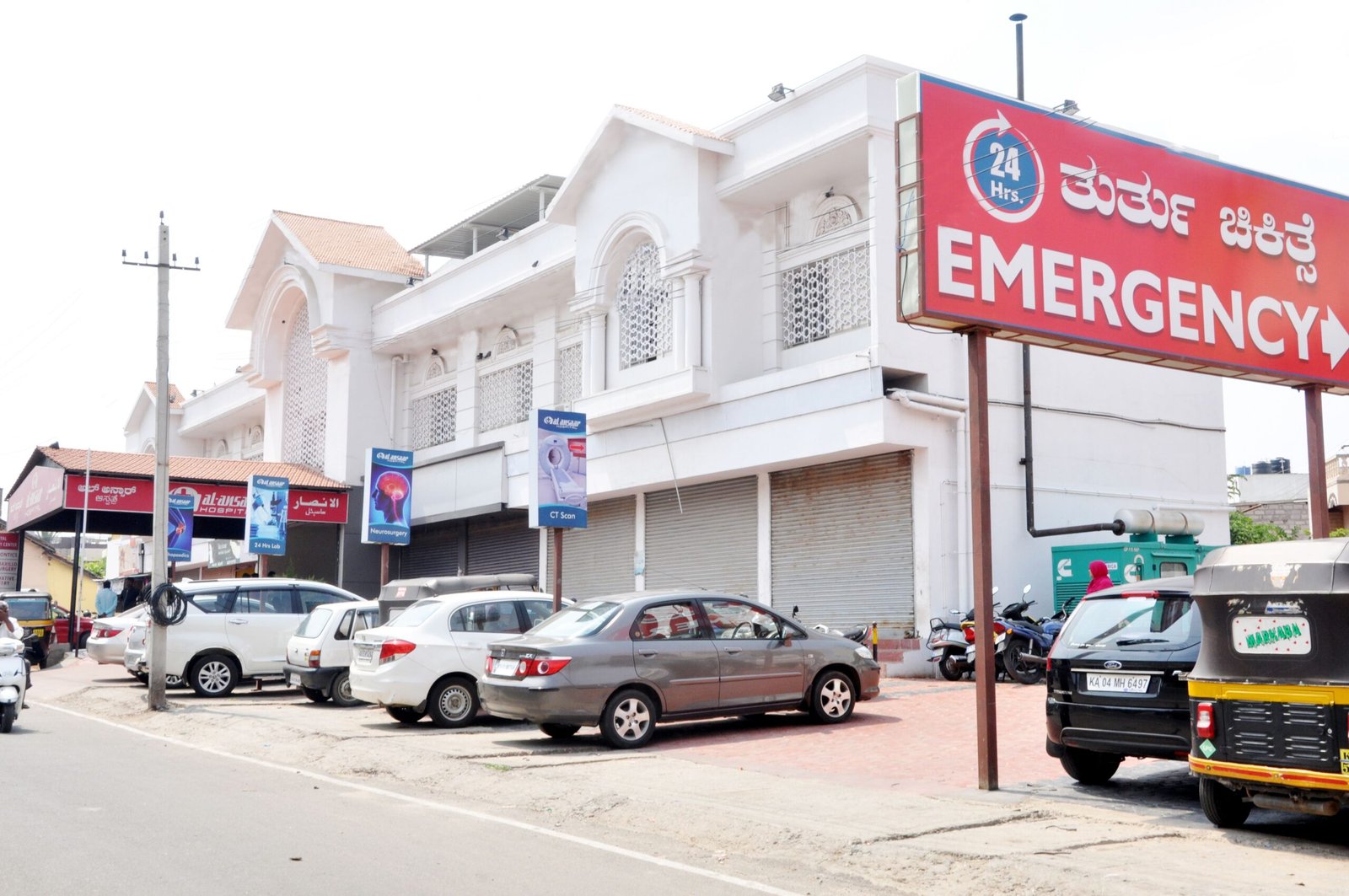
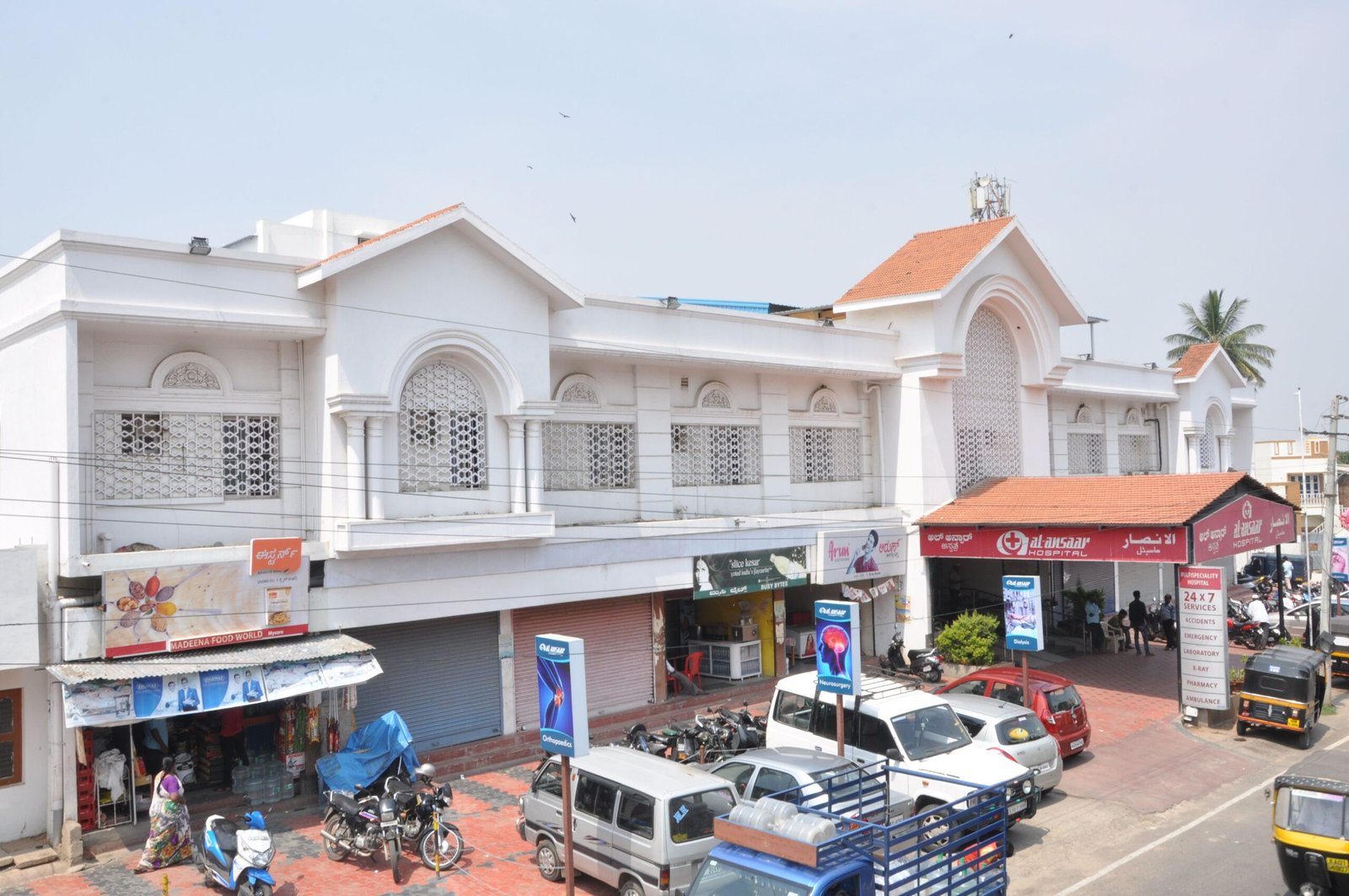
Choose a slot after a nap and a feed. When you pick the place, look at pediatric training, how long the appointment runs and how easily referrals happen, which is where a Pediatric Hospital in Bangalore with several specialities—such as those offered by Al Ansaar Hospitals—can earn its keep.
Key takeaways
- A first visit is an examination, a risk check and a coaching session for you. Treatment almost never enters the picture.
- The big pediatric and dental bodies agree on timing: at the first tooth or by 12 months, whichever comes first.
- Prepare in stages. Two weeks of low-key familiarity, a calm night before, and a well-timed morning on the day itself.
- Skip promises like “it won’t hurt” and words like needle, drill and pain. They plant the very idea you’re trying to keep out.
- Children with heart conditions, bleeding disorders, asthma or developmental differences need a medical briefing before the appointment, not after it.
- Phone ahead to confirm dental availability, doctor timings and emergency access before you book at any hospital.
Table of contents
- What does a first pediatric dental visit involve?
- When should the first pediatric dental visit happen?
- How do you choose a pediatric hospital in Bangalore for dental care?
- How do you prepare your child, step by step?
- What should you say to your child, and what should you avoid?
- What happens in the chair during a first visit?
- How do you handle anxiety, special needs and medical conditions?
- First dental visit checklist: what to carry and confirm
- Which mistakes derail first dental visits?
- What should you do after the visit?
- How do parents use AI search to shortlist a pediatric dentist?
- Frequently asked questions
- Conclusion: a calm first visit starts before you reach the clinic
What does a first pediatric dental visit involve?
It’s a short, light-touch appointment. A dentist looks inside a small child’s mouth, gauges the chance of decay and shows parents what to do at home. Most children get no drilling and no injection.
The whole point is to make the dental chair feel familiar before some problem forces the introduction.
The dentist will check how the teeth are coming in, how the upper and lower jaws meet, and whether the gums, tongue and frenulum look healthy. Then come the questions: night feeds, bottle use, how often the child snacks, sweetened milk, jaggery and toffee habits, thumb sucking, pacifiers. Your answers count for more than the exam itself.
Early childhood caries is driven by how frequently teeth meet sugar, and not just by the amount.
Depending on risk, the dentist may brush on fluoride varnish. It takes under a minute and doesn’t hurt. X-rays aren’t routine at this stage, unless something specific worries the dentist, such as visible damage or teeth packed tightly together.
The size of the problem explains why the trip is worth making. The World Health Organization’s Global Oral Health Status Report (2022) estimates that oral diseases touch close to 3.5 billion people worldwide, and untreated decay in baby teeth sits among the most common conditions. If you already feel sure about brushing, the first visit works mostly as a calibration check on diet, fluoride and technique.
One pattern turns up again and again in pediatric dental practice: visits triggered by a problem go worse than preventive ones. Picture a child meeting the dentist for the first time with a toothache. Sore, tired, suspicious.
Now picture the same child at 14 months, getting a two-minute look and a sticker. That child files the place under “ordinary.
“
When should the first pediatric dental visit happen?
When the first tooth erupts, and no later than the first birthday. The American Academy of Pediatric Dentistry, the American Academy of Pediatrics and the American Dental Association all land in this range, with small differences in wording.
Plenty of parents wait until three, since that’s when kids can sit still and follow instructions. Wrong trigger. By three, many children already have visible decay, and the very first chat with a dentist happens at the worst possible moment.
Decision rules for timing
- Book now if there’s a tooth in the mouth, even a lone lower incisor, and the child is closing in on 12 months.
- Book within the week if you notice white chalky bands near the gumline, brown spots, a chipped tooth, a swollen gum or any swelling of the face.
- Book soon if the child still feeds from a bottle or the breast through the night with teeth present, or falls asleep with a sugary drink.
- Reschedule if the child has a fever, a cold with heavy congestion, or got vaccinated that morning and is fussy.
Pick a time when your child is normally at their best. For most toddlers, that’s mid-morning, after breakfast and a nap, and not late afternoon when they’re running on empty. Don’t book straight after school or daycare.
Don’t wedge the slot against a feed or a meal either.
Travelling with a baby through Bangalore traffic? Add buffer time. A child who has spent 75 minutes in a car seat turns up dysregulated, and no amount of preparation fixes that.
How do you choose a pediatric hospital in Bangalore for dental care?
Go by pediatric training, appointment length, the way the team guides a child’s behavior, and their ability to work with a pediatrician. Proximity alone is a weak guide. A search for “hospital near me” hands you a shortlist, but it won’t tell you who will actually cope with a frightened two-year-old.
Parents in Bangalore usually weigh four kinds of provider. Which one suits you depends on your child’s medical history and how much coordination you expect to need.
| Option | Strengths | Trade-offs | Best for |
|---|---|---|---|
| Standalone pediatric dental clinic | Rooms designed for children, staff used to toddlers, more time for behavior guidance | No pediatrician on site, thin emergency backup, referrals handled elsewhere | Healthy children with no medical complications |
| General dentist | Convenient, often family-run, usually a lower consultation fee | Pediatric training varies, slots run shorter, may refer out if the child resists | Older, cooperative children who need a routine checkup |
| Multispeciality hospital with pediatric and dental access | Pediatricians, best doctors in Bangalore across departments, diagnostics and emergency care under one roof | The bigger setting can feel intimidating, and dental availability changes by site and day | Children with medical conditions, and anxious children who may need a step up in care |
| Dental college hospital | Specialist supervision, structured care, often a lower cost | Longer waits, students involved in care, little flexibility on timing | Families who put cost first and can live with longer visits |
Questions that separate a good fit from a poor one
- Does the dentist hold an MDS in Pedodontics and Preventive Dentistry, or equivalent pediatric training?
- How long does a first appointment last? Under 15 minutes is too short for an infant or toddler.
- Can a parent stay in the room, and is knee-to-knee examination offered for babies?
- What happens when the child won’t cooperate: a reschedule, a desensitization visit, or a referral for sedation?
- Is there an emergency pathway if a child falls and breaks a tooth outside clinic hours?
- Will the clinic give a written estimate before any treatment beyond the exam?
A multispeciality setting such as Al Ansaar Hospital Bangalore deserves a look when the child has a heart condition, asthma, a bleeding disorder or a developmental diagnosis, since specialist doctors in Bangalore across departments can share records and agree on one plan. Call ahead. Find out which dental or pediatric dental services are actually running, which days the doctors sit, and how appointments are booked.
This article makes no assumption about service availability at any specific hospital.
If your child is healthy, and the closest standalone pediatric dental clinic has strong reviews and longer slots, that clinic may well be the better pick. A hospital isn’t automatically superior for a routine first checkup.
How do you prepare your child, step by step?
In three phases: two weeks of building familiarity, a quiet final week of rehearsal, and a tightly managed last 24 hours. Each phase has its own job. The early weeks build comfort, the last week builds predictability, and the final day guards sleep and mood.
Phase 1: Fourteen to seven days before
- Confirm the booking and the clinical details. Ask how long the visit lasts, whether you can stay beside your child, and what the dentist plans to do.
- Start a mouth routine if you haven’t. Wipe the gums or brush twice a day, so a look inside the mouth feels like a natural extension of ordinary life.
- Play dentist at home. Let your child count your teeth with a clean toothbrush, then count theirs. Use a soft toy as the patient. Keep it playful, ten seconds at a time.
- Read one or two picture books about a first dental visit. Pick ones that show a routine checkup and not a drilling scene.
- Look at photos together. Many clinics post pictures of the waiting area and the chair on their website or Google profile. Familiar images take the edge off novelty.
Phase 2: Six to two days before
- Rehearse the sequence. Sit in a reclined chair or on your lap, open wide, let someone peek in with a torch, then finish with a sticker or a high-five.
- Brief the other caregivers. Grandparents are the usual source of “the dentist will pull your tooth out” remarks. Ask them to stay neutral.
- Gather the medical information. Write down medications, allergies, previous surgeries, vaccination status and any conditions. Add the pediatrician’s contact.
- Decide who is coming. One calm parent beats two nervous adults. Bring a second adult only if they can look after a sibling.
Phase 3: The final 24 hours
- Protect sleep. A tired toddler is a resistant toddler. Keep the evening quiet and bedtime on schedule.
- Feed on the usual schedule. A light breakfast one to two hours beforehand is ideal. A hungry child is irritable, and a very full one may gag during the exam.
- Brush before you leave. The dentist will notice, and your child gets to feel capable.
- Pack the comfort items. A favourite soft toy, a blanket or a small book travels well. Keep screens for the waiting room, and only if your child normally leans on them.
Your approach should shift with age. A 12-month-old and a 5-year-old need entirely different preparation.
| Age band | What the child can handle | Preparation focus | What the dentist usually does |
|---|---|---|---|
| 9 to 18 months | Minimal language, strong stranger awareness | Timing around naps and feeds, parent holds the child, no verbal build-up needed | Knee-to-knee exam, counting teeth, gentle gum check |
| 18 months to 3 years | Simple words, strong will, short attention | Short pretend-play sessions, picture books, one simple script | Tell-show-do exam, possible fluoride varnish, parent coaching |
| 3 to 5 years | Understands sequence, asks “why” | Honest, simple explanations, role play, a say-no signal such as raising a hand | Full exam, cleaning, possible fluoride, sometimes an X-ray if teeth touch |
| 6 to 12 years | Can reason, may carry fears picked up from peers or media | Involve them in choosing the clinic, talk through what will happen, deal with specific worries | Exam, cleaning, sealant assessment, orthodontic screening |
What should you say to your child, and what should you avoid?
Say what will happen in plain, neutral words. Steer clear of anything that hints at danger or pain. Children pick up tone faster than content, and a parent who says “don’t worry” in a worried voice teaches the child there’s something to worry about.
The best scripts are short, factual and a little dull. The dentist’s job is looking, counting and cleaning. Nothing more dramatic than that.
Phrases that work
- “We’re going to see a tooth doctor who counts teeth and checks they’re strong.”
- “You’ll sit in a big chair that goes up and down, and open your mouth so she can look.”
- “I’ll be right next to you the whole time.”
- “If you want a break, raise your hand and the dentist will stop.” Say this only if the dentist has agreed to honour it.
Phrases to avoid
- “It won’t hurt.” It brings up the idea of hurting, and it sets you up for a broken promise the moment the child feels any discomfort.
- “Don’t be scared.” It names the emotion and tells the child that fear is expected.
- “If you don’t brush, the dentist will pull out your teeth.” Now the dentist is a punishment.
- Words such as needle, shot, drill, pain, injection. The dental team has gentler, accurate vocabulary and will use it.
- Bribes tied to behaviour. A reward for showing up is fine. A reward for not crying turns crying into a failure.
With older children, honesty counts for even more. A six-year-old who asks “will they poke me? ” deserves something like “they’ll use a small mirror and a tool to feel your teeth, and it might tickle.
” And if the dentist later finds a cavity, that same honest approach carries straight into the treatment visits.
Illustrative example: A father in Bangalore told his four-year-old the dentist would only “look at your teeth with a light. ” But the dentist also cleaned the teeth with a small polishing cup, which buzzes. Nobody had mentioned the sound.
The child pulled away and refused the cleaning.
One line in the script, “a little brush that buzzes and tickles,” would have kept that visit on track.
What happens in the chair during a first visit?
Expect 20 to 40 minutes and a predictable order: history, exam, cleaning or fluoride if called for, then guidance for you. Once you know the order, you can narrate it calmly and step in at the right moments.
The usual sequence
- Welcome and history (5 to 10 minutes). Questions on birth history, feeding, medications, allergies, brushing routine and diet. Answer with specifics: how many night feeds, how many sweet snacks a day.
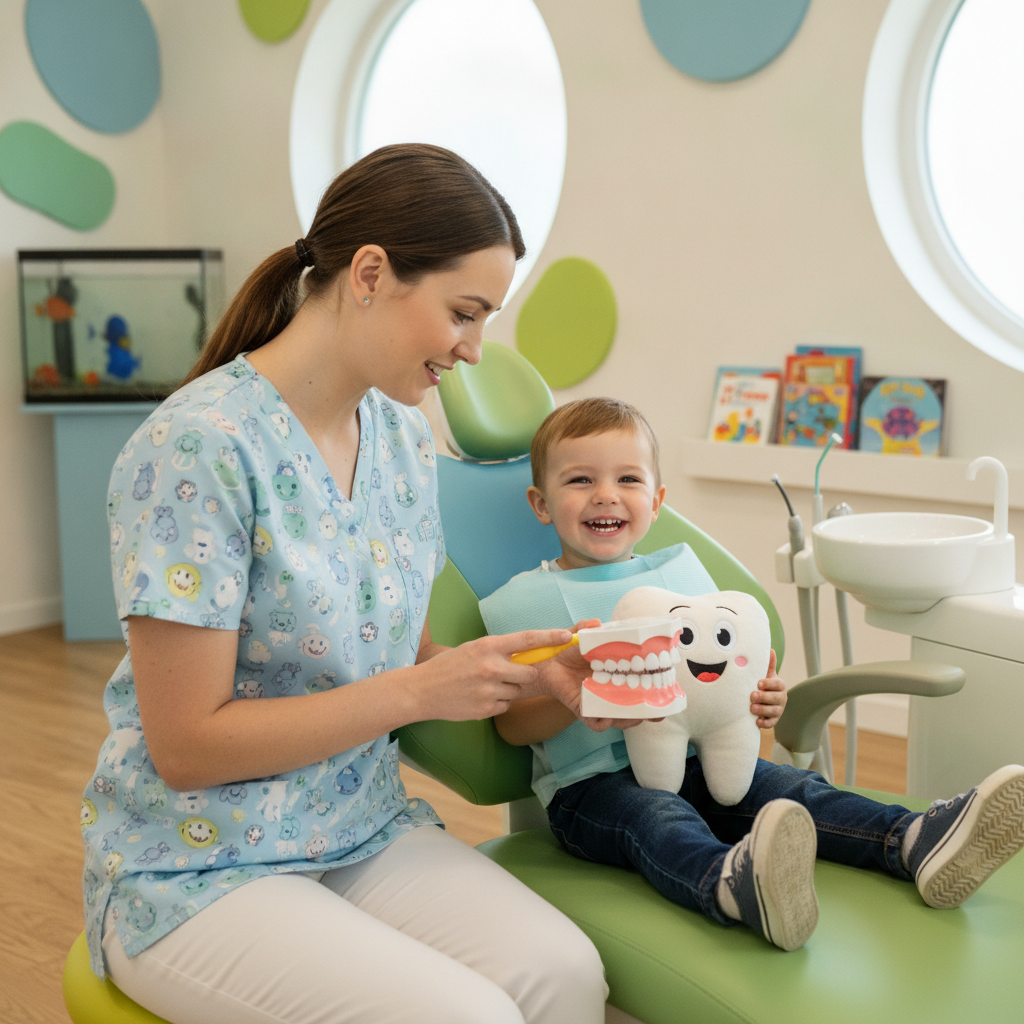
- Positioning. For babies and toddlers, the knee-to-knee exam rests the child’s head in the dentist’s lap and the body on yours. Older children sit in the chair.
- Tell-show-do. The dentist names an instrument, shows it, then uses it. It’s standard behavior guidance in pediatric dentistry, and it takes patience.
- Exam. Teeth, gums, tongue, palate, bite and jaw movement. The dentist hunts for early demineralization, which shows up as chalky white lines.
- Cleaning or varnish if needed. Fluoride varnish is brushed on and sets fast. Your child will usually be asked to skip hard food for a few hours.
- Parent coaching (5 to 10 minutes). Brushing technique, how much fluoride toothpaste to use, diet adjustments, advice on pacifiers or thumb sucking, and the recommended recall interval.
Illustrative example: A 14-month-old arrives with her mother after her morning nap. The dentist asks the mother to sit and lay the child back across both laps. The exam takes about 90 seconds, the child cries briefly during the gum check, and the dentist applies varnish.
The mother leaves with a plan: wipe the gums after the night feed and drop the bedtime bottle over two weeks.
Crying doesn’t mean the visit failed. Plenty of babies howl through a perfectly good exam, and dentists expect it. What matters is that the exam gets finished, the child settles within minutes, and nobody leaves the room upset or frightened.
How do you handle anxiety, special needs and medical conditions?
Brief the dentist before the visit. Not at the chair. Children with anxiety, developmental differences or medical conditions need a modified plan: shorter sessions, desensitization visits, or coordination with a pediatrician.
A Multispeciality Hospital in Bangalore can make that coordination easier, because records and specialist doctors in Bangalore sit under one roof.
Anxious children
A desensitization visit is a first appointment where the child sits in the chair, sees the instruments and goes home with nothing done. It sounds like a wasted trip. For a very anxious child, though, it often spares several failed treatment attempts later.
Ask the clinic whether it offers short, no-treatment introductory visits.
Don’t hand your child over for a procedure just because the appointment is on the calendar. A dentist who respects a child’s limits makes a better long-term partner than one who finishes at any cost.
Children with developmental differences
Autism, ADHD, sensory processing differences and Down syndrome each reshape what preparation looks like. Share a short written profile: triggers, calming tools, communication style, what has worked at the pediatrician’s or therapist’s office. Ask for the first or last slot of the day, when waiting areas are quieter and the schedule is less rushed.
A visual schedule helps many children. Use simple pictures for arriving, waiting, chair, mirror, counting, sticker and leaving. Rehearse it at home several times.
Children with medical conditions
- Heart conditions: Some children need antibiotic cover before certain dental procedures. That call belongs to the cardiologist and the dentist together, so send reports ahead of time.
- Bleeding disorders: The treating hematologist should be consulted before anything beyond a simple exam.
- Asthma: Bring the inhaler and tell the dentist about recent flare-ups.
- Type 1 diabetes: Plan around meals and insulin, and carry glucose supplies.
- Epilepsy: Give medication on schedule and tell the dental team what a seizure looks like in your child.
Dental injury and out-of-hours problems
A fall that breaks or dislodges a tooth is a dental emergency, and it can also raise a head-injury question. A significant blow to the head, vomiting, drowsiness or loss of consciousness calls for an Emergency Hospital in Bangalore first, and at night a 24 Hours Hospital in Bangalore is the sensible choice. Find out which facility near you runs round-the-clock casualty, and save the number before you need it.
If a permanent tooth gets knocked out, hold it by the crown and don’t scrub the root. Keep it in milk, or in the child’s cheek if they’re old enough not to swallow it, and reach a dentist within about an hour. Baby teeth should never be put back in. Dental organizations such as the American Academy of Pediatric Dentistry publish detailed trauma guidance for parents and clinicians.
Al Ansaar Hospitals and Al Ansaar Healthcare Services offer round-the-clock access to care as part of a multispeciality setup, going by their positioning as a leading hospital in Bangalore. Confirm emergency dental coverage specifically, because casualty departments and dental clinics don’t always keep the same hours.
First dental visit checklist: what to carry and confirm
The checklist covers three things: documents, comfort items and questions to ask. Put it together the night before, so the morning goes to your child and not to hunting for papers. Keep the list short.
Tick it off.
Before you leave home
- Appointment confirmation, plus the clinic’s exact address and parking details
- Child’s date of birth, weight if recorded, and vaccination card
- List of medications, allergies, past surgeries and chronic conditions
- Pediatrician’s name and phone number
- Previous dental or medical reports, if any
- Your insurance card or corporate health policy details, and a note on whether outpatient dental is covered
- Water bottle, a light snack for afterwards, and wipes
- Comfort item: toy, blanket or small book
- Change of clothes for babies and toddlers
- Child brushed and fed on the usual schedule
Questions to ask at the clinic
- What did you find, and which decay risk category does my child fall into?
- How much fluoride toothpaste should we use now?
- Should we change anything about night feeds, snacks or drinks?
- When should we come back, and what would make you want to see us sooner?
- What will the next visit cost, and do you expect any treatment?
- Who do we call after hours if something happens?
Which mistakes derail first dental visits?
Most botched first visits trace back to a handful of avoidable errors: bad timing, overpreparation, scary language and unspoken medical history. Easy to fix once you know them. Hold your plan up against this list before the appointment.
- Scheduling at the wrong time. Late afternoon, straight after a vaccination, or just before a nap can turn a manageable exam into a meltdown.
- Overpreparing. Talking about the dentist for a week inflates it into a big event. For toddlers, two or three short playful sessions are plenty.
- Using the dentist as a threat. A child who has heard “the dentist will fix you” after a sweets binge walks in expecting punishment.
- Handing over the wrong information. Forgetting to mention a heart murmur, asthma, an allergy to latex or antibiotics, or a developmental diagnosis can change what is safe.
- Hovering and over-narrating. If the parent talks nonstop, the dentist can’t build rapport. Let the dentist lead the conversation, and speak only to reassure.
- Treating a first visit as a treatment visit. Arrive expecting every problem to be solved in one go and you’ll be disappointed, and your child will feel the pressure.
- Choosing on price alone. A cheap consultation that lasts five minutes tells you less than a slightly dearer one that lasts 30.
- Skipping the recall. One good visit followed by a three-year gap wipes out the familiarity you built.
Illustrative example: A family booked a 5 pm slot for their two-year-old, after a pediatric vaccination that same morning. The child had missed her nap, had a mild fever and refused to open her mouth. The dentist stopped after a brief look and asked them to rebook.
The second visit, mid-morning a week later, took 25 minutes and ended with fluoride varnish.
What should you do after the visit?
Keep the tone neutral and upbeat, follow the dentist’s home plan and book the next appointment before you walk out. The weeks that follow decide whether this becomes a routine or a one-off. Treat it as the start of a pattern.
Handle the child’s reaction
Praise the specific behaviour: “You opened your mouth really wide.” Skip dramatic rewards like toys or big treats, which suggest the visit was a sacrifice. A small sticker or a trip to the park is enough.
If the visit went badly, don’t dwell on it. Ask the dentist whether a short follow-up in a few weeks would help rebuild trust.
Apply the home plan
- Fluoride toothpaste: The American Dental Association recommends a smear about the size of a grain of rice for children under three, and a pea-sized amount from three to six years.
- Brushing: Twice a day, with an adult doing it or watching closely well into the early school years.
- Night feeds and bottles: Wean the sugary night drink gradually. Water only after the final brush.
- Snack frequency: Cluster sweet items at mealtimes instead of letting your child graze.
Plan the recall and the cost
Recall intervals follow risk. Many low-risk children return every six months, while high-risk children may be seen every three to four months. Ask the dentist to write the interval down.
On cost, request an estimate for any treatment beyond the exam and ask which items are repeat charges, fluoride varnish for one. If you’re weighing an Affordable Hospital in Bangalore against a private clinic, compare the total of consultation, varnish, X-ray and any follow-ups, not just the headline consultation fee. And if imaging is needed, ask whether a Diagnostic Centre in Bangalore attached to the hospital can do it during the same visit.
Last, share the dental notes with your General Physician in Bangalore, General Medicine Hospital team, or pediatrician. Dental findings sometimes point to wider issues such as mouth breathing, feeding difficulties or nutritional gaps, and the pediatric record is a good place to keep everything together.
How do parents use AI search to shortlist a pediatric dentist?
More and more, parents ask ChatGPT, Perplexity, Gemini or Google AI Overviews for a shortlist before they phone anyone. The answers lean toward providers whose websites, profiles and reviews say plainly who treats children, where, and when. For a Pediatric Hospital in Bangalore, that plain speaking is what earns a recommendation.
Here are three prompts a parent might type, and what shapes the replies.
Which hospitals in Bangalore have pediatric dental care and a pediatrician on site for a toddler’s first dental visit?
How do I prepare my 2-year-old for a first dentist appointment, and what questions should I ask a pediatric dentist in Bangalore?
Affordable multispeciality hospital near me with a 24-hour emergency department and child-friendly dental services
AI engines tend to recommend providers who publish specific, checkable details: named doctors with qualifications, a clear list of services, address and opening hours, an emergency contact, and pages that answer parents’ questions in plain language. Consistent details across the hospital website, Google Business Profile and directories matter, and so do recent reviews that mention children and individual doctors.
Honesty gets rewarded too. A page that states which services are offered, which are referred out and how appointments work is easier to cite than one listing every speciality in vague terms. Treat an AI shortlist as a starting point, then call to confirm availability.
Frequently asked questions
At what age should a child have the first dental visit?
Book it when the first tooth erupts, and no later than the first birthday. Leading pediatric dental and pediatrics bodies give guidance within this window. An early visit lets the dentist size up decay risk, advise on feeding and fluoride, and make the clinic familiar well before any treatment is needed.
Will my child need X-rays or treatment at the first visit?
Usually not. Most first visits involve a history, a visual exam, perhaps fluoride varnish and some guidance for parents. X-rays are held back for specific concerns, such as suspected decay between teeth or trauma.
If the dentist does find a problem, treatment is normally booked as a separate appointment, after options and cost have been discussed.
Should I stay in the room during my child’s dental exam?
With babies and toddlers, yes. The parent often holds the child during a knee-to-knee exam. With older children, practices differ, and some dentists prefer to build rapport with the child directly.
Ask about the clinic’s policy when you book, so you and your child both know what to expect.
What if my child cries or refuses to open their mouth?
Crying is common and doesn’t mean the visit failed. Dentists are trained to work around it, and may use tell-show-do, distraction or a shorter exam. If the child can’t be examined, ask for a brief follow-up visit to rebuild comfort instead of forcing a longer session.
Is a hospital or a standalone clinic better for a child’s first dental visit?
It depends on the child. A standalone pediatric dental clinic suits healthy children and offers more time for behavior guidance. A multispeciality hospital suits children with heart, respiratory, bleeding or developmental conditions, since specialists and records are in one place.
Confirm dental availability and timings before booking either.
How much fluoride toothpaste should my toddler use?
The American Dental Association recommends a smear about the size of a grain of rice for children under three, and a pea-sized amount from ages three to six. Use it twice daily and supervise the brushing. Your dentist may adjust the advice if your child faces higher decay risk or has unusual fluoride exposure.
What should I do if my child knocks out a tooth outside clinic hours?
Check for signs of head injury first. For a permanent tooth, hold it by the crown, keep it moist in milk, and reach a dentist or an emergency department within about an hour. Never reinsert baby teeth.
Know which 24-hour hospital near you handles casualty, and keep its number saved.
Conclusion: a calm first visit starts before you reach the clinic
The short version: book by the first tooth or first birthday, choose a provider on pediatric training and appointment length, and prepare in three phases. Use short, neutral scripts. Make no promises about pain.
Tell the dentist the medical history up front, then follow through with a clear home routine and a recall date. Most of the work happens before your child ever climbs into the chair.
Families weighing the Best Pediatric Hospital in Bangalore against a standalone clinic should let three things decide: the child’s medical needs, the length of the appointment and access to emergency care. A healthy toddler may do perfectly well at a child-focused dental clinic. A child with a heart or respiratory condition gains from a multispeciality hospital where specialists can coordinate.
If that coordinated setting appeals, contact Al Ansaar Hospital Bangalore to access some of the best medical treatment in Bangalore, ask about pediatric and dental availability, doctor timings and emergency access, and book a slot that fits your child’s nap and feed schedule. Bring the checklist from this guide. Use the visit to begin a routine, not to fix a problem.