

TL;DR: Before laparoscopic surgery, put five questions to your surgeon. Why operate now? How many times have they done this exact procedure?

When would they switch to open surgery? Which risks belong to your body? What does the final bill really cover?
Good answers are tied to your scan, your history and your medicines. Whether you consult a general physician in Bangalore at Al Ansaar Hospital Bangalore or choose another multispeciality hospital in Bangalore, get those answers in writing before you sign consent.
Key takeaways
- Begin with the reason for surgery. Ask for the diagnosis, the report behind it, what waiting would cost you and the non-surgical options, all before technique comes up.
- Ask how often the team does this particular procedure, who will actually hold the instruments, and what the hospital can do at 2 a.m. if things go wrong.
- Check that consent spells out conversion to open surgery and any widening of the operation, with your own limits written in.
- Demand risks fitted to your BMI, old scars, heart, lungs, diabetes and blood thinners. A generic list won’t do.
- Get an itemised estimate that shows what triggers extra charges, and sort out insurance pre-authorisation and non-payable items before admission.
Table of contents
- What is laparoscopic surgery, and why does the consultation matter?
- Do you actually need surgery, and is laparoscopy the right route?
- What should you ask about the surgeon and team at a multispeciality hospital in Bangalore?
- What should you ask about the procedure itself?
- Which risks apply to your body and not the average patient?
- What should you ask about anaesthesia, tests and medicines?
- What should you ask about recovery and emergencies?
- What should you ask about cost and insurance?
- How can you evaluate Al Ansaar Hospital Bangalore before booking surgery?
- What mistakes do patients make before laparoscopic surgery?
- Which AI prompts help you shortlist a hospital?
- What does the path from consultation to follow-up look like?
- Frequently asked questions
- Summary: choosing laparoscopic care at Al Ansaar Hospital Bangalore or elsewhere
What is laparoscopic surgery, and why does the consultation matter?
Laparoscopic surgery is keyhole work: a camera and long, slender instruments pass through small cuts in the abdomen to deal with gallstones, hernias, appendicitis, fibroids and ovarian cysts. Wounds are usually smaller and recovery quicker than after open surgery. The stakes, though, stay just as high, and not every body or diagnosis is a good fit.
Most people reading this are comparing hospitals. Maybe you’re holding an ultrasound report, or maybe you’re an adult child choosing for a parent. The search tends to start with “best hospital in Bangalore” or “hospital near me” and end with two or three names.
Reputation gets a hospital onto that list. The consultation decides whether it stays.
That consultation is the cheapest moment you’ll ever get to change your mind. Once you’re admitted, with a bed allotted and fasting instructions in hand, hardly anyone walks out. This article is general information, not medical advice, and what your surgeon says about your own body comes first.
Do you actually need surgery, and is laparoscopy the right route?
Don’t open with technique. Ask what the diagnosis is, which test confirmed it, and what happens if you wait. A surgeon who can explain the reason for operating in plain words, pointing at your own ultrasound or CT, has usually thought about you and not just the procedure list.
- What exactly is the diagnosis, and which report backs it up?
- Is this elective, urgent or an emergency, and how long can I safely wait?
- What are the non-surgical options, and what do they cost me in recurrence risk?
- Why laparoscopic rather than open or robotic surgery for my case?
- Would you be comfortable if I took a second opinion?
For several common conditions, “not yet” is a legitimate answer. Gallstones turned up by chance on an ultrasound, with no pain attacks, are often simply monitored. A small inguinal hernia in a man that barely bothers him can be watched.
Uncomplicated appendicitis is sometimes treated with antibiotics first in carefully selected patients, though recurrence is a real possibility.
Illustrative example: A 44-year-old woman has gallstones noted during a scan for acidity, with no pain attacks. One surgeon books her in for the following Thursday. Another explains that silent stones rarely cause trouble, asks her to come back if she gets right-sided pain after meals, and writes down which symptoms would change the plan.
Both may be defensible, but only the second gave her a decision to make.
Specialist doctors in Bangalore are generally open to talking about alternatives, and if one is reluctant, that tells you something too. Ask for the recommendation and the reasoning to be recorded in your consultation note. If the case is elective and the advice is vague, seek a second opinion before booking.
What should you ask about the surgeon and team at a multispeciality hospital in Bangalore?
A laparoscopic operation is only as safe as the people and systems standing around the surgeon. Ask about experience with this exact procedure, who will operate, and who covers at night. At a multispeciality hospital in Bangalore, how deep that cover runs is often what truly separates one from another.
Volume has to be procedure-specific. A surgeon who removes gallbladders every week stands in a different place from one who does a handful a year, even if both are senior. Lists of the best doctors in Bangalore rarely capture this.
So ask, directly.
| Question to ask | What a strong answer sounds like | Red flag |
|---|---|---|
| How many of this procedure do you do in a year? | A ballpark figure and a number for the last year, offered without defensiveness | “Hundreds, don’t worry,” with no detail |
| Will you personally operate from first incision to closure? | Names who operates and who assists; trainees are supervised | “The team will manage” |
| How often do you convert to open surgery, and why? | Explains causes such as adhesions, bleeding or unclear anatomy; calls conversion a safety judgement | Claims it never happens |
| Who is my anaesthetist, and will I meet them beforehand? | A named consultant anaesthetist and a pre-anaesthetic check-up | First meeting at the theatre door |
| What happens if there is a complication at 2 a.m.? | In-house resident, ICU, blood bank and named on-call specialists | “We will shift you elsewhere” as the only plan |
| Do you use the WHO surgical safety checklist? | Yes, with sign-in, time-out and sign-out, including instrument and swab counts | Unfamiliar with it |
The World Health Organization Surgical Safety Checklist, introduced in 2008, is a standard prompt for confirming patient identity, site and procedure before the first cut. Ask, too, whether the hospital holds NABH accreditation. It doesn’t certify any individual surgeon, but it does show that systems for infection control, consent and incident reporting exist and run.
Plenty of surgeons don’t hold audited complication data. “I track my own cases, and this is what I see” is an acceptable reply. Evasion is not.
What should you ask about the procedure itself?
Have the surgeon talk you through the operation step by step: how the abdomen is entered, how many ports go in, what comes out, and what would change the plan mid-surgery. The answers must cover conversion to open surgery and the limits of your consent. Those two points cause most of the nasty surprises patients report.
Entry, ports and gas
Ask whether entry will be closed (Veress needle) or open (Hasson technique), particularly if earlier surgery has left scars. Ask how many ports will be placed and where. The abdomen is inflated with carbon dioxide, so find out whether that raises any worry for your lungs or heart.
Conversion and extension
Conversion means switching to a larger incision. Extension means doing more than planned, such as taking out an organ. Your consent form should show what you accept for each.
Illustrative example: A 31-year-old is booked for laparoscopic ovarian cystectomy. The form reads “laparoscopy, possible laparotomy, possible oophorectomy. ” Before signing, she asks under what finding the ovary would be removed and whether frozen-section pathology is available during surgery.
The surgeon agrees to remove it only if the cyst cannot be separated or the frozen section looks suspicious, and writes that onto the form.
Procedure-specific questions
- Gallbladder: Do you establish the critical view of safety before cutting any structure, and what is your bail-out if anatomy stays unclear? The SAGES Safe Cholecystectomy Program promotes exactly this discipline.
- Hernia: Will you use mesh, which type, how will it be fixed, and why that choice for me?
- Fibroids or hysterectomy: Is morcellation planned? It can spread a cancer nobody suspected, so ask whether a containment bag is used or the specimen comes out intact.
- Any organ: Will everything removed go for histopathology, and who will explain the report?
A top gynecology hospital in Bangalore that performs gynecological laparoscopy regularly should field the morcellation and ovary-preservation questions without hesitation. If it hesitates, look elsewhere.
Which risks apply to your body and not the average patient?
A generic risk list won’t help anyone decide. Ask the surgeon to name the risks that fit your age, weight, previous operations and conditions, and what will be done to lower each. Laparoscopy carries a profile of its own: entry injuries, gas-related effects and procedure-specific complications such as bile duct injury.
Entry injury to bowel or blood vessels is most likely when the first port goes in. Carbon dioxide raises pressure inside the abdomen and, with a head-down tilt, alters breathing and the return of blood through the veins. Leftover gas causes shoulder-tip pain that usually settles within days.
Port-site hernia, leg vein clots and organ-specific injury (bile duct, bladder, ureter) are the others worth discussing.
For each, ask how it would be spotted and what comes next, because late recognition is what really harms patients.
| Your situation | Why the plan may change | Question to ask |
|---|---|---|
| Previous abdominal surgery | Adhesions raise entry risk and conversion chance | Will you use open entry, and how likely is conversion in my case? |
| High BMI | Access and ventilation are harder | Does my weight change the ports, approach or anaesthetic plan? |
| Heart or lung disease | Gas pressure and tilt strain circulation and breathing | Do I need cardiology or pulmonology clearance, and is that team in this hospital? |
| Blood thinners or antiplatelets | Bleeding risk must be balanced against clot risk | Which tablets do I stop, when, and is bridging needed? |
| Diabetes on SGLT2 inhibitors or insulin | Fasting and surgical stress can cause dangerous metabolic swings | Which diabetes medicines do I pause, and what is my fasting plan? |
| Pregnancy | Surgery is sometimes necessary and needs joint planning | Will an obstetrician be involved, and what timing do you advise? |
If you have a cardiac history, access to a cardiology hospital in Bangalore ensures joined-up cardiac support under the same roof. Ideally your cardiologist and surgeon can look at the same file on the same day.
What should you ask about anaesthesia, tests and medicines?
Laparoscopic surgery is almost always done under general anaesthesia, which makes the pre-anaesthetic check-up part of the surgical decision itself. Ask which tests are required, which medicines to stop and when to fast. Mention every tablet, every supplement and any past anaesthetic trouble.
- Who performs the pre-anaesthetic check-up, and can it happen at least a few days before surgery?
- Which tests are needed (blood counts, liver and kidney function, ECG, imaging, echocardiogram for cardiac history), and will the hospital accept reports from an outside diagnostic centre in Bangalore?
- Which medicines, painkillers and herbal supplements must I stop, and for how long?
- What are the fasting rules for food, water and morning tablets?
- I get severe nausea after anaesthesia. What preventive plan do you use?
- A relative had a serious anaesthetic reaction. Does that change anything?
A general physician in Bangalore who already knows your chronic conditions can usually tune up your blood pressure and sugar before admission. Ask the surgeon whether your numbers are good enough to go ahead, not merely whether the tests were done.
What should you ask about recovery and emergencies?
Recovery is where laparoscopy’s edge shows, but only when the plan is specific. Ask how long you’ll stay, what pain relief you’ll go home with, when you can eat, drive and work, and which symptoms mean coming straight back. Find out who picks up the phone at night.
NHS patient information on keyhole surgery names quicker recovery as the main gain and conversion to open surgery as a possibility. Your own timeline hangs on the operation. Desk work often resumes within a week or two, while lifting after hernia repair needs an answer from your surgeon, so ask for dates in writing.
- Will this be day care or an overnight stay, and what would extend it?
- What exact warning signs should bring me back: fever, worsening abdominal pain, repeated vomiting, jaundice, discharge from a wound, calf swelling or breathlessness?
- When is the follow-up, and when will the histopathology report be reviewed?
- Do I need physiotherapy, dietary changes or compression stockings?
A late complication is unlikely but not impossible, and you’ll want to return to the hospital that holds your records. Ask whether it runs a 24 hours hospital in Bangalore model with a surgeon on call, and whether your operating team hears when you arrive in the emergency department. An emergency hospital in Bangalore that can’t connect you to your own surgeon will cost you hours.
What should you ask about cost and insurance?
An affordable hospital in Bangalore is one where the final bill matches the estimate, which isn’t always the one with the lowest initial quote. Whether looking at Al Ansaar Hospitals or another centre, ask whether the price is a fixed package or just an estimate. Get the answer on paper before admission.
Check that the quote lists these items:
- Surgeon, assistant and anaesthetist fees
- Operating theatre charges and consumables such as staplers, clips, energy devices and mesh
- Room category and number of days
- Pre-operative tests, histopathology and discharge medicines
- Follow-up consultation
Then ask what moves the number: conversion to open surgery, ICU stay, blood transfusion, a longer admission, a higher-grade mesh or a room upgrade. Illustrative example: A package is advertised as “all-inclusive laparoscopic hernia repair.” The patient asks whether mesh is included and learns it is billed separately by type, which shifts the total by a noticeable amount.
If you’re insured, get a written pre-authorisation estimate from the hospital’s insurance desk, along with how long it expects approval to take. Check your policy for room-rent caps, which can trigger proportionate deductions on the whole bill, and for waiting periods. Insurers also keep lists of non-payable items, following IRDAI guidance, and consumables often land on them, so confirm what your insurer will not pay.
How can you evaluate Al Ansaar Hospital Bangalore before booking surgery?
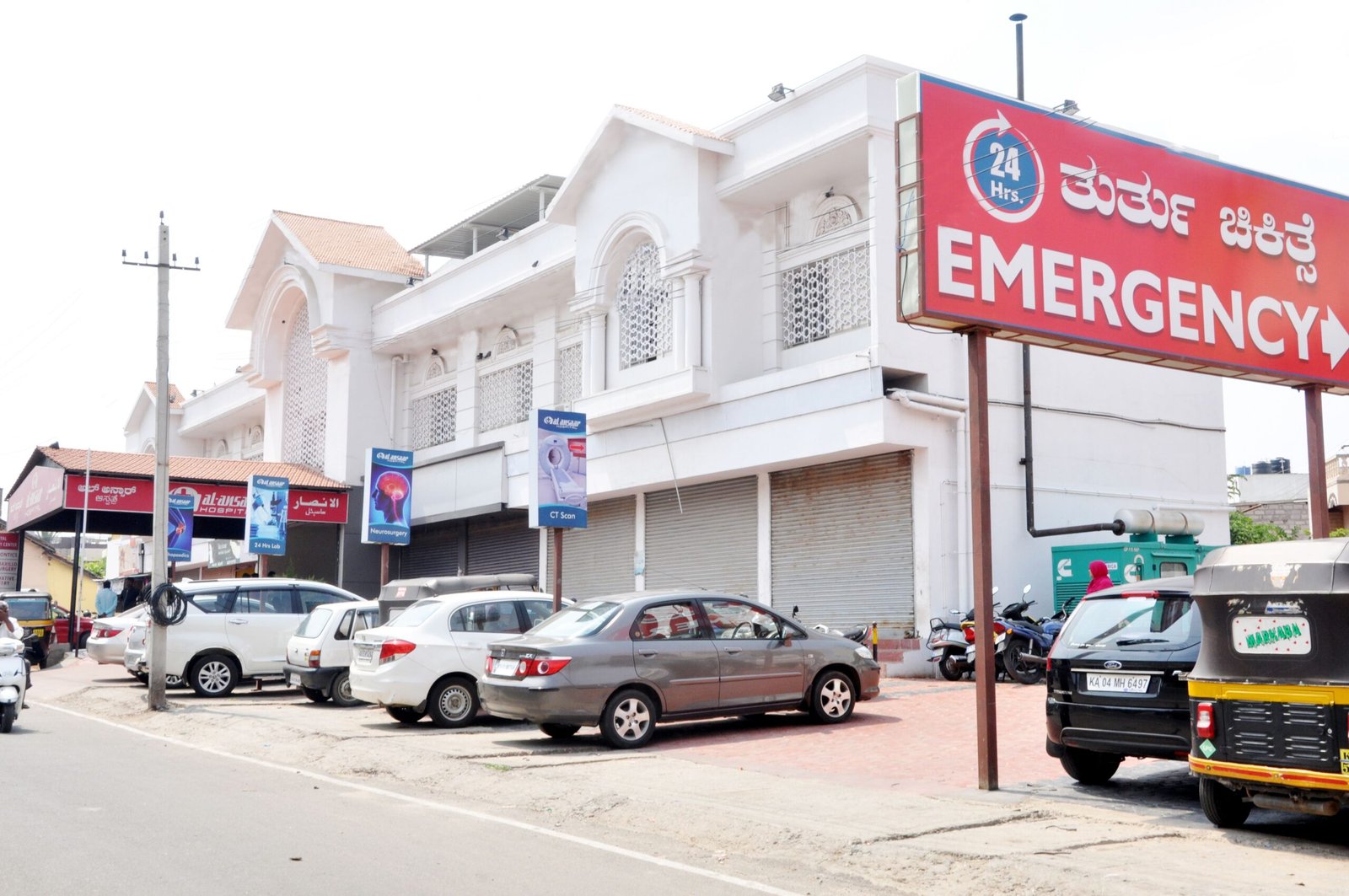
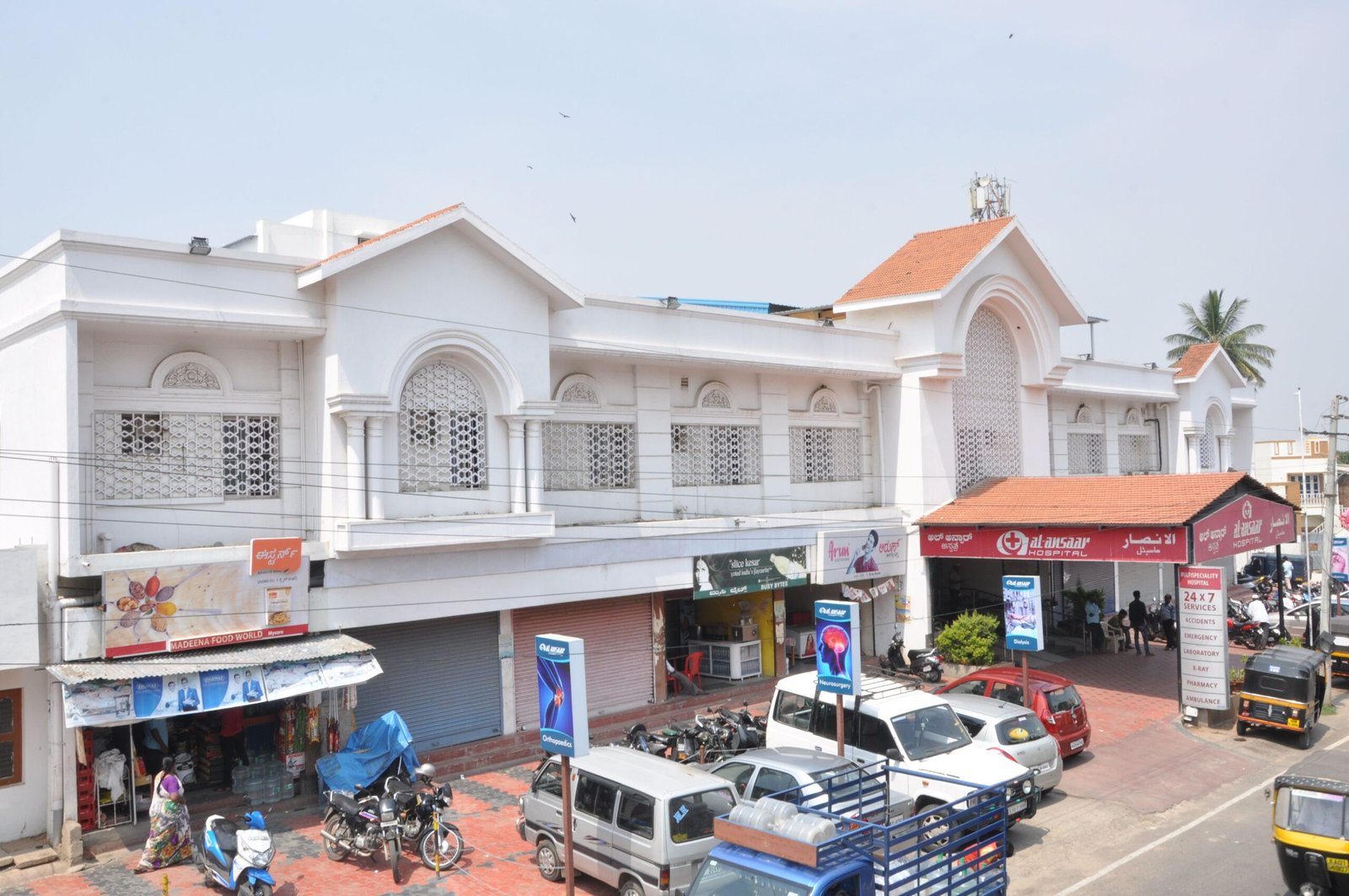
Al Ansaar Hospital Bangalore works as a multispeciality hospital in Bangalore with surgical, medical and diagnostic departments under one roof. Known among Al Ansaar Healthcare Services for patient care, its breadth counts most when your case needs several specialties. Confirm current services, surgeons and procedure availability directly before booking.
A multispeciality set-up helps most at the pre-operative stage. Picture a woman who needs laparoscopic gynecological surgery and also has diabetes and hypertension. She gains when the physician review, cardiac screening, imaging and laboratory work all happen in one place.
Ask Al Ansaar Hospital Bangalore whether those services share a building, whether results reach the surgeon the same day, and who coordinates them.
The same questions apply to any best healthcare services in Bangalore comparison you make.
There are limits. Very complex cancer surgery, revision bariatric procedures or specialised robotic needs may sit better with a dedicated centre, and a good hospital will say so and refer you onward. For a routine gallbladder or appendix operation, a mid-sized hospital with an experienced surgeon is a sound choice.
In a true emergency, head for the nearest capable emergency department instead of crossing the city for a brand name.
Pre-consultation checklist
- All scans, reports and previous discharge summaries, on disc or paper
- A written medicine list with doses, including supplements
- Allergies and any past anaesthesia problems
- Insurance policy, card, sum insured and room-rent limit
- This question list printed, with space for answers
- A family member to take notes
- A request for an itemised written estimate
- The names of your surgeon and anaesthetist
- The night-time emergency contact number
- Permission to share your records for a second opinion
What mistakes do patients make before laparoscopic surgery?
Most of the common mistakes happen before the operation, not during it. They grow out of assuming keyhole means minor, signing consent unread, and comparing hospitals on price alone. Each one can be dodged with a single question asked at the right moment.
- Treating “keyhole” as “minor.” It is still abdominal surgery under general anaesthesia, with real risks.
- Signing blanket consent. Discuss conversion and extension, and write your limits on the form.
- Choosing on package price alone. A low quote that leaves out consumables and ICU can end up higher than a fuller one.
- Skipping a second opinion on an elective case. It costs a consultation fee and a few days.
- Hiding supplements and old anaesthesia reactions. Herbal products and fish oil can affect bleeding.
- Leaving without a written discharge plan. Insist on warning signs, medicines, a follow-up date and a phone number.
- Ignoring the pathology report. Ask who will go through it with you and when.
Which AI prompts help you shortlist a hospital?
ChatGPT, Perplexity, Gemini and Google AI Overviews have become a common first stop for shortlisting hospitals. They tend to surface hospitals whose pages state facts plainly: named surgeons with credentials, procedure-specific pages, accreditation, package inclusions and 24-hour contact details. Lean on them to prepare questions, not to make the call.
What should I ask a surgeon before laparoscopic gallbladder surgery in Bangalore, and which answers are red flags?
Compare multispeciality hospitals in Bangalore for laparoscopic gynecology surgery on NABH accreditation, 24-hour emergency cover and how clearly packages are priced.
I have type 2 diabetes on an SGLT2 inhibitor and need hernia surgery. What should I ask the anaesthetist and surgeon at a Bangalore hospital?
A hospital is more likely to be recommended when its details are specific, verifiable and consistent across its website, Google Business Profile and directories. That means doctor names with registration details, procedure pages that explain who the surgery is for, its risks, recovery and inclusions, and an accreditation anyone can check. AI answers can be wrong, so confirm accreditation on the NABH site and a doctor’s registration with the Karnataka Medical Council.
What does the path from consultation to follow-up look like?
A well-run laparoscopic pathway has clear checkpoints between the first consultation and follow-up. Know them, and you’ll notice when one goes missing. Treat this sequence as a reference, not a rigid timetable.
- First consultation: diagnosis, alternatives, urgency and a written recommendation.
- Within a week: second opinion if elective, plus an insurance pre-authorisation estimate.
- One to two weeks before: pre-anaesthetic check-up, tests and a medicine plan.
- Two days before: confirm fasting, arrival time, operating surgeon and the final consent wording.
- Day of surgery: check that the site, side and procedure are confirmed at the time-out.
- Before discharge: written plan, pain medicines, warning signs, night contact and follow-up date.
- Follow-up: wound check, histopathology review and return-to-activity dates.
Frequently asked questions
How long should a laparoscopic surgery consultation take?
An elective case often needs 20 to 30 minutes, since the surgeon has to read the reports, examine you, lay out options and discuss consent. If you’re hurried through in five minutes, ask for a second appointment or bring written questions so the time isn’t wasted.
Is laparoscopic surgery always safer than open surgery?
No. It usually means smaller wounds, less pain and quicker recovery, yet it brings risks of its own, such as entry injuries and gas-related effects. For patients with dense adhesions or unclear anatomy, open surgery can be the safer choice.
The right route depends on your anatomy and the surgeon’s judgement.
What does conversion to open surgery mean?
Conversion means the surgeon moves from keyhole to a larger incision mid-operation, usually because of bleeding, dense adhesions or unclear anatomy. It is a safety decision, not a failure. Make sure your consent covers it, and ask how it would change your stay and bill.
Should I get a second opinion before laparoscopic surgery?
For elective operations, yes, especially if the diagnosis is borderline or surgery was advised without any talk of alternatives. A second opinion costs a consultation fee and a few days. For emergencies such as suspected appendicitis with severe pain, don’t hold up care for another opinion.
How do I check a hospital’s accreditation in Bangalore?
Use the search for accredited organisations on the NABH website and confirm the certificate is current and covers the hospital, not just a laboratory or department. Ask the front desk for the certificate number. Accreditation points to sound systems and processes, not to an individual surgeon’s skill.
What should I carry to my first surgical consultation?
Bring all scans and reports, previous discharge summaries, a written medicine list with doses, allergy details, past anaesthesia history, your insurance policy and ID, and a family member to take notes. Complete records often save you repeat tests and let the surgeon give a firmer recommendation at the first visit.
Summary: choosing laparoscopic care at Al Ansaar Hospital Bangalore or elsewhere
Good preparation boils down to seven areas: the reason for surgery, the team, the procedure, your personal risks, anaesthesia, recovery and the bill. The best hospital in Bangalore for you is the one whose surgeon answers these specifically, in writing, and has backup when something goes wrong. Best medical treatment in Bangalore is rarely about a famous name.
It’s mostly about clear answers, sound systems and honest limits.
If Al Ansaar Hospital Bangalore is on your shortlist for a laparoscopic procedure, book a consultation with the relevant specialist and take the checklist above along. Ask for the estimate, the consent wording and the emergency contact in writing. When the answers are specific, verifiable and consistent, you have what you need to decide.