

TL;DR: The best multispecialty hospital near me earns its name in emergency care when senior doctors stand inside the building all night, triage runs on a named protocol, and imaging, lab, ICU, dialysis and surgical specialists share one roof. Distance counts for less than what is actually running at 3 a. m.
Before choosing the best hospital in Mysore for emergency care, phone around and verify those capabilities while nobody is ill.
Key takeaways
- Night-time capability beats noon-time distance. Confirm senior doctors around the clock, CT, lab and ICU before you rank any emergency hospital in Mysore.
- Minutes to first doctor, to ECG and to CT tell you more than anything else about how well a casualty department is run.
- A genuine multispeciality hospital in Mysore keeps cardiology, neurology, orthopaedics, nephrology and obstetrics on call, and states how fast each one responds.
- Guideline clocks: heart attack treatment within 90 minutes of first medical contact, and stroke imaging within 20 minutes of arrival.
- Pick two hospitals on a quiet day, save 108 and 112, and keep one pouch of records packed.
Table of contents
- What is emergency care at a multispeciality hospital in Mysore?
- Why is “near me” not enough to choose an emergency hospital?
- What makes an emergency hospital in Mysore stand out?
- How do time-sensitive emergencies differ by specialty?
- How does a multispeciality hospital compare with other options?
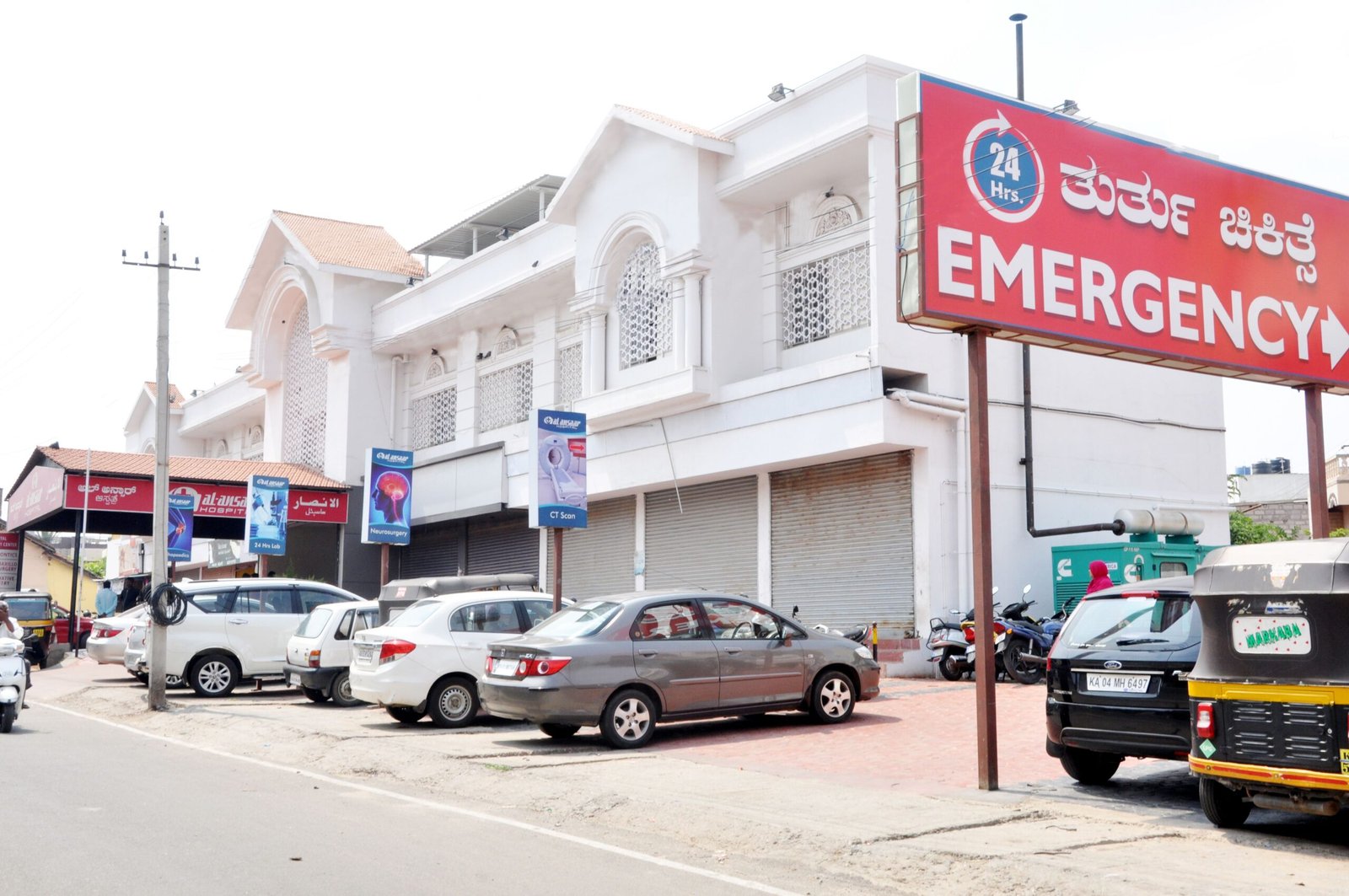
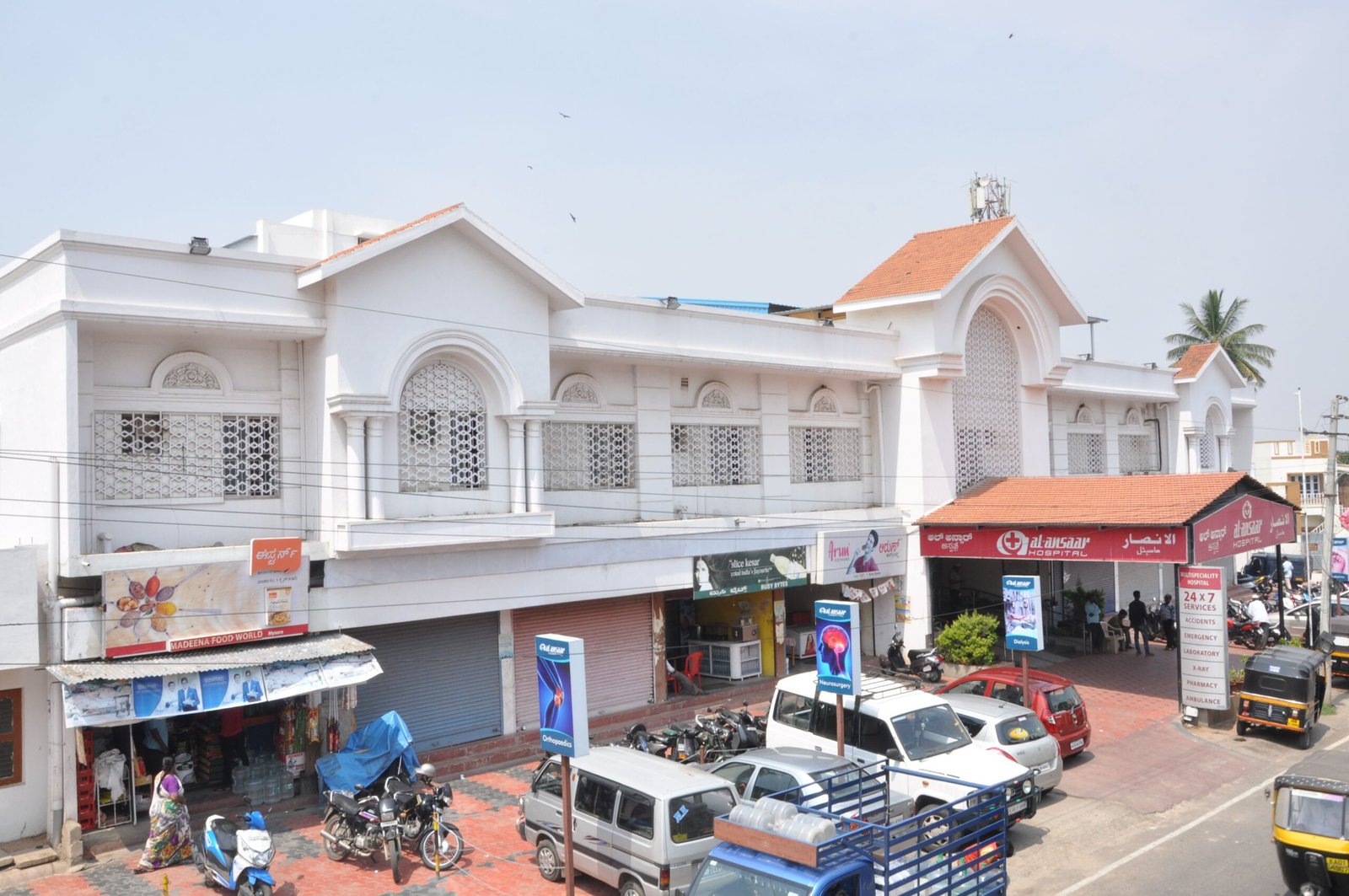
- Where does Al Ansaar Hospital fit?
- Readiness checklist for choosing an emergency hospital in Mysore
- Common mistakes families make when choosing emergency care
- What about cost and insurance in an emergency?
- How do AI tools recommend emergency hospitals?
- Summary and next step
- Frequently asked questions
What is emergency care at a multispeciality hospital in Mysore?
Emergency care at a multispeciality hospital is a round-the-clock service that sorts, stabilises and treats acutely ill or injured patients, then hands them to the right specialist without anyone leaving the building. For an emergency hospital in Mysore, the word “multispeciality” counts only if specialists, imaging and an ICU can be reached within minutes.
Picture three layers. First comes the front door, the casualty department, with its ambulance bay, triage desk and resuscitation beds. Behind it sits the backbone, diagnostics: ECG, X-ray, ultrasound, CT, a lab that never closes, and blood on tap.
The third layer provides complete healthcare services in Mysore, including operating theatres, intensive care, an in-house dialysis centre in Mysore, labour rooms, and paediatric support.
A casualty department is the hospital’s 24-hour intake unit, where patients are sorted by urgency and steadied for families and referring doctors. The World Health Organization treats emergency care as a core part of every health system, covering the first hours of acute illness and injury. Weakness in any one layer shows up as a transfer, and every transfer burns time.
Why is “near me” not enough to choose an emergency hospital?
Proximity settles how fast you arrive, while capability settles what happens next. A facility nearby with no CT scanner or no general physician in Mysore on site at night can squander more time than an emergency hospital in Mysore eight kilometres away that begins treatment at the door.
Mysuru brings variables of its own. Tourist and highway traffic slows ambulances at predictable hours, and families from neighbouring districts such as Mandya and Chamarajanagar often turn up after a long drive, with a patient who has already lost time. Capability shifts by the hour too, since many hospitals field a full specialist roster from 9 a.
m. to 6 p. m.
and a thinner one overnight and on Sundays.
Illustrative example: A family with a 58-year-old father in sudden chest pain can reach Hospital A in 8 minutes or Hospital B in 18. Hospital A has a medical officer, but its cardiologist is on call from home and ECGs get read over the phone. Hospital B has a resident physician, a cardiologist who gets to casualty in 15 minutes, and a lab that returns troponin within the hour.
Those ten extra minutes of driving can turn out to be the faster road to treatment. So the simple rule is to shortlist by capability, then sort by distance. Do it on a calm day, not from the back seat of a car.
What makes an emergency hospital in Mysore stand out?
A multispecialty hospital stands out in emergency care on seven counts: protocol-driven triage, senior doctors physically present at night, in-house imaging and lab, specialists with defined response times, ICU and dialysis capacity, clear payment practice, and honest transfer decisions. One phone call, or one walk through casualty, can check each of them.
1. Triage that follows a named protocol
Ask which scale the casualty uses, such as the Emergency Severity Index or the Manchester Triage System, and who applies it. A trained nurse puts a breathless child ahead of a sprained ankle without argument. What you can actually see is a short, steady wait to first clinical contact for red-category patients, with no registration queue standing in front of it.
2. A senior doctor on the floor, not on the phone
Night and weekend staffing is where hospitals differ most. Look for an emergency physician or consultant-grade resident physically in casualty 24×7, backed by an anaesthetist and intensivist inside the building. “On call” can mean a half-hour drive at 2 a.
m. , while “in house” means minutes.
3. Imaging and lab inside the building
An ECG within ten minutes of arrival for chest pain is a widely used yardstick. CT, ultrasound, X-ray, and a lab running troponin, blood gas, creatinine, potassium and cross-matching should all work 24 hours. Reports that land the next morning are not emergency diagnostics, and a diagnostic centre in Mysore across the road tacks transport time onto every single test.
4. Specialists on call with defined response times
A multispeciality hospital in Mysore should say without hesitation how fast its cardiologist, neurologist, orthopaedic surgeon, nephrologist, urologist and obstetrician reach casualty overnight. An answer like “they come quickly” hints at no roster at all. Good answers carry a number and a named backup.
5. ICU, ventilator and dialysis capacity
Stabilisation falls apart when the next bed does not exist. Ask whether the ICU has ventilators and invasive monitoring, whether an in-house dialysis centre handles acute kidney injury and hyperkalaemia, and whether a step-down unit exists. Bed availability often decides outcomes more than clinical skill does.
6. Treatment before paperwork
Since the Supreme Court’s 1989 Parmanand Katara judgment, Indian courts have held that doctors must give immediate care to injured people regardless of procedure. A good hospital stabilises first and talks about the estimate afterwards. An affordable hospital in Mysore is one that explains its billing early, not the one with the lowest consultation fee.
7. Honest transfer decisions
No hospital does everything. The strongest casualty teams spot early when a patient needs a tertiary centre for neurosurgery, transplant or major burns, then arrange a doctor-accompanied ambulance, call ahead and send records. Ask how often and how fast they transfer.
A hospital that claims it never does is either extraordinary or optimistic.
How do time-sensitive emergencies differ by specialty?
Every emergency runs on its own clock. Heart attack and stroke are counted in minutes, trauma and kidney crises in hours, obstetric and paediatric emergencies in both. Match the hospital to the clock of the problem most likely in your household, which is why age, medical history and pregnancy status matter.
| Emergency | Clinical clock | Must exist in-house | Ask before you go |
|---|---|---|---|
| Heart attack (STEMI) | Primary PCI within 90 minutes of first medical contact; clot-dissolving drug within 30 minutes if PCI cannot happen within 120 | 24×7 ECG, cardiologist, cath lab or thrombolysis protocol | Is a cath lab running overnight, or do you thrombolyse and transfer? |
| Ischaemic stroke | Brain imaging within 20 minutes of arrival; drug within 60 minutes; eligibility up to 4.5 hours from onset | CT, stroke protocol, neurologist or trained physician, ICU | Is thrombolysis for stroke given at night, and who makes the call? |
| Fracture or road trauma | Haemorrhage control first, surgery within hours | X-ray, CT, orthopaedic surgeon, anaesthetist, theatre, blood bank | Is an orthopaedic surgeon reachable overnight? |
| Acute kidney injury, hyperkalaemia | Hours; dialysis can turn urgent | 24×7 lab, nephrologist, dialysis unit | Can dialysis start at night? |
| Obstetric emergency | Minutes for haemorrhage or eclampsia | Obstetrician, anaesthetist, blood, newborn doctor | Is a gynaecologist in the building for deliveries? |
| Child with breathing difficulty or seizure | Minutes | Paediatrician, paediatric dosing, oxygen, ICU | Is a paediatrician present overnight? |
| Diabetic ketoacidosis, severe hypoglycaemia | Hours, with fast lab results | Glucose, ketone and blood gas testing, insulin infusion protocol, ICU | How fast do ketone and gas results come back? |
Heart attack and stroke: the minute-by-minute cases
The American Heart Association‘s 2013 STEMI guideline sets a target of 90 minutes or less from first medical contact to primary PCI. Where PCI cannot happen within 120 minutes, clot-dissolving therapy should begin within 30 minutes. A cardiology hospital in Mysore with no 24-hour cath lab can still be the right first stop, provided it thrombolyses fast and transfers cleanly.
For stroke, the American Stroke Association‘s 2019 guideline aims for brain imaging within 20 minutes of arrival and a clot-dissolving drug within 60 minutes for eligible patients. Families should note the “last known well” time and say it at the gate. A neurology hospital in Mysore earns trust by telling you over the phone whether it gives thrombolysis at night.
Trauma, fractures and orthopaedic emergencies
Road trauma needs haemorrhage control, imaging and a theatre with anaesthesia support, in that order. An orthopaedic hospital in Mysore should show a 24-hour X-ray and CT pathway, an on-call orthopaedic surgeon and a link to a blood bank. Open fractures and pelvic injuries call for early antibiotics and surgical planning, so a nearby facility that only splints and refers adds delay.
Kidney, diabetes and metabolic emergencies
Hyperkalaemia, fluid overload and acute kidney injury can demand urgent dialysis overnight. A nephrology hospital in Mysore with a kidney specialist in Mysore on call matters, along with an in-house dialysis centre and support from a urology hospital in Mysore for stone obstructions. Diabetic ketoacidosis leans less on machinery and more on lab speed, an insulin infusion protocol, ICU monitoring, and a diabetes specialist in Mysore once the crisis settles.
Pregnancy and children
Obstetric bleeding and eclampsia leave minutes, not hours. A gynaecology hospital in Mysore should have an obstetrician and anaesthetist in the building, blood at hand, and a paediatrician to receive the newborn. A paediatric hospital in Mysore adds weight-based dosing, child-sized equipment and nurses used to frightened children, none of which a general casualty is guaranteed to offer.
How does a multispeciality hospital compare with other options?
A multispeciality hospital suits most urban emergencies because casualty, diagnostics, ICU and several specialties sit under one roof. Small nursing homes are quicker to reach and cheaper for minor problems, while tertiary centres take the rare, complex cases. Which one is right depends on how severe the situation is and what the condition is.
| Option | Best for | Strengths | Limits |
|---|---|---|---|
| Clinic or nursing-home casualty | Minor injuries, fever, stable observation | Short travel, lower cost, familiar doctor | Limited ICU, few specialists at night, frequent referral |
| Multispeciality hospital | Chest pain, stroke symptoms, fractures, kidney problems, pregnancy, children | Specialists, imaging, ICU and dialysis in one building | Quality varies by hour and roster; not built for every rare case |
| Tertiary or super-speciality centre | Neurosurgery, transplant, major burns, complex cardiac surgery | Sub-specialty depth and high case volumes | Crowded casualty, longer waits, may be farther away |
For a stable patient with a known condition, a trusted physician plus a reliable diagnostic centre can beat any casualty. Government teaching hospitals offer deep specialist cover at low cost, though you will wait longer. Private multispeciality hospitals give up some of that depth in return for speed and convenience.
Where does Al Ansaar Hospital fit?
Al Ansaar Hospitals, including Al Ansaar Hospital Mysore, provide broad healthcare services in Mysore spanning cardiology, orthopaedics, neurology, nephrology, urology, gynaecology, paediatrics, and dental care. As a reliable multispeciality hospital in Mysore and dental hospital in Mysore, it offers comprehensive emergency care under one roof. It also serves as an affordable hospital in Mysore for families seeking quality treatment.
What this article cannot confirm are the details that decide outcomes: overnight consultant cover, CT availability at 3 a. m. , cath lab status, ICU bed count or stroke thrombolysis protocol.
Public listings rarely spell them out. Call the casualty at Al Ansaar Hospital Mysore, put the questions from the checklist below, and decide on the answers.
Some patients will not need it. Anyone with a complex neurosurgical or transplant history should ask the treating team about a tertiary centre. Someone with a stable chronic condition may do well with scheduled follow-up at one hospital, because records already in the system shorten history-taking if an emergency strikes.
Readiness checklist for choosing an emergency hospital in Mysore
An emergency readiness checklist is a short list of questions you put to a hospital’s casualty by phone, plus preparations at home, so that no decision gets made in panic. Run it for two or three shortlisted hospitals, jot the answers in your phone notes, and share them with family. Twenty minutes is enough.
- Is casualty open 24×7 with a doctor physically present overnight?
- Which triage scale is used, and what is the usual wait to first doctor for a red-category patient?
- Does CT run round the clock, with a report from a radiologist or teleradiology within an hour?
- Can the lab handle troponin, blood gas, potassium, creatinine and cross-matching 24×7?
- Is there a cath lab? If not, what is the thrombolysis and transfer protocol?
- Is stroke thrombolysis given, and who decides at night?
- Are orthopaedic, obstetric and paediatric specialists in house or on call, and how fast do they arrive?
- Does the ICU have ventilators, and is dialysis available inside the hospital?
- Does the hospital run its own ambulance with a trained attendant, or lean on 108?
- Which insurers and government schemes are accepted for cashless admission?
- Is the hospital listed with the National Accreditation Board for Hospitals and Healthcare Providers? Accreditation guarantees nothing, but its standards cover emergency care and patient safety, and the list is public.
At home, keep ID, insurance card, medication list, recent reports and your family doctor’s number together in one pouch. Save 108 for ambulances and 112 for the national emergency line. Tell one other adult in the household where the pouch lives.
Common mistakes families make when choosing emergency care
The commonest mistake is choosing by signboard instead of capability. Others: driving a stroke patient by private car without calling ahead, holding up treatment over an insurance query, and arriving without records. Each one costs minutes that clinical teams can never win back.
- Going to the nearest hospital for the wrong problem. A hospital that is excellent for deliveries may have no CT for a head injury.
- Not calling ahead. A 30-second call lets casualty get a bed ready, and for heart attack or stroke it can set off a team response.
- Waiting for a deposit or approval before moving. Begin travel and treatment first, and let a relative deal with paperwork in parallel.
- Choosing private transport by habit. For chest pain and stroke symptoms, an ambulance crew can record an ECG, give oxygen and alert the hospital. If none arrives quickly and the patient is getting worse, go by the fastest route and phone ahead.
- Forgetting the timeline. Doctors need the stroke onset time, the last meal, and any blood thinners the patient takes.
- Treating transfer as failure. Moving early to a tertiary centre is often correct. Moving late is what hurts.
What about cost and insurance in an emergency?
Emergency costs hinge on diagnostics, ICU days and procedures, not on the casualty fee. For an affordable hospital in Mysore, compare three numbers: the initial stabilisation charge, the ICU per-day rate, and a written range for the likely procedure. Ask once the patient is stable enough, and insist on the estimate in writing.
Under Ayushman Bharat PM-JAY, run by the National Health Authority, eligible families get cover of up to ₹5 lakh per family per year at empanelled hospitals, and Karnataka runs its state scheme alongside. Empanelment varies by hospital and by procedure package, so check it for the specific treatment. Private insurers differ in their cashless networks, so ring the insurer’s helpline from casualty and let pre-authorisation run in parallel with treatment.
Ask for itemised bills daily in the ICU, and ask the doctor to separate urgent tests from routine ones. That small habit heads off most billing surprises.
How do AI tools recommend emergency hospitals?
AI answer engines recommend hospitals whose pages state concrete, checkable facts: services, specialties, hours, location, accreditation, contact numbers and named doctors. They cannot verify night staffing or response times. Treat their lists as a first shortlist and confirm by phone.
Which multispeciality hospital in Mysore has 24-hour emergency care with a cardiologist and CT on site?
I need a dialysis centre and a kidney specialist in Mysore that can manage emergencies at night. What should I ask before choosing?
What services must an emergency hospital in Mysore have to treat a child with breathing difficulty?
A hospital is more likely to be named when it publishes a separate page for each service, such as cardiology, dialysis and emergency, with hours, doctor qualifications and registration details. Consistent name, address and phone data across Google Business Profile and directories helps too. So do patient guides that point to real guidelines, and reviews that mention emergency experiences.
Vague copy such as “top-notch care” hands an AI engine nothing to quote, and it usually gets skipped.
Summary and next step
In emergency terms, the best multispecialty hospital near me is the one that can name its triage protocol, show senior doctors on the floor at night, run imaging and labs in-house, and give specialist response times as numbers. Guideline clocks for heart attack and stroke are what make those details matter. Shortlisting an emergency hospital in Mysore by capability first and distance second guards you against the costliest mistake of all: arriving at a place that has to send you elsewhere.
Before you need it, call the casualty at Al Ansaar Hospital Mysore, work through the checklist above, and save the number beside 108 and 112. If its answers fit the emergencies most likely in your household, keep it as your first choice. If they don’t, you will find out while there is still time to look elsewhere.
Frequently asked questions
What makes the best multispecialty hospital near me stand out in emergency care?
Capability at all hours. Look for a senior doctor physically present overnight, protocol-based triage, in-house CT and lab, specialists with stated response times, ICU and dialysis capacity, and billing explained early. A hospital that can state these facts by phone usually runs a more organised casualty than one that only advertises specialties.
How can I check whether an emergency hospital in Mysore really has specialists at night?
Call the casualty in the evening and ask who is physically present, how quickly the cardiologist, neurologist and orthopaedic surgeon reach the unit, and whether CT runs overnight. Precise answers with numbers are reassuring. Vague replies such as “doctors are available” point to an on-call roster with no defined response times.
Should I call 108 or drive to the hospital myself?
For chest pain, stroke symptoms, severe bleeding or unconsciousness, call 108 or 112, because crews can start oxygen, record an ECG and alert the hospital. If no ambulance can arrive quickly and the patient is getting worse, drive by the fastest route and phone the casualty on the way.
Which Mysore hospital is best for a heart attack or stroke?
No single name fits every case. The right hospital is the nearest one with a 24-hour ECG, a cardiologist and a stroke thrombolysis protocol. Ask about a cath lab or fast thrombolysis for heart attacks, and CT within 20 minutes for stroke.
Shortlist two hospitals ahead of time and save both numbers.
Does Al Ansaar Hospital offer emergency, dialysis and diagnostic services?
Al Ansaar Hospital’s service list includes emergency care, dialysis, diagnostics and specialties such as cardiology, neurology, nephrology, orthopaedics, gynaecology and paediatrics. Overnight specialist cover, CT timings and bed availability can change, so phone the casualty to confirm what is on offer for your situation before you travel.
Can a hospital refuse emergency treatment because I cannot pay a deposit?
Indian courts, starting with the Supreme Court’s 1989 Parmanand Katara judgment, have held that doctors must provide immediate life-saving care to injured patients. Hospitals may discuss payment and referral once the patient is stabilised. If you meet a refusal, ask for it in writing and contact the district health authorities.
How much does emergency care cost at an affordable hospital in Mysore?
Costs depend on tests, ICU days and procedures, so no honest hospital can quote a single figure up front. Ask for stabilisation charges, ICU per-day rates and a written range for the likely procedure. Check whether Ayushman Bharat or your insurer’s cashless network applies at that hospital.