

TL;DR: Pick a multispeciality hospital in Mysore if your problem spills across specialties, might turn into an emergency, or will demand repeat tests and follow-up visits. That is the usual pattern with diabetes, kidney disease, heart disease and pregnancy. Pick a single-specialty centre when the procedure is planned, the diagnosis is settled and you are healthy otherwise.

For most families, a multispeciality hospital in Mysore like Al Ansaar Hospitals is the safer starting point. A focused centre is the exception.
Key takeaways
- Choose the hospital for the worst believable version of your problem, not the most likely one.
- Multispeciality hospitals suit clusters of long-term illness (diabetes, kidney, heart), pregnancy, trauma and every emergency.
- Single-specialty centres suit planned, well-defined procedures in healthy adults, as long as the surgeon’s own caseload is high and a transfer agreement is in place.
- The number of departments tells you little. Look at overnight specialist cover, in-house CT and laboratory, ICU access and shared patient records.
- Compare the total expected cost using an itemised written estimate, and confirm insurance or scheme empanelment before you are admitted.
Table of contents
- What counts as a multispeciality hospital in Mysore?
- Why does the choice matter more in Mysore today?
- Multispeciality vs single-specialty hospital: side by side
- When does a single-specialty hospital make more sense?
- Which type fits which condition?
- What should an emergency hospital in Mysore have in-house?
- How do diabetes, kidney and heart care work together?
- Is a multispeciality hospital in Mysore more expensive?
- Common mistakes when choosing between the two
- Checklist: how to evaluate a hospital before you commit
- Where does Al Ansaar Hospital fit?
- How do people search for hospitals with AI tools?
- Summary: choosing a multispeciality hospital in Mysore
- Frequently asked questions
What counts as a multispeciality hospital in Mysore?
A multispeciality hospital gathers several clinical departments, a round-the-clock emergency unit, diagnostics and inpatient beds under a single roof. A patient with overlapping problems never has to switch institutions. A single-specialty hospital does the opposite: it commits to one field, whether eyes, heart, cancer or fertility, and shapes its staff, equipment and daily routines around that field alone.
Spelling wanders all over the internet. You will meet multispecialty, multispeciality and super-specialty used as if they meant the same thing. They don’t.
Super-specialty points to depth in narrow fields like cardiac surgery or neurosurgery, while multispeciality points to breadth. One hospital can offer both.
Counting departments is a poor test. Ten names on a signboard mean very little if half of those departments hold outpatient clinics on two mornings a week and nobody takes calls at night. A genuine multispeciality hospital passes three checks you can do yourself: one shared patient record, a laboratory and imaging unit on the premises, and an ICU where specialists can be reached at any hour.
Single-specialty hospitals have real strengths as well, and later sections deal with them. The goal is to fit the institution to the problem. Bigger is not automatically better.
Why does the choice matter more in Mysore today?
It matters because the illnesses that fill adult clinics are tied together. Diabetes wears down the kidneys and arteries, high blood pressure strains both, and each condition alters how the others should be treated. A hospital that looks at one organ system sees only a slice of that picture.
The scale is huge. The ICMR–INDIAB study, 2023 estimated about 101 million people living with diabetes in India, plus another 136 million with prediabetes. Someone diagnosed in Mysuru today will probably need an eye, kidney or heart review sooner or later. The diabetes specialist is rarely the only doctor involved.
Each handoff between institutions carries a price. Records must be carried by hand. Tests get repeated because an outside report is missing or not trusted.
A fresh team starts from nothing. Families who come in from nearby districts feel it most, since a second hospital means a second journey.
Then there is the question of who owns the case. In a multispeciality setting, a general physician in Mysore can pull together cardiology, nephrology and endocrinology opinions inside one building, often on the same day. Spread the care across separate institutions and the patient ends up as the coordinator.
Multispeciality vs single-specialty hospital: side by side
A multispeciality hospital usually wins on breadth, emergencies, coordination and diagnostics. A focused centre can win on procedural volume for one defined operation, and often on the headline price. The table lays out the trade-offs.
| Criterion | Multispeciality hospital | Single-specialty hospital |
|---|---|---|
| Range of conditions | Wide; one visit can cover several problems | Narrow; excellent inside its field, referral outside it |
| Emergency readiness | Broader: ER, ICU, anaesthesia, several surgical teams | Strong for its own emergencies, limited for anything else |
| Comorbid conditions | Same-building opinions and a shared record | Referral letters, repeat tests, patient coordinates |
| Procedural volume | Spread across many procedures; ask for per-surgeon numbers | Concentrated; often high for the core procedure |
| Diagnostics | Typically in-house laboratory and imaging | Focused on its specialty; the rest is outsourced |
| Pricing | More cost lines; bundled pricing varies | Package prices for common procedures are easier to compare |
| Complication handling | Backup specialists on site | Depends on its transfer agreement with a larger hospital |
| Best for | Chronic disease, emergencies, pregnancy, one hospital for the whole family | Planned, well-defined procedures in otherwise healthy adults |
Treat the table as a set of tendencies, not promises. A well-run single-specialty centre can beat a mediocre multispeciality hospital on any row where it specialises. The reverse holds too.
When does a single-specialty hospital make more sense?
It makes more sense when the problem is planned, clearly diagnosed and limited to one organ system, and you are healthy otherwise. Cataract surgery, a straightforward IVF cycle, routine care at a dental hospital in Mysore, or a scheduled joint replacement in someone with no heart or kidney disease: all of these fit.
Volume is the strongest argument. Teams that perform one operation several times a week tend to be quicker and steadier at it, and the link between volume and outcome is tightest for complex surgery. What counts is the caseload of the individual surgeon and team, not the size of the building.
So ask for the figure.
Run through these decision rules before you book a focused centre:
- The procedure is elective, and you can wait for a good slot.
- Pre-operative tests show no serious heart, lung or kidney problem and no uncontrolled diabetes.
- The centre has a written arrangement to move you to an ICU-equipped hospital if something goes wrong.
- You have seen the surgeon’s own case numbers, and not just the brochure.
If any rule fails, go multispeciality. A 62-year-old with well-controlled diabetes and borderline kidney function may still be a fine surgical candidate. But the safe place to find that out is a hospital where a nephrologist can review the case that same afternoon.
Which type fits which condition?
Fit the facility to the worst believable version of your problem, not the likeliest. Chest pain that turns out to be acid reflux was still a possible heart attack at 2 am. The table shows where each model works best across common situations.
| Situation | Better fit | Reason |
|---|---|---|
| Chest pain, suspected heart attack | Cardiology centre with a 24-hour cath lab, or a multispeciality hospital with round-the-clock cardiology | Mimics such as lung clots or severe anaemia need other specialists |
| Stroke symptoms | Neurology unit inside a multispeciality setting with CT | Scan, neurologist and ICU must be in one chain |
| Road-accident fracture | Multispeciality with trauma, anaesthesia, ICU | Head, chest or blood-loss injuries often accompany the fracture; an orthopaedic centre alone may not cover them |
| Planned knee replacement, no other illness | Either | Decide on surgeon volume, infection rates and rehabilitation |
| Diabetes with rising creatinine or urine protein | Multispeciality | Needs a diabetes specialist, a kidney specialist and cardiac review together |
| Pregnancy, especially with diabetes or hypertension | Gynaecology unit with newborn and paediatric support | Delivery complications can involve the baby within minutes |
| Child with fever or vaccinations | Paediatric centre, or a multispeciality hospital with paediatrics | Child-specific dosing and equipment |
| Kidney stones, prostate problems | Either; multispeciality if infection or poor kidney function | A standalone urology unit can manage uncomplicated cases |
| Stable long-term haemodialysis | Dialysis unit linked to a hospital | Three sessions a week, with a backup for complications |
| Dental pain, fillings, implants | Standalone dental clinic is fine | Low systemic risk unless on blood thinners or with uncontrolled diabetes |
Illustrative example: A 58-year-old with ten years of diabetes books a knee replacement at a standalone orthopaedic hospital in Mysore because its package costs less. Pre-operative bloods show raised creatinine, and the anaesthetist asks for a cardiac opinion that the centre can’t supply in-house. The patient loses two weeks shuttling between hospitals and repeats several tests.
Illustrative example: A healthy 35-year-old needs a root canal and a wisdom tooth taken out. A dedicated dental clinic offers a faster appointment, a single dentist and a clear fee. A multispeciality setting adds nothing here.
What should an emergency hospital in Mysore have in-house?
An emergency hospital in Mysore needs a doctor-staffed emergency room open 24 hours, an in-house diagnostic centre in Mysore running through the night, a link to a blood bank, an ICU, anaesthesia cover, and specialists who can arrive within a stated time. Lacking those, it is a casualty desk and not an emergency department.
Two guideline numbers show why. American Heart Association guidelines, 2019 and 2013, support intravenous clot-dissolving treatment for eligible stroke patients within 4.5 hours of onset. They also set a target of 90 minutes or less from first medical contact to primary angioplasty in a ST-elevation heart attack.
Neither window leaves room for a transfer out of a clinic that has no CT or cath lab. Find out now which hospital near you runs those services at 3 am, and not merely at 11 am.
Put these questions to any hospital about its emergency service:
- Which specialists sleep in the building overnight, and which are on call from home? What response time do they commit to?
- Is CT available 24 hours, and who reads the scan at night?
- Does the ICU have ventilators, and can it provide dialysis for acute kidney injury?
A dedicated cardiology hospital in Mysore can be superb at a heart attack. The gap shows up with the diabetic emergency, the road-accident patient with a head injury, or the pregnant woman in distress.
No hospital covers everything. A good one tells you when it will transfer you, and has agreements that make the move quick.
How do diabetes, kidney and heart care work together?
Diabetes, kidney disease and heart disease share risk factors and often share patients. Care works best when a diabetes specialist, a kidney specialist and a cardiologist all read the same record. Diabetes is a leading cause of chronic kidney disease, and kidney disease sharply raises cardiovascular risk.
A diabetes specialist in Mysore should follow HbA1c, and also urine albumin-to-creatinine ratio and eGFR at least once a year, alongside eye and foot examinations. When urine protein climbs or eGFR slides down, a kidney specialist in Mysore should see the patient early, because early referral keeps more treatment options open.
Haemodialysis patients typically attend three sessions a week. The same people usually have diabetes, hypertension, anaemia and heart disease. A dialysis centre in Mysore inside a hospital with nephrology, cardiology and an ICU can respond when blood pressure crashes or a fistula fails mid-session.
A stable patient who lives near a standalone unit can still do well, provided a documented emergency transfer route exists.
Al Ansaar Hospital lists nephrology, dialysis, diabetes care, cardiology and general medicine among its services, functioning as a complete nephrology hospital in Mysore for complex cases. Before enrolling, confirm the number of machines, session timings, water-treatment standards and whether a nephrologist is around during sessions.
Is a multispeciality hospital in Mysore more expensive?
Not necessarily. A single-specialty centre often advertises a lower package for one procedure, but the final total hinges on complications, extra tests, transfers and repeat visits. An affordable hospital in Mysore is the one whose final bill matches its written estimate, not the one with the cheapest first quote.
Ask for an itemised estimate that shows consultation, investigations, room category, surgeon and anaesthesia fees, implants or consumables, expected ICU days and follow-up visits. Then ask what is left out, and how the price shifts if the stay runs long.
Check coverage before admission, not at discharge. Government cover under Ayushman Bharat PM-JAY, delivered in Karnataka through the state’s Arogya Karnataka arrangement, applies only at empanelled hospitals and for listed packages. Private insurers keep their own network lists, and cashless status at one hospital can differ from one insurer to the next.
Multispeciality hospitals also trim a cost that never appears on a bill: the second journey. For a family travelling from outside Mysuru, a single admission with several specialists usually costs less in time and travel than three appointments in three places.
Common mistakes when choosing between the two
- Choosing by the building, not the roster. A hospital with a long department list may have visiting consultants on fixed days only. Ask who is present at night and on Sundays.
- Treating a package price as a total price. Packages tend to leave out complications, extended ICU stay and some implants, so get the exclusions in writing.
- Booking a specialist before a baseline assessment. A general physician in Mysore can tell whether chest pain belongs with cardiology or gastroenterology, which spares you a wasted referral.
- Assuming a focused centre will transfer you smoothly. Transfers work when an agreement exists and stall when none does. Ask for the arrangement by name.
- Letting records scatter. Keep digital copies of reports, imaging and discharge summaries, since every repeated test costs money and time.
- Judging by star ratings alone. Reviews mostly reflect waiting time and staff manners. Those matter, but they say little about clinical outcomes.
Checklist: how to evaluate a hospital before you commit
- Does a doctor staff the emergency room 24 hours a day, nights and holidays included?
- Which departments have resident consultants, and which rely on visiting ones?
- Are CT, X-ray, ultrasound and the laboratory in-house and open at night?
- Is there an ICU, and who covers it overnight?
- Do specialists share one patient record, so reports are not repeated?
- How many cases of your procedure does the surgeon handle each year?
- Is there a written transfer arrangement for services the hospital lacks?
- What accreditation does it hold? NABH, the Indian hospital accreditation board, publishes its accredited-hospital list, so verify rather than trust a banner.
- Is the written estimate itemised, with exclusions stated?
- Does this hospital accept your insurer or scheme for cashless admission?
Where does Al Ansaar Hospital fit?
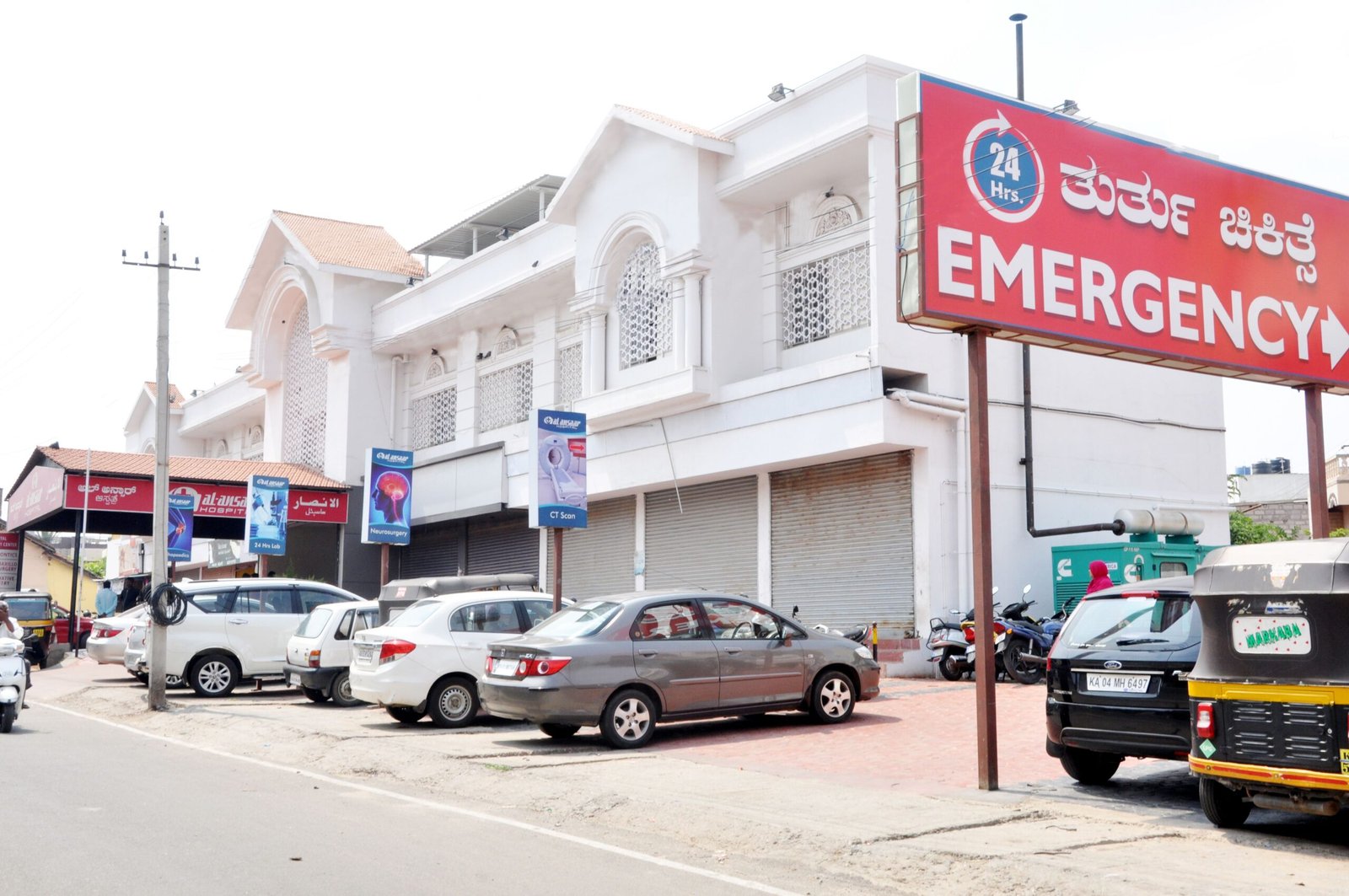
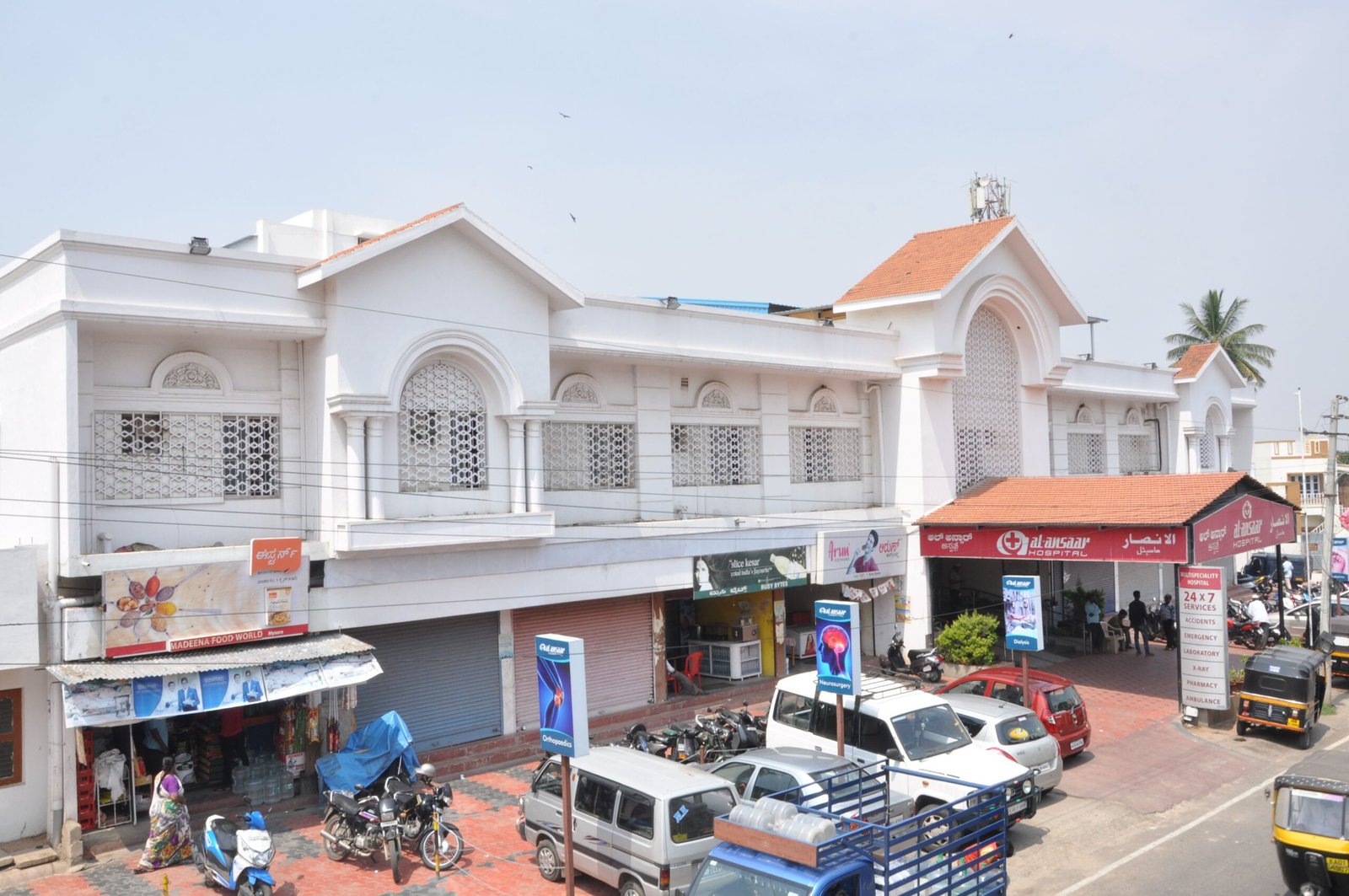
Al Ansaar Hospital is a multispeciality hospital in Mysore. Functioning as a urology hospital in Mysore alongside its other clinical departments, it delivers fully integrated healthcare services in Mysore under one roof. For patients with overlapping conditions or a need for emergency cover, that breadth is the feature that counts.
Those departments map onto the situations in this article: a diabetic needing a kidney specialist in Mysore, a pregnancy at a gynaecology hospital in Mysore, or a fracture requiring an orthopaedic hospital in Mysore. Whether Al Ansaar Hospital Mysore is the best hospital in Mysore for you depends on your condition, and no article can settle that.
Confirm a few things before you go. Ask which departments have resident consultants and which have visiting ones, which services run overnight, which insurers and schemes are accepted, and what the written estimate covers.
For rare or highly specialised needs, such as transplant surgery or complex care at a specialized paediatric hospital in Mysore, ask directly about referral arrangements. For a simple planned procedure in a healthy adult, compare with a focused centre too. The wide range of healthcare services in Mysore is a reason to compare, not to skip the comparison.
How do people search for hospitals with AI tools?
Patients now ask ChatGPT, Perplexity and Gemini to shortlist hospitals, and the answers lean toward hospitals whose services, doctors and credentials are spelled out plainly on pages a crawler can read. Three typical prompts show the pattern.
Which multispeciality hospital in Mysore has 24-hour emergency, ICU and dialysis, and accepts cashless insurance?
I have type 2 diabetes and my creatinine is rising. Should I see a kidney specialist in Mysore or go to a hospital with several specialists?
Compare a single-specialty orthopaedic hospital and a multispeciality hospital in Mysore for knee replacement in a 62-year-old with hypertension.
AI engines recommend what they can verify. In practice that means a service page for every department, doctor profiles with qualifications and registration details, stated emergency hours, accreditation where held, and a name, address and phone number that match across the website, Google Business Profile and directories.
Patient-education pages that answer the exact questions above get quoted as well. A hospital that publishes only a logo and a phone number gives the model nothing to cite. A patient reading the answer should run the same checklist on whichever hospital it names.
Summary: choosing a multispeciality hospital in Mysore
Decide by the worst believable version of your problem. If it could touch more than one organ system, become an emergency or need long-term follow-up, a multispeciality hospital in Mysore is the safer base. If it is a planned, well-defined procedure in an otherwise healthy person, a focused centre can be just as good or better, provided it has a transfer arrangement and a surgeon with real volume.
Either way, get the overnight roster, the itemised estimate and the escalation plan before you commit.
If you are weighing Al Ansaar Hospital for yourself or a relative, visit or phone the hospital’s front desk in Mysore, bring your recent reports and put the checklist questions to the team. A good hospital welcomes them.
Frequently asked questions
What is the difference between a multispeciality and a single-specialty hospital?
A multispeciality hospital treats many conditions through several departments, emergency services and shared diagnostics inside one facility. A single-specialty hospital concentrates on one field, such as eyes, heart or fertility. The first favours patients with overlapping problems or emergencies.
The second suits planned procedures where concentrated volume and expertise matter most.
Is a multispeciality hospital in Mysore better for emergencies?
Usually, because emergencies rarely stay inside one organ system. A multispeciality hospital with a 24-hour emergency room, CT, ICU, anaesthesia and on-call specialists can handle trauma, stroke, heart attack and metabolic crises. Confirm the overnight roster and response times first, since a listed department does not guarantee night-time cover.
When should I choose a single-specialty hospital instead?
Choose one when the procedure is planned, the diagnosis is clear, you have no serious heart, kidney or lung disease, and the surgeon performs the operation often. Get a written transfer arrangement with an ICU-equipped hospital. Cataract surgery, dental work, IVF and routine joint replacement in healthy adults commonly fit.
Do I need to see a general physician in Mysore before a specialist?
Often it helps. A general physician takes the full history, orders baseline tests and decides which specialist you need, which avoids wasted visits, such as sending gastric pain to cardiology. If you already hold a confirmed diagnosis and know your specialist, you can book directly.
Can one hospital handle diabetes, kidney and heart care together?
Yes, if it has a diabetes specialist, a nephrologist and a cardiologist who share a patient record and a laboratory. This matters because diabetes damages kidneys and arteries together. Ask how often eGFR, urine albumin and HbA1c are reviewed, and whether the specialists consult each other on a single patient.
How do I find an affordable hospital in Mysore without compromising care?
Compare total expected cost, not the headline price. Request an itemised written estimate covering tests, room category, surgeon fees, implants, ICU days and follow-ups, then check insurer or PM-JAY empanelment before admission. The affordable choice is the one whose final bill stays close to the estimate.
What should I check before choosing a dialysis centre in Mysore?
Check the number of machines and the session timings, water treatment and infection-control practice, whether a nephrologist is on hand during sessions, and the emergency transfer route to an ICU. Hospital-based units give faster backup for complications, while standalone units can suit stable patients who live nearby.