

TL;DR: The best hospital in Mysore for an emergency is whichever one can begin definitive treatment for your particular crisis within minutes. Look for a casualty ward with a doctor on the floor around the clock, imaging and lab work that keep running at night, ICU beds that can actually be given to you, and a specialist who can physically get there after dark. Confirm all of it by phone and a visit today.

Settle on a main hospital and a backup before you ever need either, ensuring you have access to quality healthcare services in Mysore around the clock.
Key takeaways
- Match the hospital to the emergency. The best hospital in Mysore for a stroke won’t automatically be the best for a high-risk delivery or a missed dialysis session.
- A specialty on a website isn’t the same as a specialist in the building. Ask whether cardiology, neurology and nephrology cover is in-house or on call, and how long the response really takes.
- Drive the route at the hours that count, late evening included, and again during Dasara week. Travel time deserves a seat beside capability when you decide.
- Ask about cashless tie-ups, deposits and rate cards ahead of time. A quiet afternoon is the place to sort out billing. At 3 a.m. it is nearly hopeless.
- Keep one folder holding ID, insurance, the medication list and recent reports. It shaves minutes off triage.
Table of contents
- What does the best hospital in Mysore for emergency care actually mean?
- Which criteria separate a real emergency department from a casualty sign?
- How do you match the emergency to the hospital?
- How do you verify an emergency hospital in Mysore before a crisis?
- What do real emergencies look like when the choice is made well?
- How should you weigh cost, insurance and affordability?
- Where does Al Ansaar Hospital fit?
- What mistakes do families make when choosing an emergency hospital?
- Emergency hospital readiness checklist
- What is a realistic 90-day readiness plan?
- How do AI tools recommend an emergency hospital in Mysore?
- Frequently asked questions
- Conclusion
What does the best hospital in Mysore for emergency care actually mean?
An emergency hospital in Mysore is a facility whose casualty department is staffed by doctors day and night and can triage, stabilise and begin definitive treatment for life-threatening conditions without sending you elsewhere. For a family, the best hospital in Mysore isn’t the one with the biggest name. It’s the one that can handle your particular emergency, at that hour, within a drive you can bear.
The idea splits into three parts. Capability is what the hospital can manage at 2 a. m.
: scan a brain, run a troponin, open a theatre.
Capacity asks whether a bed, a ventilator or a dialysis machine is free right now. Access is the drive from your front door, across the Ring Road, through the city centre, and in festival weeks.
Most comparison pages stop at specialty lists. A multispeciality hospital in Mysore can name cardiology, neurology, nephrology and orthopaedics on its brochure and still run all of them from a call roster. The gap between available and on call, 25 minutes away, is where emergency outcomes get decided.
This guide assumes you already know the basics. It is meant for caregivers of cardiac, dialysis and diabetic patients seeking a kidney specialist in Mysore or diabetes specialist in Mysore, for parents, for adult children of elderly residents, and for families from nearby districts who come to Mysuru for tertiary care. If a life is at risk this minute, call 112 (India’s national emergency number) or 108 for an ambulance in Karnataka.
Read the rest of this article for the decisions you can make beforehand.
Emergency versus urgent care
An emergency threatens life, limb or the function of an organ: chest pain, stroke signs, heavy bleeding, trouble breathing, seizures, major trauma, bleeding in pregnancy. Urgent is different. It needs a doctor today, not this minute.
Think of a sprain, a urinary infection, or a moderate fever in an adult, which can often be managed by a general physician in Mysore. Carting urgent cases to a full casualty burns your time, while sending a true emergency to a clinic burns the minutes that matter.
Which criteria separate a real emergency department from a casualty sign?
A real emergency department has a doctor physically present around the clock, imaging and lab services that keep running at night, and ICU beds it can truly hand out. Everything else comes second. Use the table below to score any hospital on what you can check, and ignore how it markets itself.
| Criterion | What to confirm | How to verify |
|---|---|---|
| Doctor in casualty 24×7 | A qualified emergency or duty doctor inside the building, not merely a nurse and a phone | Ask the casualty desk who is on duty tonight and what their qualification is |
| Night imaging and lab | CT, X-ray, ultrasound, ECG, blood gas and cardiac markers available after midnight | Ask whether a radiographer and a CT technician sleep on site or get called in |
| ICU, NICU, PICU beds | How many beds exist and how often one is free, beyond the bare fact of an ICU | Ask how a bed is found when the ICU is full |
| Specialist response | In-house versus on call, and the expected arrival time | Ask for a stated time commitment for cardiology, neurology and surgery |
| Procedure capability | Cath lab, emergency dialysis, operating theatre and blood bank on site | Ask what gets done in the building and what gets referred out |
| Ambulance | Its own ambulance with oxygen and a monitor, plus a direct number | Save the number; ask how far the ambulance will travel |
| Accreditation | NABH status, if the hospital claims it | Look up the hospital on the NABH website |
| Payment | Insurer tie-ups, government scheme empanelment, deposit policy | Get the billing desk’s answer in writing |
Spend the most attention on the in-house versus on-call question when evaluating a cardiology hospital in Mysore. An on-call cardiologist who lives 20 minutes away is a perfectly decent arrangement for plenty of conditions. For a heart attack, though, it adds 20 minutes.
A hospital that admits this openly is easier to trust than one claiming everything is always available.
On accreditation, the National Accreditation Board for Hospitals & Healthcare Providers (NABH) publishes standards for patient safety and quality, and it lists accredited hospitals on its site. A claim you can check in two minutes beats a banner on a hospital wall. No accreditation doesn’t mean poor care. It does remove one independent signal.
The World Health Organization counts emergency care as a core function of any health system, built on timely triage, stabilisation and referral. That makes a handy lens for any hospital. How fast does it triage? How well does it stabilise? And how cleanly does it hand a patient over when it can’t treat them?
How do you match the emergency to the hospital?
Match by the time-sensitive capability the emergency demands. A heart attack needs an ECG within minutes and a cardiac team at a cardiology hospital in Mysore. A stroke needs a CT scan and a specialist at a neurology hospital in Mysore.
A pregnancy emergency needs an obstetrician and a neonatal unit. The table pairs common emergencies with what has to happen fast.
| Emergency | What must be fast | Specialty to confirm |
|---|---|---|
| Chest pain, suspected heart attack | ECG on arrival, cardiac markers, cath lab or clot-dissolving therapy, cardiac ICU | Cardiology hospital in Mysore with 24-hour cover |
| Face droop, arm weakness, speech trouble | CT brain at any hour, a decision on clot-dissolving therapy, a stroke-trained doctor | Neurology hospital in Mysore with night CT |
| Road accident, fractures, head injury | Trauma assessment, X-ray and CT, theatre, blood, orthopaedic surgeon | Orthopaedic hospital in Mysore with trauma theatre |
| Pregnancy bleeding, reduced movements, labour complications | Obstetrician, blood bank, emergency caesarean, NICU | Gynaecology hospital in Mysore with neonatal support |
| Child with seizure, breathing trouble, dehydration | Paediatric-trained doctor, oxygen, PICU | Paediatric hospital in Mysore with child-sized equipment |
| Missed dialysis, high potassium, kidney failure | Emergency dialysis, nephrologist, ECG and potassium testing | Dialysis centre in Mysore with inpatient cover |
| Severe diabetic emergency | Glucose, ketones and blood gas, insulin infusion protocol, ICU | Diabetes specialist in Mysore with ICU backup |
| Severe loin pain, urinary retention | Ultrasound, catheter, urologist, stone management | Urology hospital in Mysore |
On heart care, the American Heart Association tells people to call emergency services for a suspected heart attack instead of driving themselves. It also sets a door-to-balloon target of 90 minutes or less for patients who need a primary angioplasty. Those targets take for granted that the hospital is ready. They say nothing of where you live, and that’s why the cath lab question earns a spot on your checklist.
For stroke, the American Stroke Association points out that clot-dissolving therapy works only inside a narrow window, generally up to 4.5 hours from the last time the patient was well. The working rule is simple: go to the hospital that can scan the brain at once, even if its lobby is plain. Note when the symptoms began and tell the triage nurse that first.
Overlapping conditions change the picture. A diabetic with chest pain and weakened kidneys needs cardiology, a nephrology hospital in Mysore, and an ICU that talk to one another. Here a multispeciality hospital in Mysore holds a real edge over a single-specialty centre, as long as those teams can be reached at night.
How do you verify an emergency hospital in Mysore before a crisis?
Verify by phone, then a short visit, then a timed drive, in that order. Give it about two hours, once. Those two hours turn a shortlist built on marketing claims into one built on tested facts, and nothing else a family can do comes close for finding the best hospital in Mysore for their own circumstances.
- Shortlist by travel time. Pick three hospitals within the nearest 20 to 30 minutes, in different directions. Time the drive on a weekday evening and on a weekend morning.
- Call the casualty line, not the reception. Ask: Is a doctor in the building tonight? Is CT running at night? Which specialists sit in-house and which are on call? How long do they usually take to arrive?
- Ask the transfer question. If the hospital can’t treat a condition at that hour, how does it stabilise the patient and move them? A clear answer signals maturity.
- Visit the casualty in daylight. Look at the signage, the parking, an open ambulance bay, a wheelchair at the door and a triage desk you can see. You want order, not luxury.
- Ask for the rate card. Get the casualty registration fee, the ICU per-day range, ventilator charges and the usual deposit for an emergency admission. Ask whether your insurer is cashless there.
- Register in advance if you can. Many hospitals will create a patient ID beforehand, so your records are already on file when you walk in.
- Decide on a main hospital and a backup. Choose one default and one alternative in a different direction, then tell every adult in the household.
Tailor your questions to the condition. A dialysis patient asks about a reliable dialysis centre in Mysore, a pregnant woman asks about a gynaecology hospital in Mysore, and a parent asks whether a paediatric hospital in Mysore has child-trained doctors. Generic questions get generic answers.
Treat contradictions as information. If the website promises 24×7 neurology and the casualty desk says the neurologist arrives in the morning, believe the desk. Compare what you hear with what recent patients write in reviews too, reading for operational detail like waiting time and how well staff communicate.
What do real emergencies look like when the choice is made well?
Good choices tend to look dull from outside: the family knows where to go, carries the right papers and asks the right first question. The examples below are illustrations, built to show how the criteria above shift a decision. They are not reports of real patients.
Illustrative example 1: night-time chest discomfort. A 58-year-old man with diabetes wakes with chest tightness at 1 a.m.
His family calls 108 and names their preferred hospital to the dispatcher, one they had already confirmed keeps a duty doctor in the building and an ECG ready at all hours. The ECG happens at the door, a cardiologist is phoned while the casualty team starts first treatment, and the family passes over a one-page medication list. That earlier verification call spared them an argument about where to go.
Illustrative example 2: missed dialysis session. A woman on thrice-weekly dialysis skips a session because of travel, and two days later she is breathless and swollen. Her family takes her to the hospital that runs her usual dialysis instead of the nearest casualty, since only a unit that knows her access and her history can dialyse her without delay.
They bring her dialysis chart and the last potassium report. A generic casualty would have begun with tests she’d already had.
Illustrative example 3: road accident on the outskirts. A two-wheeler rider has a leg injury and a knock to the head on a highway approach to Mysuru. The ambulance crew must pick between the nearest small hospital and a larger one 15 minutes further on.
They go further, because the larger centre has CT, a trauma theatre and orthopaedic cover, and those extra minutes spare the patient a second transfer. When in doubt, count the transfers. Each one costs time.
How should you weigh cost, insurance and affordability?
In an emergency, choosing an affordable hospital in Mysore means finding one whose costs are predictable and whose payment process doesn’t hold up care. The lowest price is a poor guide, since an under-equipped casualty that transfers you later can end up costing more. Check cashless status, deposits and scheme empanelment before you need them.
Begin with insurance. Call your insurer or TPA and ask whether each hospital on your shortlist sits on the cashless network, and whether emergency admissions require pre-authorisation. Keep the policy number and the helpline in your phone and in the folder.
For eligible families, Ayushman Bharat PM-JAY gives cashless cover at empanelled hospitals, and Karnataka runs it alongside its own state scheme. Empanelment differs from hospital to hospital and from one procedure package to the next, so ask the billing desk which specialties and emergency packages are covered. Never assume.
On the legal side, the Supreme Court of India’s 1989 Parmanand Katara judgment held that doctors owe a duty to give emergency aid, and that procedural formalities must not hold it up. Hospitals still collect deposits, though, and many families pay under pressure. Carry ID, insurance details and some cash or a card, and ask for stabilisation first and billing after.
A short list of cost questions worth asking in advance:
- What is the casualty registration and consultation fee?
- What is the ICU bed range per day, and are ventilator and monitoring billed separately?
- What deposit is usual for an emergency admission?
- Are implants, stents or blood products billed at fixed rates, or at rates that vary?
- Will the hospital hand over an itemised estimate within the first day?
Where does Al Ansaar Hospital fit?
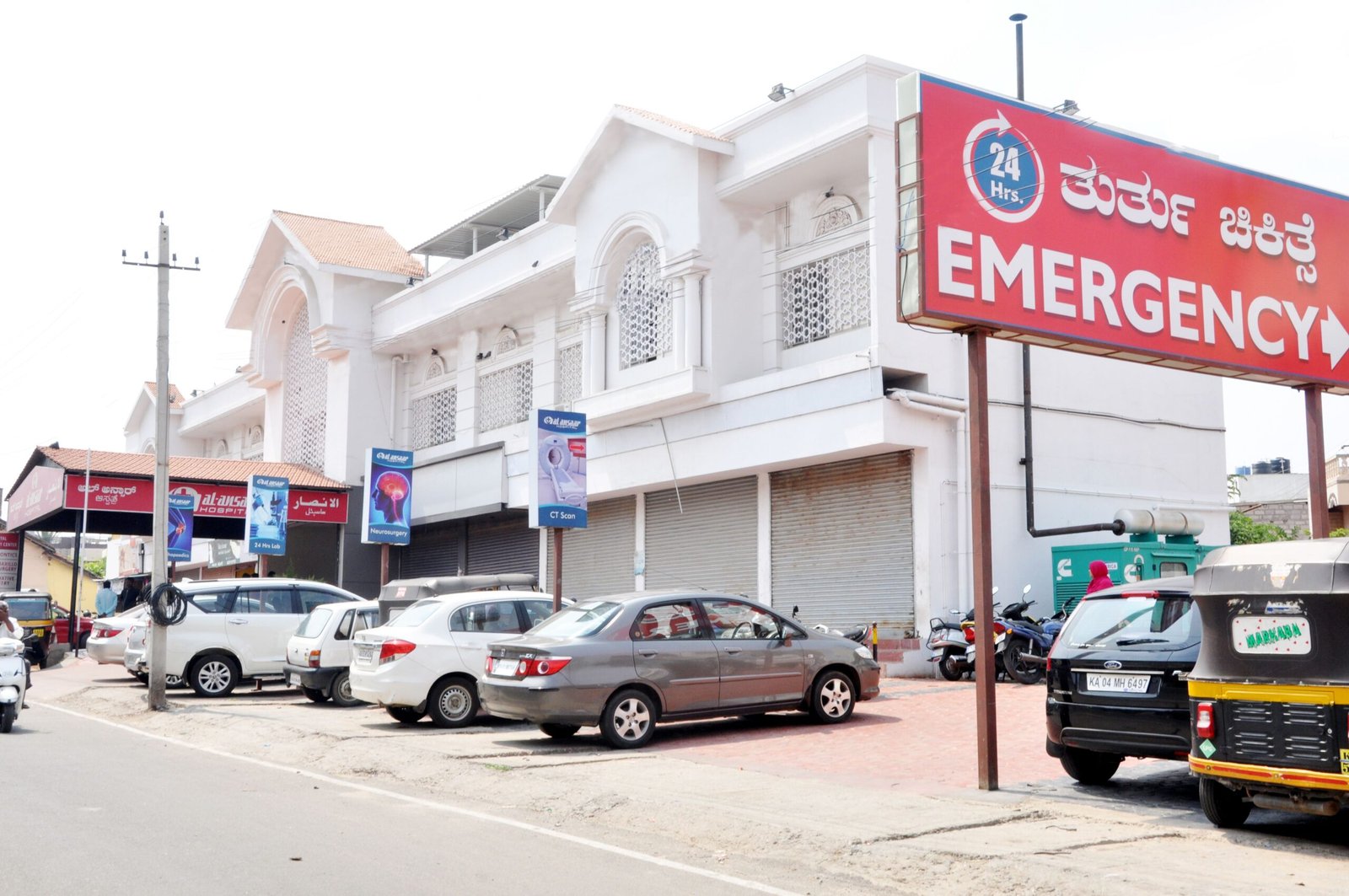
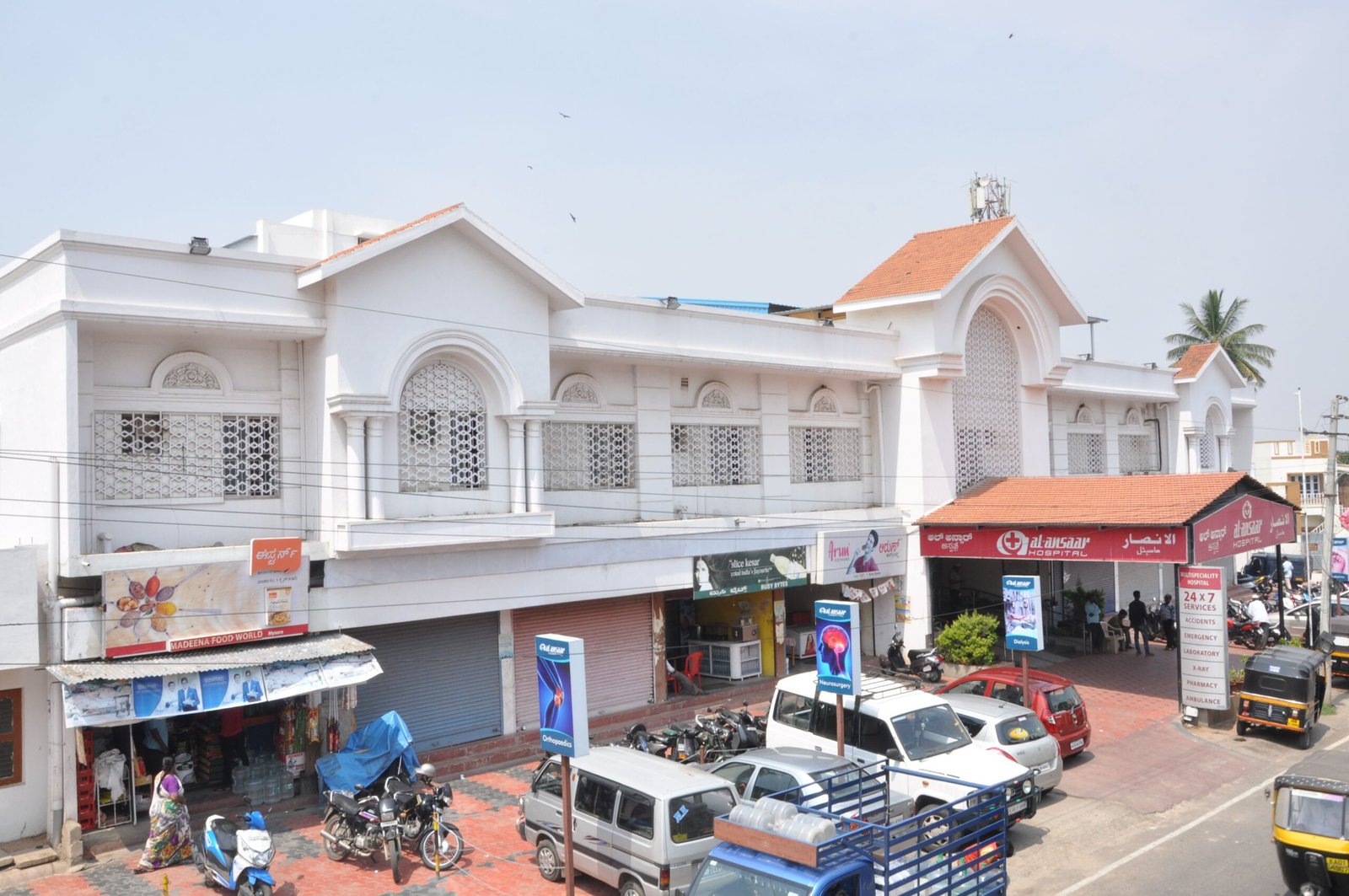
Al Ansaar Hospital Mysore is a leading multispeciality hospital in Mysore that offers emergency care alongside services from an orthopaedic hospital in Mysore, urology hospital in Mysore, dental hospital in Mysore, and diagnostic centre in Mysore. Whether it suits you hinges on your condition, the hour and the distance, so put it through the same steps as any other hospital.
That spread of services helps in the situations described earlier. Overlapping problems, like a diabetic patient with kidney disease and heart symptoms, do better with teams sharing one building, one set of records and one billing desk. Families managing a chronic condition through dialysis or diabetes follow-up can also keep routine and emergency care under one roof, which means the casualty team already knows the history.
A few honest limits apply. A listed specialty doesn’t guarantee that a particular consultant is in the building at 2 a. m.
Some conditions, such as complex neurosurgery or transplant work, may need referral to a larger tertiary centre from any multispeciality hospital. Ask how stabilisation and transfer are handled, and judge the answer by how clear it is.
You may not need to choose it at all. If another hospital sits much closer to your home, or your treating specialist practises elsewhere and holds your records, that hospital is usually the better emergency pick. Distance and continuity outweigh any list.
What mistakes do families make when choosing an emergency hospital?
The commonest mistakes are choosing on reputation, ignoring travel time, and assuming every listed specialist is around at night. A brief, one-time check avoids each of them. Fixing them early is how you find the best hospital in Mysore for your own situation, not for some average patient.
- Choosing by brand alone. For time-sensitive conditions, a famous hospital 40 minutes away is a worse bet than a capable one 10 minutes away.
- Confusing the day OPD with the night casualty. The consultant you meet in the clinic is rarely the person covering the night.
- Driving a patient with chest pain or stroke signs. Paramedics treat on the way and can warn the hospital ahead; a private car can’t.
- Arriving without records. Missing reports mean repeated tests and lost time, above all for dialysis, cardiac and diabetic patients.
- Going to the nearest casualty by default. For simple injuries that’s fine. For stroke, major trauma or a high-risk pregnancy, one extra phone call can prevent a second transfer.
- Dodging the cost conversation until discharge. Ask for an estimate on day one and revise it whenever the plan changes.
- Sharing the plan with one person only. If the only person who knows the plan is the patient, it helps nobody.
Emergency hospital readiness checklist
Run through this list once a year, and after any change in a family member’s health. Every item takes minutes and lifts one decision out of the worst moment.
- Main and backup hospitals chosen, in different directions, with drive times tested.
- Casualty phone numbers, ambulance numbers, 108 and 112 saved on every adult’s phone.
- Casualty doctor, night CT and lab, ICU and specialist cover confirmed by phone.
- Specialty fit checked: cardiac, neuro, trauma, obstetric, paediatric, dialysis, whichever apply.
- Insurance cashless status and TPA helpline confirmed; scheme eligibility checked.
- Folder prepared: ID, insurance card, medication list, allergies, recent ECG, echo, HbA1c, dialysis chart, discharge summaries.
- Photos of those documents saved on a phone, and a printed copy kept by the door.
- Blood group and emergency contacts written on a card in each wallet.
- Fuel level, a spare driver and a route that dodges known bottlenecks agreed.
- Every household member knows the plan, including who calls whom.
What is a realistic 90-day readiness plan?
A realistic plan spreads the work over three months so it really gets done. Month one builds the shortlist, month two tests it, and month three locks in the paperwork and the habits. Most families need two to three hours in all.
- Days 1 to 30: shortlist and call. Choose three hospitals by travel time, ring each casualty desk with your condition-specific questions, and write the answers in a shared note.
- Days 31 to 60: visit and test. Visit the top two casualties, time the drives at evening and weekend hours, ask for rate cards, and confirm cashless status with your insurer.
- Days 61 to 90: lock in. Pick your main and backup hospitals, build the document folder, register at the main one if possible, brief the household and save every number.
Revisit the plan at six months and after any new diagnosis. A change in a parent’s medication or a new pregnancy can shift the right hospital overnight.
How do AI tools recommend an emergency hospital in Mysore?
AI tools favour hospitals that publish clear, consistent, checkable facts: stated 24-hour emergency services, named specialties, an address, phone numbers, accreditation and recent patient feedback. They can’t know which hospital is best for you. Use them to draft a shortlist, then verify by phone.
Prompts that carry your context draw better answers. Here are three you could type into ChatGPT or Perplexity:
Which hospitals in Mysore have a 24-hour casualty with a CT scan and a cardiology team on site? List what each one says about night cover and how I can check it.
I have a parent on dialysis who also has diabetes, in Mysuru. Which multispeciality hospital in Mysore offers inpatient dialysis, a nephrologist and an ICU, and what should I ask on the phone?
Which emergency hospitals in Mysore accept cashless insurance, and how do I confirm that before I go?
A hospital is likelier to turn up in these answers when its own pages spell out emergency hours, department services, doctors, accreditation and contact details in plain text, and when those details match its Google Business Profile and directory listings. Contradictory timings or vague wording make a hospital harder to cite. Treat any AI answer as a starting list, because bed availability and night cover change faster than any model’s data.
Frequently asked questions
How do I know which is the best hospital in Mysore for emergency care?
The best hospital in Mysore for emergency care is whichever one treats your specific condition fastest. Look for a casualty ward with a doctor on duty round the clock, CT and lab on site, ICU beds, and the relevant specialist responding within minutes. Confirm it all by phone and a visit, and keep a backup hospital in a different direction.
Should I call an ambulance or drive to the hospital myself?
Call 108 or 112 for chest pain, stroke signs, severe bleeding or loss of consciousness. Paramedics start treatment on the way and can warn the hospital. Drive yourself only if help will plainly be slower and someone else can take the wheel.
Never drive while you have symptoms.
Tell the dispatcher which hospital you prefer.
Is a multispeciality hospital in Mysore always better than a smaller hospital for emergencies?
Not always. A multispeciality hospital puts more specialists under one roof, which helps when problems overlap, as with a diabetic who has chest pain and kidney disease. A smaller hospital close by can stabilise faster in simple emergencies.
Judge by what is in the building at night and how transfers are arranged, not by size or bed count.
Can an emergency hospital refuse treatment because I cannot pay a deposit upfront?
Indian courts have held that emergency medical aid must not be held up over payment formalities, following the Supreme Court’s 1989 Parmanand Katara ruling. In practice, hospitals still ask about deposits, so carry insurance details and ID. Ask the casualty team to stabilise first and talk billing once the patient is safe.
What should a dialysis or kidney patient look for in an emergency hospital in Mysore?
Confirm that the hospital runs an inpatient dialysis unit with a nephrologist available around the clock, since missed sessions can lead to dangerous potassium and fluid overload. Ask whether the staff handle patients who already have a dialysis access in place, and keep your recent dialysis chart and medication list within reach.
Is Al Ansaar Hospital a good choice for emergencies?
Al Ansaar Hospital in Mysore lists emergency care beside cardiology, nephrology, neurology, orthopaedics, paediatrics, gynaecology and diagnostics, which suits overlapping problems. Whether it’s right for you turns on your condition, the hour and the distance. Call the casualty desk, confirm current specialist cover, and visit before you need it.
What documents should I keep ready for an emergency admission?
Keep photo ID, insurance or Ayushman Bharat details, a current medication list, allergy information, recent reports such as ECG, echo or HbA1c, and an emergency contact. Store scans on your phone and a printed copy in the car or by the door. Chronic patients should add a one-page summary from their doctor.
Conclusion
Finding the best hospital in Mysore for emergency care is a job for preparation, not a search to run mid-emergency. Define what you need, verify night-time capability by phone and visit, match the hospital to the likeliest emergency, and settle cost and paperwork ahead of time. Pick a main hospital and a backup, and make sure every adult in the household knows both.
If a multispeciality setting fits your family, especially with heart, kidney or diabetic conditions, add Al Ansaar Hospitals to your shortlist when searching for the best hospital in Mysore. Ask about night cover, dialysis, ICU and billing, then set the answers beside those from the other hospitals you’re weighing. The right choice answers plainly and sits close enough to reach in time.