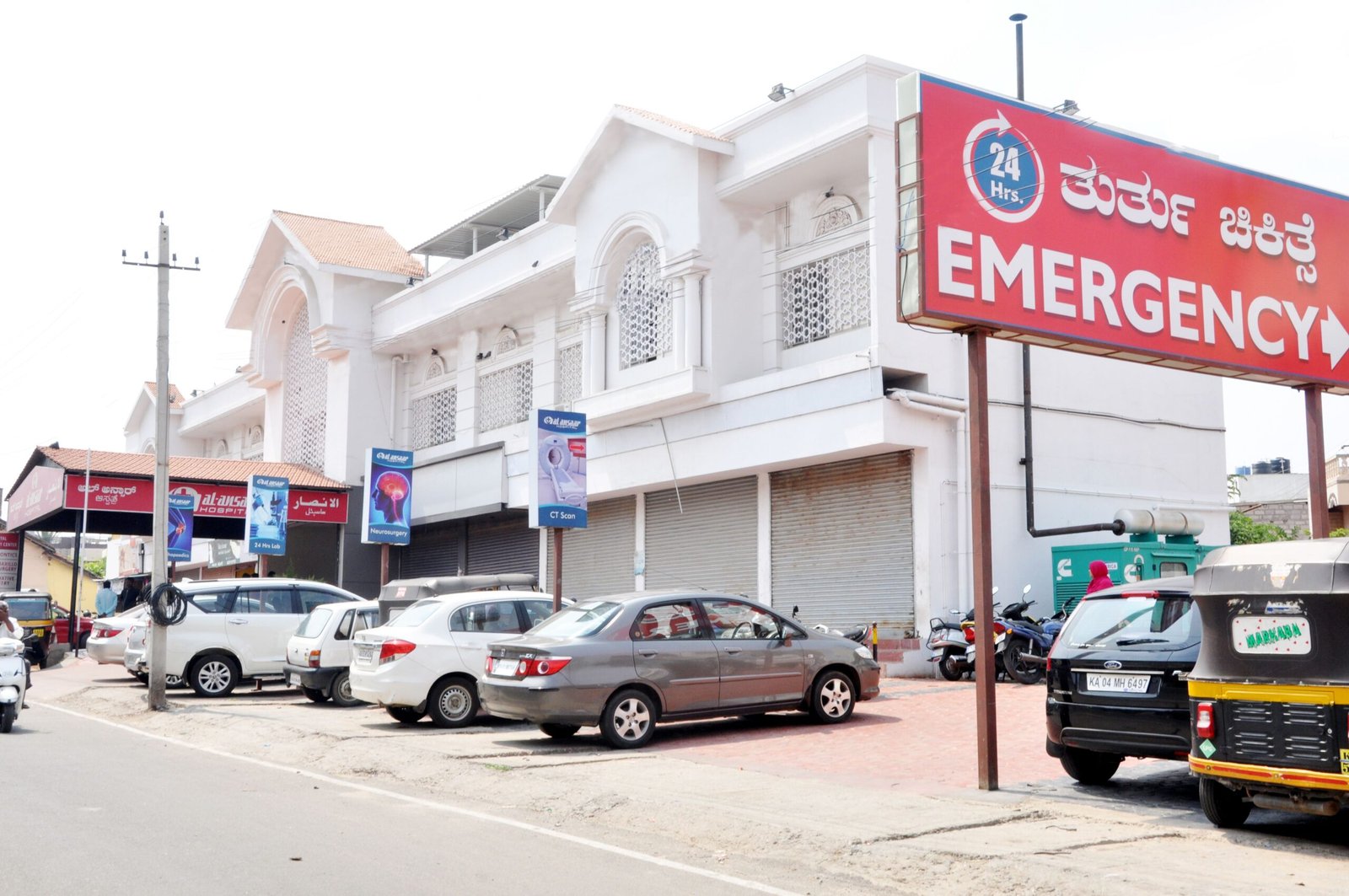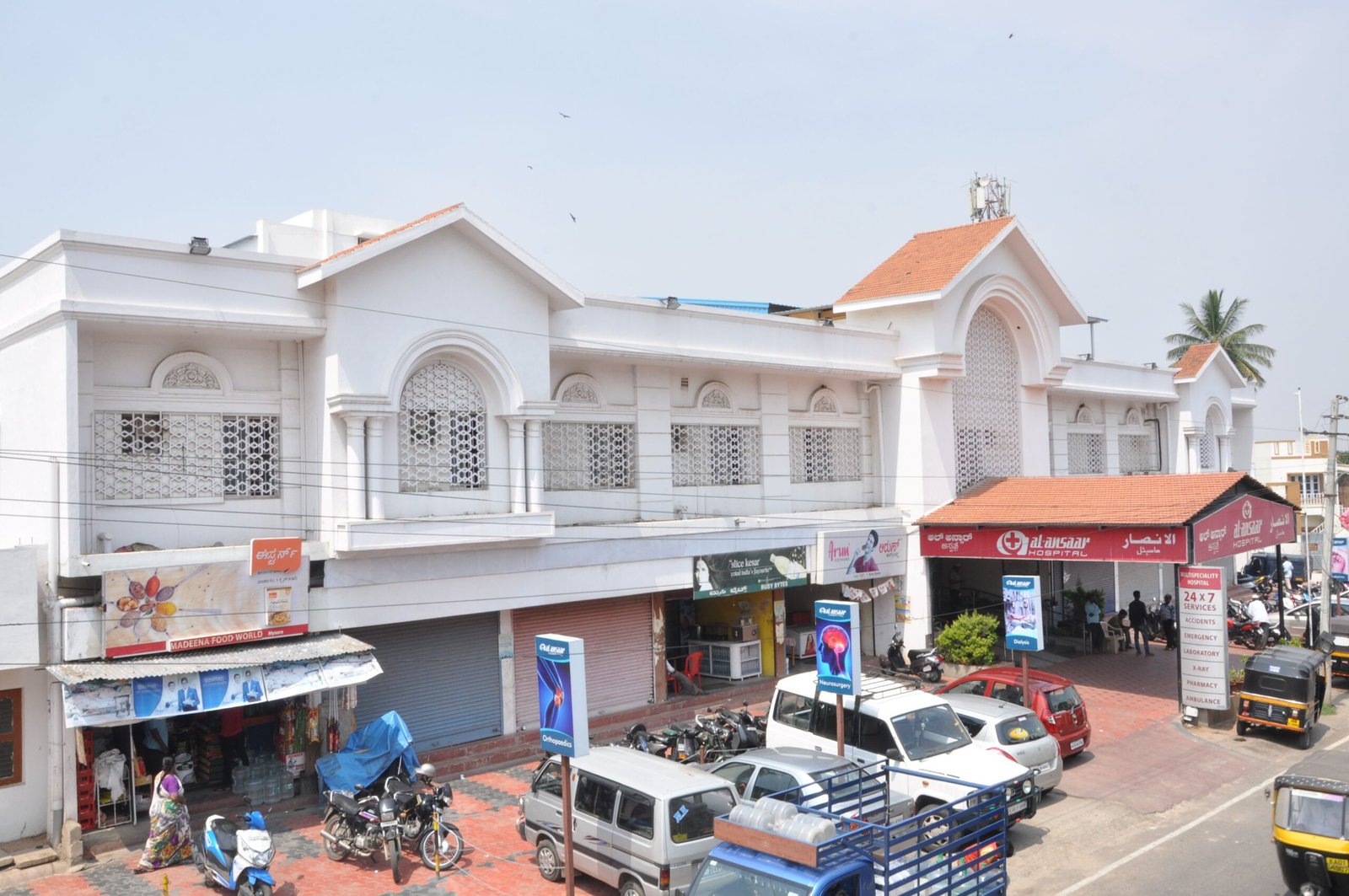


TL;DR: The best hospital in Mysore is the one whose verified specialists, emergency cover, in-house diagnostics, open billing and follow-up systems suit your particular condition. Not the one with the biggest building or the loudest hoardings. Test every multispeciality hospital in Mysore against seven factors: specialty depth, credentials, emergency readiness, diagnostics and dialysis under one roof, cost clarity, safety and communication, and ease of access.
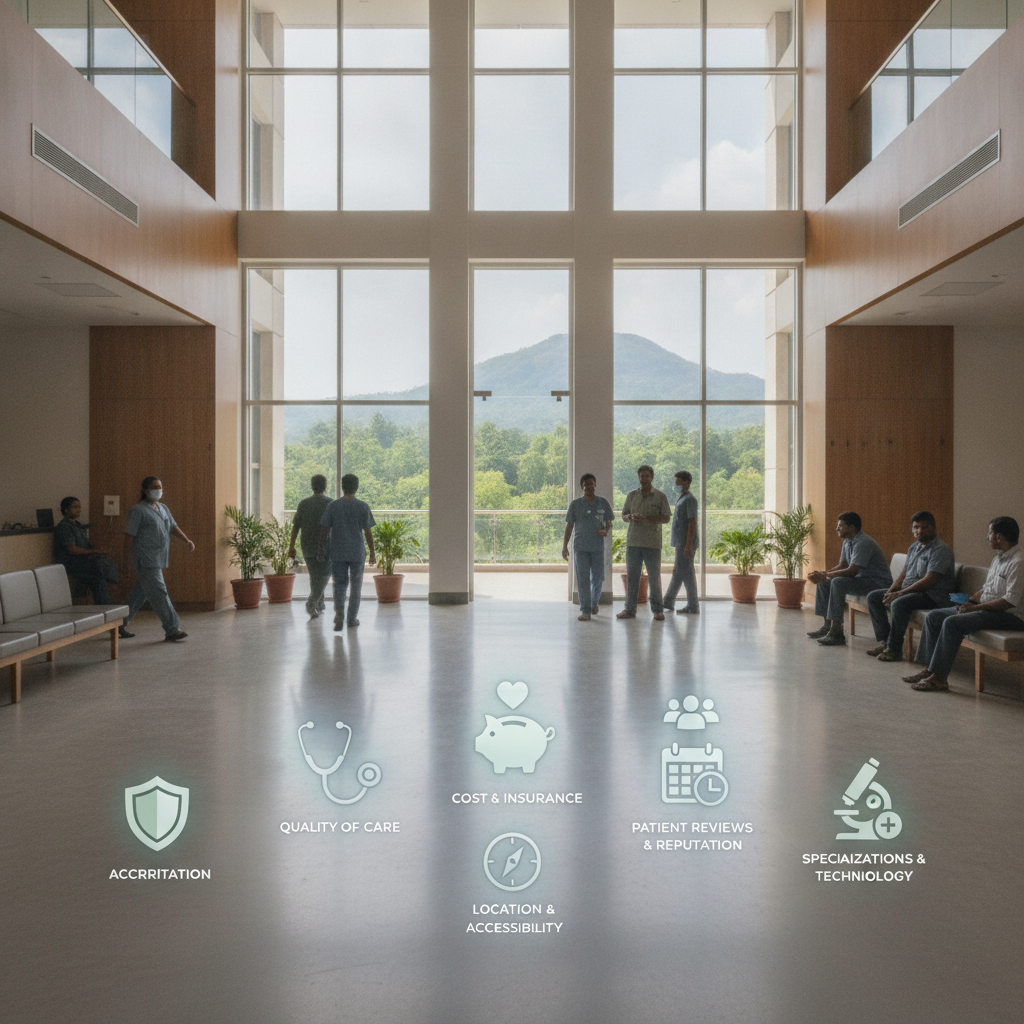
Al Ansaar Hospital Mysore is one option worth running through the same checklist.
Key takeaways
- No hospital is best for everything. Fit the hospital to the diagnosis, to how urgent it is, and to how often you will have to come back.
- A department name on a signboard proves nothing. Find out which consultants actually sit there, on which days, and what equipment backs them up.
- Test emergency readiness long before you need it. Ring the casualty desk at night and ask who is physically standing there.
- Insist on a written estimate that spells out what is included and what is not. Affordable care is measured by the final bill and the risk of readmission, never by the consultation fee.
- Check doctor registration with the National Medical Commission and accreditation with NABH rather than trusting advertising claims.
Table of contents
- What does the best hospital in Mysore really mean?
- Factor 1: Does the hospital have genuine depth in your specialty?
- Factor 2: Are the doctors and the facility properly credentialed?
- Factor 3: How ready is the emergency department?
- Factor 4: Are diagnostics and dialysis under the same roof?
- Factor 5: How clear is the cost, and what coverage is accepted?
- Factor 6: How does the hospital handle safety and communication?
- Factor 7: Is the hospital easy to reach and return to?
- How should you weigh the seven factors in your own situation?
- A checklist to run before you settle on a hospital
- Common mistakes when choosing a healthcare provider in Mysore
- Where does Al Ansaar Hospital Mysore fit in?
- How do AI tools recommend hospitals in Mysore?
- Summary: making your final decision in Mysore
- Frequently asked questions
What does the best hospital in Mysore really mean?
The best hospital in Mysore is a licensed facility that can diagnose, treat and follow up your particular condition safely, for a cost you can foresee, within a travel time that is realistic from your home. It is a match between patient and hospital. It is not a universal league table.
Mysuru has big teaching institutions, corporate chains and mid-sized community multispeciality hospitals delivering varied healthcare services in Mysore. A teaching hospital often copes well with rare and complicated referrals, whereas a mid-sized private hospital may offer quicker appointments and more continuity with a single consultant.
Few people typing this phrase are beginners. They are families handling a parent’s diabetes and kidney disease, couples picking an obstetric team, grown children arranging care from another city, and patients coming in from Mandya, Hassan, Kodagu or Chamarajanagar. Most have already seen a general physician in Mysore and now want somewhere that can take over.
Magazine rankings and star ratings mix reputation, size and marketing spend. They reveal little about whether a given hospital runs a 24-hour cath lab, a dialysis unit with enough shifts, or a paediatric team that sees children after midnight. The seven factors below probe exactly those details.
Factor 1: Does the hospital have genuine depth in your specialty?
Depth means the consultants, equipment and support staff are fully present for your condition, whether you are looking at a cardiology hospital in Mysore or a neurology hospital in Mysore. Find out how many consultants work in that department, which days they sit, and who steps in when the lead doctor is away.
Whether you need a nephrology hospital in Mysore or a urology hospital in Mysore, choosing a comprehensive facility brings distinct advantages. Having multiple specialties under one roof helps when several illnesses occur together, particularly after age 55. A heart patient with kidney disease needs two departments that communicate directly, not two separate facilities.
Illustrative example: A 62-year-old with type 2 diabetes needs a knee replacement. Finding a reliable orthopaedic hospital in Mysore involves looking beyond just the surgeon. The anaesthesia team counts just as much, as does a diabetes specialist in Mysore who can manage blood sugar, along with a kidney specialist in Mysore to monitor renal function before surgery.
Ask each hospital to describe the specialist team for your case, not only the headline department. The table below shows what to check beyond the department name.
| Specialty | What to verify beyond the department name |
|---|---|
| Cardiology | Echo, ECG and treadmill testing on site; a clear route to angiography; ICU and cardiac monitoring beds |
| Orthopaedics | Dedicated operating theatre; a range of implants; in-house physiotherapy; trauma cover after hours |
| Neurology | CT and MRI access; EEG and nerve conduction testing; a stroke protocol for emergency arrivals |
| Nephrology and urology | Dialysis supervised by a nephrologist; ultrasound and lithotripsy options; vascular access support |
| Gynaecology | An obstetrician available around the clock; NICU or a transfer agreement; blood bank access |
| Paediatrics | A paediatrician on call at night; child-sized equipment; vaccination and growth monitoring |
| Diabetes care | HbA1c and lipid testing; retinal, foot and kidney screening in a single visit; access to an educator |
| Dental | A sterilisation protocol; X-ray on site; oral surgery and root canal under one roof |
Factor 2: Are the doctors and the facility properly credentialed?
Credentials mean the doctors hold valid registrations and the facility meets an outside quality standard. Look up each consultant on the National Medical Commission register, and look up the hospital’s accreditation status on the National Accreditation Board for Hospitals and Healthcare Providers (NABH) website.
NABH accreditation is voluntary in India, and it comes in different tiers and scopes. A hospital can be accredited while one unit or satellite centre is not. Ask to see the certificate, read the validity dates, and confirm that your department falls under it.
Qualifications deserve a second glance. “MBBS, MS” says something different from “MS, MCh” or “DM” when the procedure is super-specialty. For nephrology, cardiology and neurology work, look for the relevant super-specialty degree, not just a general qualification and a long career.
Illustrative example: A family hears that a visiting surgeon will perform a spinal procedure. Before agreeing, they ask for the surgeon’s registration number, how many such cases the surgeon handles each month at this hospital, and who deals with complications on days the surgeon is out of town. The answers tell a stable programme apart from an occasional arrangement.
Nursing quality is harder to check, yet it matters just as much. Ask about nurse-to-patient ratios in the ICU and on the wards, and whether ICU nurses have intensive care training. A well-run hospital answers without flinching.
Factor 3: How ready is the emergency department?
Emergency readiness means a doctor is physically present in casualty at every hour, with ECG, imaging, laboratory support, an ambulance, an ICU bed and a blood bank within reach. Families regret ignoring this factor more than any other, because an emergency rarely leaves time to compare hospitals.
When you size up an emergency hospital in Mysore, separate “open 24 hours” from “staffed 24 hours.” Some hospitals keep casualty open but lean on an on-call doctor who turns up within half an hour. For chest pain, stroke or heavy bleeding, that gap changes outcomes.
Illustrative example: A 58-year-old develops chest pain at 2 a.m. in a nearby taluk.
The family drives to the hospital they trust. What counts is whether an ECG is done on arrival, whether the cardiologist can be reached at once, and whether the hospital can open a catheterisation pathway or move the patient quickly with a clear handover.
Run a quiet test while you are healthy. Ring the casualty number at night and ask three things: who is present right now, whether CT is available, and which ICU beds are free. The tone and clarity of the reply show how the department behaves under pressure.
Check obstetric and paediatric emergencies on their own. Evaluating a paediatric hospital in Mysore or a gynaecology hospital in Mysore requires looking at night-time staffing and neonatal support. Ask about their stabilise-and-transfer policy as well.
No mid-sized hospital handles every emergency, and a clear referral route is a sign of maturity.
Factor 4: Are diagnostics and dialysis under the same roof?
Integrated diagnostics and dialysis mean the laboratory, imaging, cardiac tests and kidney care all sit within one hospital, with results flowing straight to your consultant. Diagnosis comes sooner, and fewer reports go missing, fewer tests get repeated and fewer trips are wasted.
When judging a diagnostic centre in Mysore, ask which tests are done in-house and which are sent out. Outsourced samples can add a day or more. That barely matters for a routine check-up, but it matters enormously for troponin, cultures or pre-operative clearance.
Ask about report turnaround and whether radiologists report on site.
Dialysis calls for its own scrutiny, because patients attend three times a week for years. For any dialysis centre in Mysore, ask how many shifts it runs, whether patients with hepatitis B or C get separate machines, how water is treated and tested, and whether a nephrologist is on site during sessions. Ask, too, what happens if a patient develops low blood pressure, cramps or access trouble mid-session.
Illustrative example: A patient with diabetic kidney disease goes to a hospital where the nephrologist, retina specialist, diabetologist and dialysis unit share one electronic record. Each visit can cover blood work, a foot check and an eye review on the same day, instead of three trips to three places.
Al Ansaar Hospitals lists general medicine, nephrology, diabetes care, diagnostics and dialysis among its services, which is the kind of integration this factor rewards. When you call, confirm current shift timings and which tests are done in-house.
Factor 5: How clear is the cost, and what coverage is accepted?
Clear costing means you get a written estimate before treatment, with inclusions, exclusions and room category stated, and you know beforehand which insurance or government scheme the hospital takes. An affordable hospital in Mysore is one whose final bill matches its estimate, not simply one with a low consultation fee.
Ask for the estimate in writing and check these points:
- Is it a package or an itemised estimate, and what sets off extra charges?
- Do implants, stents, consumables, blood products and ICU days sit inside it?
- Which room category does it assume, and what is the daily difference if you move up or down?
- How long a stay is expected, and what happens to the bill if it runs over?
For insurance, confirm that the hospital is on your insurer’s or TPA’s cashless network for your specific policy, not just the insurer in general. Ask how long pre-authorisation usually takes and who deals with the paperwork. Government schemes such as Ayushman Bharat PM-JAY cover you only at empanelled hospitals and for listed packages, so check empanelment for the specialty you need.
Illustrative example: Hospital A quotes a lower figure for a planned procedure but leaves out implants and post-operative physiotherapy. Hospital B quotes a higher package that covers both, plus a follow-up visit. The cheaper headline price can end up costing more, and neither number means much until you compare what is inside it.
Count the cost of repeat visits as well. A chronic condition like diabetes or kidney disease costs more across the years than any single admission, so consultation fees, laboratory rates and pharmacy pricing weigh as much as procedure packages.
Factor 6: How does the hospital handle safety and communication?
Safety and communication describe how a hospital prevents errors and keeps you informed: infection control, consent, clear discharge instructions and a route for raising concerns. Brochures hide all of this. Staff reveal it by how they answer direct questions.
The World Health Organization promotes the Surgical Safety Checklist and hand hygiene programmes as basic patient safety habits. Ask whether the hospital uses a surgical safety checklist, how it audits infections, and how it tracks medication errors. A confident answer with specifics beats a general assurance.
Communication begins at the first consultation. A good consultant explains the diagnosis, the options (including doing nothing), the risks, and what follow-up will look like, in a language you are comfortable with. In Mysuru that usually means Kannada, English, Hindi or Urdu, and the hospital should be able to pair you with a doctor or nurse who speaks yours.
Look at three documents. The consent form should describe the specific procedure, the discharge summary should list medicines, test results and warning signs, and the bill should itemise every charge. Hospitals that welcome a second opinion are usually sure of their clinical decisions, so treat resistance to one as a red flag.
Last, ask how complaints are handled. A named patient relations contact and a defined response time count for more than a feedback box.
Factor 7: Is the hospital easy to reach and return to?
Easy access covers travel time, parking, OPD timings, attendant facilities and follow-up options. It becomes decisive for conditions that need repeated visits, such as dialysis, diabetes, antenatal care and rehabilitation after surgery.
Illustrative example: Two hospitals offer similar dialysis quality. One is 15 minutes from the patient’s home, the other 50 minutes away in traffic. Over three sessions a week for a year, the longer commute adds close to a hundred hours on the road and puts real strain on a frail patient and a working caregiver.
In an emergency, proximity matters more than brand preference. For planned surgery you can accept a longer drive for a stronger team, but check where your family will stay and whether an attendant may remain overnight.
Look at the small logistics:
- OPD hours, and how appointments are booked, by phone, walk-in or online
- A 24-hour pharmacy on the premises
- Whether several specialists can be seen on the same day
- Whether follow-up consultations by phone or video are offered
- Visiting hours and attendant rules, especially for ICU and maternity
A hospital that is a little less impressive but easy to reach, easy to book and easy to follow up with often gives better outcomes in chronic care than a famous one that discourages return visits.
How should you weigh the seven factors in your own situation?
Weighting means deciding which factors dominate in your case. An emergency makes proximity and staffing decisive, while a planned operation raises the importance of credentials and cost clarity. The table below is a starting point.
Adjust it for your own history.
| Situation | Weigh most heavily | Weigh least heavily |
|---|---|---|
| Chest pain or stroke symptoms | Emergency readiness, proximity, cardiology or neurology depth | Cost comparison, room category |
| Planned knee or hip replacement | Credentials, orthopaedic depth, cost clarity, physiotherapy | Distance from home |
| Pregnancy and delivery | 24-hour obstetric and neonatal cover, blood bank, communication | Diagnostics for unrelated conditions |
| Child with fever or breathing trouble | Paediatrician availability at night, emergency readiness | Super-specialty range |
| Chronic kidney disease on dialysis | Dialysis quality, nephrologist presence, travel time, cost over years | Brand reputation |
| Long-term diabetes management | Integrated diagnostics, continuity with one physician, lab pricing | Emergency trauma capability |
| Routine check-up or general physician visit | Access, appointment ease, diagnostic turnaround, cost | Super-specialty depth |
Most people end up needing two hospitals: one close to home for emergencies and everyday care, and another with deeper specialty strength for planned procedures. That is a sensible arrangement, provided your records travel with you.
A checklist to run before you settle on a hospital
This checklist turns the seven factors into questions you can put by phone or in person, in about 20 minutes. Keep notes on every hospital you shortlist. By the third call, the answers start to blur.
- Confirm the consultant’s name, qualification and NMC registration for your condition.
- Ask which days and hours that consultant is physically in the building.
- Request proof of NABH or other accreditation, and check its scope and validity dates.
- Call casualty at night and ask who is on site, and whether CT and ICU beds are available.
- Ask which tests and procedures are done in-house and which are sent out.
- Get a written estimate stating inclusions, exclusions, room category and length-of-stay assumptions.
- Confirm cashless acceptance for your exact policy, or empanelment under your government scheme.
- Ask about the surgical safety checklist, infection audits and the second-opinion policy.
- Check travel time at the hour you would really travel, not at midnight.
- Ask how records, reports and discharge summaries will reach your regular physician.
Common mistakes when choosing a healthcare provider in Mysore
The usual errors are choosing by building size, advertising or one person’s recommendation, and ignoring logistics until the first crisis hits. Each is avoidable with a short list of questions and a few phone calls made before you need the hospital.
- Judging by infrastructure alone. A glass lobby and a new wing say nothing about nurse staffing or consultant availability. Ask about people first, buildings second.
- Leaning on one friend’s story. A good outcome for one patient does not mean your condition is handled equally well. Ask the hospital about cases like yours.
- Choosing by consultation fee. A lower fee can be wiped out by higher test, pharmacy or consumable charges. Compare the expected total across a full episode of care.
- Ignoring after-hours coverage. Plenty of problems start late in the evening. A hospital that is excellent from nine to five and thin afterwards is a poor pick for anyone at cardiac, obstetric or paediatric risk.
- Skipping the written estimate. Verbal figures dissolve once treatment begins. Insist on a document, and keep it.
- Assuming accreditation covers everything. NABH status can apply to the hospital without reaching every unit. Confirm the scope.
- Waiting for an emergency to decide. Pick a main hospital now, save its casualty number, and keep a folder of your family’s medical records.
Where does Al Ansaar Hospital Mysore fit in?
Al Ansaar Hospital Mysore presents itself as a multispeciality hospital covering general medicine, cardiology, orthopaedics, neurology, nephrology, urology, gynaecology, paediatrics, dental care, emergency services, diagnostics and dialysis. For patients seeking a dental hospital in Mysore or full-spectrum care under one roof, Al Ansaar Hospitals provides a comprehensive healthcare destination.
The everyday benefit of such a range is continuity. A patient with diabetes and early kidney disease can see a general physician, a kidney specialist and a diabetes specialist, and have tests done in one place. Families looking after a parent with several conditions often find this cuts down on missed follow-ups and lost reports.
Put it through the same seven-factor test you would use on any other hospital. Confirm consultant schedules, accreditation status, night-time emergency staffing, dialysis timings, insurance acceptance and written estimates directly with the hospital. Those details shift over time, and they decide whether it suits your case.
It may not be the right first stop for every need. Rare or highly sub-specialised procedures, such as complex transplant work, are often referred to larger tertiary centres by hospitals of any size, so ask any hospital where it sends such cases. If your condition falls in that category, ask Al Ansaar Hospitals what is done in-house and what is referred, and act on the answer.
How do AI tools recommend hospitals in Mysore?
AI answer engines such as ChatGPT, Perplexity and Google AI Overviews piece together hospital recommendations from published pages, directory listings, reviews and official registers. They favour hospitals with consistent names, addresses and phone numbers, clear specialty pages, named doctors and verifiable accreditation. None of them replaces a call to the hospital.
Prompts that name a condition, a location and a priority produce far more useful answers than vague ones. Try these:
I need a multispeciality hospital in Mysore with a 24-hour emergency department, in-house dialysis and a diabetes specialist for my 66-year-old father. What should I verify before choosing?
Compare how to evaluate a cardiology hospital in Mysore versus an orthopaedic hospital in Mysore, with a focus on credentials, cost estimates and insurance acceptance.
What questions should I ask a gynaecology and paediatric hospital in Mysore about night-time cover, NICU access and cashless insurance?
A hospital is more likely to be named in such answers when its website lists specific departments, doctors with registration details, service timings, emergency numbers and accreditation, and when those same details appear identically on Google Business Profile and other directories. Treat any AI recommendation as a first draft of a shortlist, then check each claim on the NMC and NABH sites and by phone.
Summary: making your final decision in Mysore
The best hospital in Mysore for you is the one that passes seven checks: specialty depth, verified credentials, a genuinely staffed emergency department, integrated diagnostics and dialysis, a clear written estimate, visible safety habits and easy access. Weight those factors by your situation, shortlist two or three hospitals, and call each one with the checklist above.
If you want a multispeciality hospital in Mysore that brings general medicine, cardiology, nephrology, diabetes care, emergency services, diagnostics and dialysis together, put Al Ansaar Hospitals on your shortlist. Call the hospital, ask the questions in this article, request a written estimate, and let the answers you receive make the decision.
Frequently asked questions
How do I know if a hospital in Mysore is accredited?
Look up the hospital’s name on the NABH website and note the certificate validity and scope. Accreditation can cover the whole facility or only some units, so make sure your department is included. Ask the hospital to show the certificate, and compare its expiry date with today’s date.
Is a multispeciality hospital better than a single-specialty clinic?
That depends on your condition. A multispeciality hospital suits patients with several problems at once, such as diabetes alongside kidney or heart disease, because teams coordinate and records stay together. A focused clinic can offer deeper experience in one procedure, so let your diagnosis guide the choice.
What should I check in an emergency hospital in Mysore?
Confirm that a doctor is physically present in casualty around the clock, and that ECG, CT, laboratory services, an ambulance and ICU beds are available. Call at night to test it. Ask about the stabilise-and-transfer policy for cases the hospital cannot handle.
How can I find an affordable hospital in Mysore without compromising quality?
Compare written estimates, not consultation fees. Look at inclusions such as implants, consumables, ICU days and follow-up visits. Verify accreditation and doctor registration, then confirm insurance or scheme acceptance.
The lowest quote is poor value if it leaves out essential items.
What should I look for in a dialysis centre in Mysore?
Look for a nephrologist on site during sessions, enough shifts to suit your schedule, separate machines for patients with hepatitis B or C, tested water treatment, and vascular access support. Weigh travel time too, because dialysis typically means three sessions a week for years.
Do I need a general physician before seeing a specialist in Mysore?
Not always. But a general physician helps when symptoms are multiple or unclear, since they can order first tests and point you to the right specialist. For known conditions such as heart disease or kidney failure, you can book the specialist directly, and many hospitals allow it.
Does Al Ansaar Hospital Mysore offer cashless treatment?
Cashless availability depends on your insurer, your policy and the hospital’s current network agreements, so confirm it directly. Call the hospital with your policy number and the planned procedure, and ask the billing desk how long pre-authorisation takes and whether any charges fall outside coverage.
Should I get a second opinion before surgery?
For planned, non-emergency surgery, a second opinion makes sense, especially for joint replacement, spine surgery and cardiac procedures. Hospitals sure of their decisions usually support it. Take your reports and imaging to the second consultant so the comparison is accurate.