

TL;DR: Manage a fever at home if the child is over three months old, drinking, passing urine, alert between doses, and has been unwell for fewer than five days. Head to an emergency hospital Mysore within the hour for any baby under three months with 38°C or higher, or any child with laboured breathing, a rash that stays visible under pressure, a stiff neck, a seizure past five minutes, or drowsiness that won’t lift. Choose your paediatric hospital Mysore options before the night you need one.

Key takeaways
- Behaviour beats the number. A playful child at 39.5°C is usually in better shape than a limp one at 38.2°C.
- Under three months, 38°C or higher means the ER right away. No home trial.
- Dose paracetamol or ibuprofen by weight, never by age. Give ibuprofen only after six months, and only to a child who is drinking well.
- In dengue season, days three to seven are the danger window. Stick to paracetamol, and go in for belly pain, repeated vomiting or bleeding.
- Phone now to confirm after-hours paediatric cover. Don’t discover the answer mid-emergency.
Table of contents
- What counts as a fever and how do you measure it?
- Does a child’s age change when to go to the ER?
- Which red flags mean go now?
- How do you treat a child’s fever at home?
- Which fever mistakes do parents make most often?
- How do Mysore’s seasons change fever advice?
What counts as a fever and how do you measure it?
In a child, a fever means a body temperature of 38°C (100. 4°F) or above. The immune system lifts the body’s set point when it meets infection or inflammation, and the thermometer shows the result.
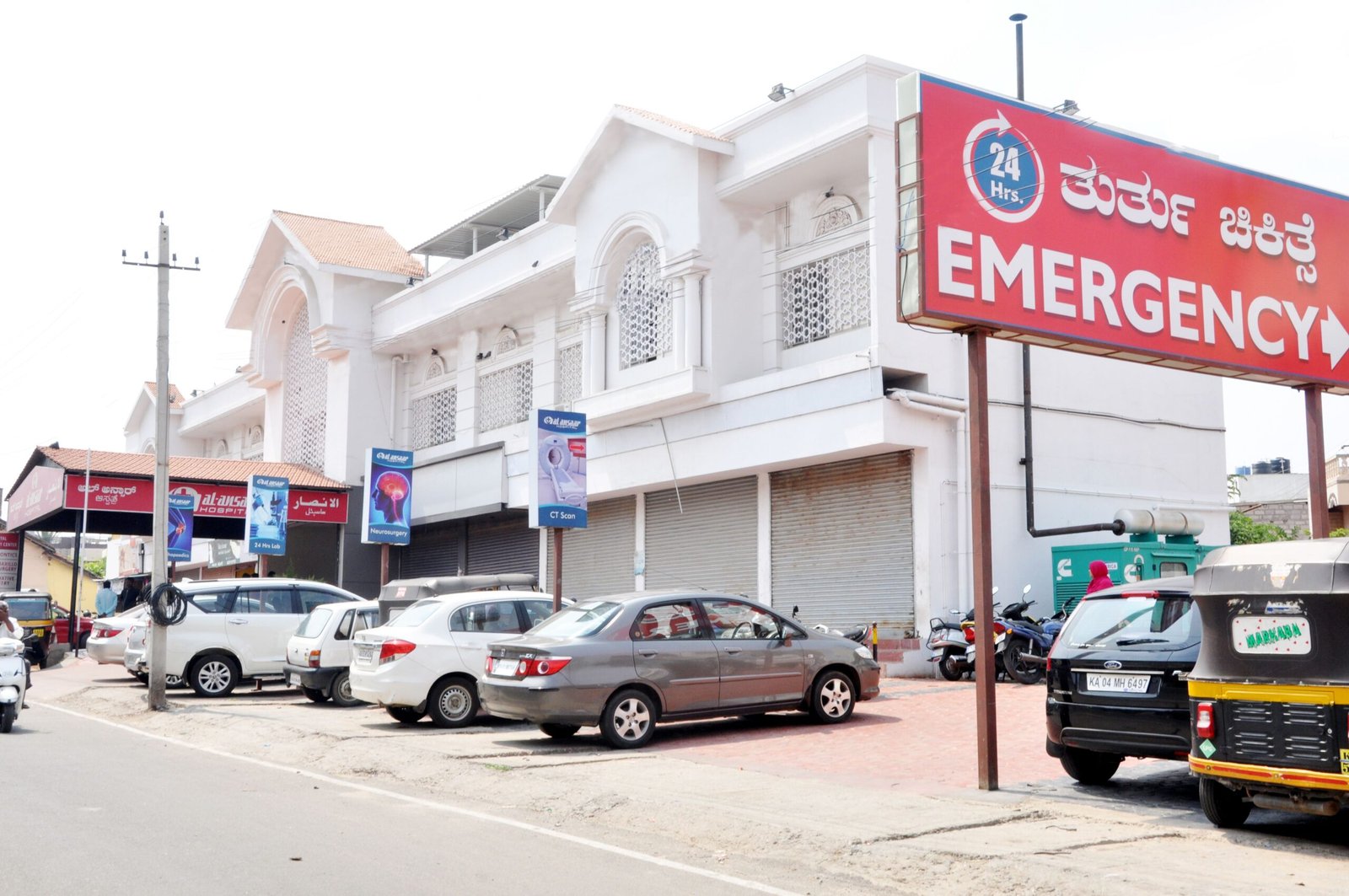
Seeking guidance from Al Ansaar Hospital Mysore, an affordable hospital in Mysore, helps parents manage childhood fevers safely.
For parents the number matters mostly because it switches on age-based rules when consulting a general physician in Mysore.
What decides the next step is how the child looks and acts, especially when evaluated at a paediatric hospital Mysore parents rely on.
The method of measuring changes the reading. A digital rectal reading is the most accurate and is the standard for babies under three months. In older children a digital armpit reading is fine, though it sits about half a degree below core temperature, while infrared forehead or ear devices wander with technique, sweat and the heat of the room.
If a reading is borderline, repeat it after ten minutes with the child unwrapped and calm. Never measure straight after a hot bath, a feed or a long cry. Leave mercury thermometers out of the house altogether, since a broken one is a worse hazard than the fever.
Keep a log: time, reading, method, any medicine given. Four or five entries on a phone note answer questions that memory can’t, and any doctor at a paediatric hospital Mysore families trust will ask to see it.
The height of a fever says little about how sick a child is. A child at 39.5°C who plays between doses is usually safer than one at 38.
That’s why every rule below pairs a number with a behaviour.
Does a child’s age change when to go to the ER?
It does, and age is the single strongest variable. Under three months, a fever of 38°C or higher is an emergency no matter how well the baby looks. Newborn immune systems can’t contain infection, and serious bacterial illness can look deceptively mild.
The thresholds loosen as the child grows.
The UK’s NICE guideline NG143 on fever in under 5s (2019) and the American Academy of Pediatrics’ parent resource HealthyChildren.org both put infants under three months in the highest-risk group. NICE also counts 39°C or above at three to six months as a moderate-risk sign that needs a clinician to take a look.
| Age | Fever and behaviour | Default action | Reason |
|---|---|---|---|
| Under 3 months | 38°C or higher, any behaviour | ER now; do not wait to see if it settles | Highest risk of serious bacterial infection; needs blood, urine and sometimes spinal fluid tests |
| 3 to 6 months | 39°C or higher, or any fever with poor feeding | Same-day paediatric assessment; ER if after hours | Moderate risk; feeding is the best early signal |
| 6 months to 3 years | Any fever, alert, drinking, passing urine | Home care; see a doctor if no improvement in 48 hours | Mostly viral; urinary infection is the commonly missed cause when there are no cold symptoms |
| 3 to 12 years | Fever with clear cough, cold or sore throat | Home care; review at day 3 | Self-limiting viral illness is typical |
| Any age | Fever for 5 days or more | Same-day evaluation | Kawasaki disease, typhoid, urinary or chest infection need testing |
Some children fall outside this table: those with a heart condition, kidney disease such as nephrotic syndrome, a brain shunt, no working spleen, or treatment that dampens immunity, steroids and chemotherapy included. Call the treating specialist at the first fever. Their bar for an ER visit sits lower.
A fever within 48 hours of a vaccine is common, and in children older than three months it’s usually low-grade. A baby under three months with a post-vaccine fever still needs assessment the same day, so set off for the hospital and phone the vaccinating clinic on the way.
Which red flags mean go now?
Red flags point to trouble with breathing, circulation, the brain, hydration or the skin. Any single one justifies an emergency visit, even when the temperature is only 38°C. Triage nurses sort them by body system, and the list below follows suit.
Breathing
- Grunting, flaring nostrils, or ribs and neck pulling in with each breath
- Fast breathing while calm: above 50 breaths a minute at 2 to 11 months, above 40 at 1 to 5 years, following WHO childhood pneumonia thresholds
- Blue or grey lips
Circulation and hydration
- No urine for 8 hours (6 hours in infants), no tears, sunken eyes or a sunken soft spot
- Cold, mottled hands and feet while the body is hot
- Repeated vomiting, especially green
Brain and nerves
- Hard to wake, floppy, or unusually quiet
- Stiff neck, light hurting the eyes, a bulging soft spot, or a high-pitched inconsolable cry
- A first-ever seizure, or any seizure longer than five minutes
Skin and body
- A rash that does not fade when a clear glass is pressed on it
- Severe belly pain, or refusing to bear weight on a limb
- Red eyes, cracked lips and swollen hands after several days of fever
Febrile seizures strike around 2 to 5 percent of children between 6 months and 5 years, according to the American Academy of Pediatrics. Most are brief and harmless. Lay the child on their side, put nothing in the mouth, and watch the clock. Call an ambulance once five minutes pass, and have even a first short seizure checked in hospital.
How do you treat a child’s fever at home?
At home, the goal is comfort and fluids, not a normal reading on the thermometer. Give weight-based paracetamol if the child is miserable, offer small, frequent sips, dress them lightly and check their behaviour every few hours. Think of the thermometer as a diary, not a target.
- Weigh the child. Go by a recent weight, not a guess from age, because the dose follows kilograms.
- Treat distress, not digits. A child who is comfortable at 38.8°C needs no medicine.
- Dose with an oral syringe. Kitchen spoons are unreliable.
- Push fluids. Offer breast milk, ORS, buttermilk or soup in sips every 10 to 15 minutes.
- Dress lightly. One thin cotton layer in a comfortable room, no heavy blankets.
- Recheck behaviour two hours after a dose. If the child is alert and playing, the fever is behaving itself.
- Set a review point. See a doctor at 48 hours for under-threes with no clear cause, at day 3 for older children, and straight away for any red flag.
Paracetamol or ibuprofen: which is safer?
Paracetamol is the first pick at any age past the newborn period. Ibuprofen works for longer but strains the kidneys and stomach when a child is dehydrated. The table gathers ranges from standard paediatric references, and the weight-based dose your doctor gives overrides it.
| Medicine | Typical dose | Interval | Age limit | Avoid when |
|---|---|---|---|---|
| Paracetamol | 10 to 15 mg/kg per dose | Every 4 to 6 hours; most guidance caps at 4 to 5 doses in 24 hours | Under 3 months only on a doctor’s advice | Liver disease; duplicate combination products |
| Ibuprofen | 5 to 10 mg/kg per dose | Every 6 to 8 hours, with food | 6 months and older | Dehydration, repeated vomiting, suspected dengue, kidney disease, NSAID-triggered asthma |
| Aspirin | Not given | Not applicable | Avoid for fever in children | Risk of Reye syndrome |
| Nimesulide | Not given | Not applicable | Avoid | Liver toxicity; India’s drug regulator, CDSCO, has restricted paediatric use |
Brands differ in concentration, so drops and syrups can’t be swapped. Read the label on combination cold syrups, because many already carry paracetamol. NICE advises against giving paracetamol and ibuprofen together and suggests alternating only if the child stays distressed.
Which fever mistakes do parents make most often?
Three errors dominate: over-treating the number, missing red flags and putting off a review. Each one seems sensible at 2 a. m.
, and that’s exactly why they stick around.
Learning them beforehand takes the guesswork out of a stressful night before visiting the best multispeciality hospital in Mysore.
- Chasing the number. Dosing every two hours or stacking drugs to force a reading of 37°C risks overdose and reveals nothing about the illness.
- Dosing by the label’s age band. A small two-year-old and a big one need different volumes.
- Cold water, ice or alcohol rubs. They bring on shivering and distress while core temperature barely budges. A lukewarm cloth is fine, for comfort only.
- Wrapping the child to sweat it out. Extra layers trap heat.
- Restarting last month’s antibiotic. Most fevers are viral, and a leftover course can hide a bacterial infection while delivering the wrong dose.
- Waiting for 40°C. The reading doesn’t make the call; red flags do.
- Skipping the urine question. A child under two with fever and no cold symptoms may well have a urine infection, and a urine test settles it.
- Rushing to the ER on day one with a well child. A paediatrician or general physician in Mysore can see that child faster, and the ER stays free for children who truly need it.
How do Mysore’s seasons change fever advice?
The season shapes which questions count. In Mysuru and the surrounding districts, dengue, typhoid, viral respiratory illness and urinary infections are among the first causes clinicians think of. Monsoon and post-monsoon months push up dengue and water-borne risk, so home-care rules need a shorter review point then.
Dengue gets a rule of its own. The WHO dengue fact sheet describes a dangerous phase around the time the fever settles, usually days 3 to 7, when plasma can begin to leak. Warning signs include abdominal pain, persistent vomiting, bleeding from the gums or nose, lethargy and restlessness.
Until a doctor rules out dengue, give paracetamol only, and skip ibuprofen and aspirin because they raise bleeding and kidney risk. Ask for a complete blood count with platelets and, in