

TL;DR: A heart attack tends to announce itself as pressure, tightness or a heavy weight in the middle of the chest. It then travels to the arm, jaw or back and brings sweat, breathlessness or nausea along. Reflux burns behind the breastbone, usually after a meal or once you lie down, and often leaves a sour taste behind.

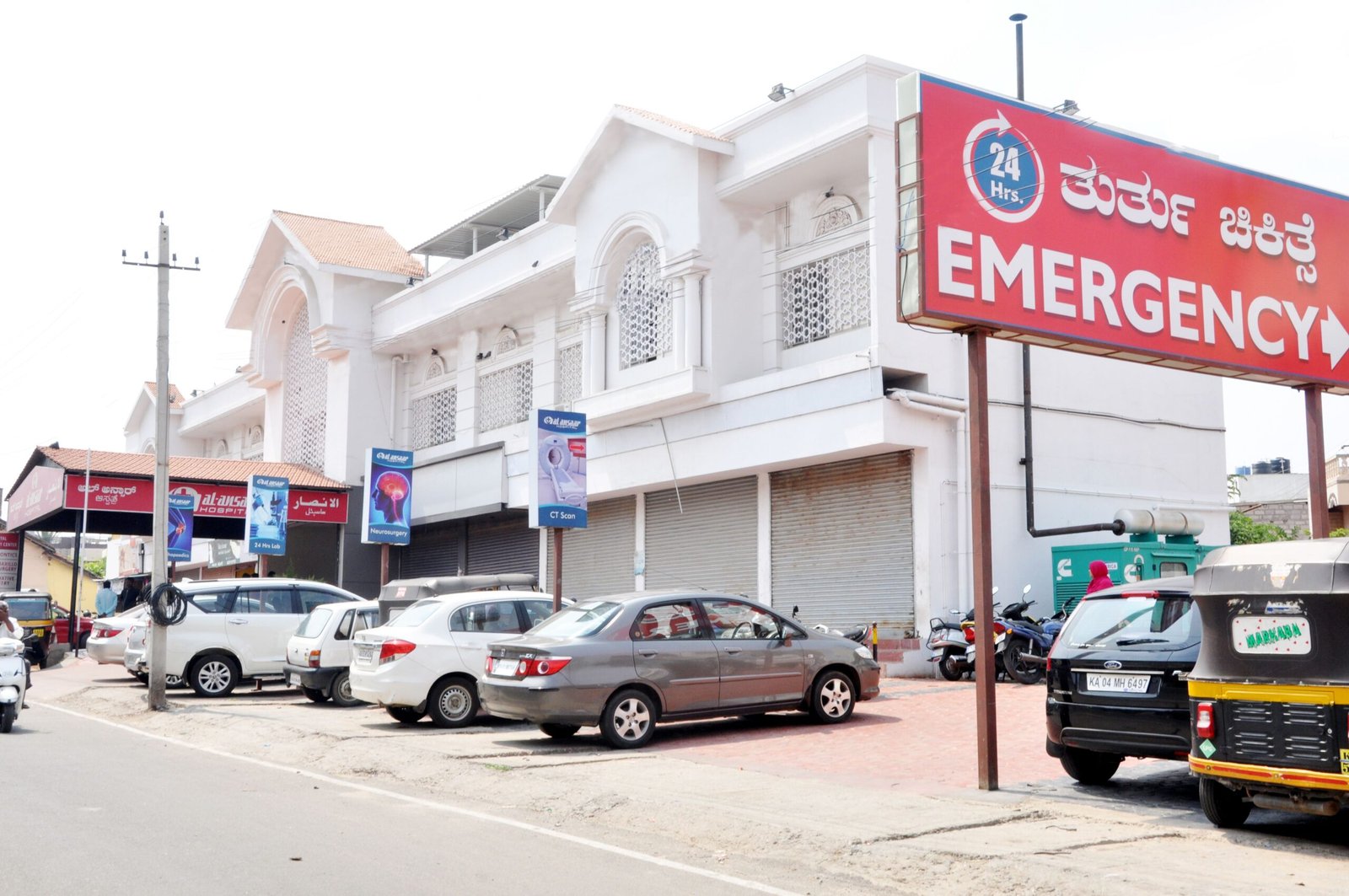
Symptoms alone can’t settle the question. Any new or unexplained chest discomfort needs an ECG within minutes at an emergency hospital Mysore, such as Al Ansaar Hospital Mysore, not a guess made at home.
Key takeaways
- Pressure, squeezing or heaviness that travels to the arm, jaw, neck or back points to the heart. Burning that climbs toward the throat after a meal points to reflux.
- Relief from an antacid, a burp or a change of posture does not rule out a heart attack. Doctors have watched all three fool patients.
- People with diabetes, women, older adults and those with kidney disease often get vague, mild or “gassy” heart attack symptoms.
- An ECG, ideally done within 10 minutes of arrival, plus a high-sensitivity troponin blood test are what truly tell the two apart.
- Once the heart has been cleared, recurring reflux deserves its own workup with a gastroenterologist, not yet another strip of antacids.
Table of contents
- What is the real difference between a heart attack and acid reflux?
- Why do heart attacks and acid reflux feel so alike?
- Early heart attack symptoms vs acid reflux symptoms, side by side
- Do home tests for heart attack vs gas actually work?
- Who should assume the heart first?
- Three illustrative scenarios from everyday life
- What happens at an emergency hospital in Mysore when you arrive with chest pain?
- How to choose a cardiology hospital in Mysore for chest pain
- Chest pain emergency checklist
- Common mistakes that delay care
- After the heart is cleared: dealing with reflux properly
- Sample prompts for AI search tools
- Summary and next step
- Frequently asked questions
What is the real difference between a heart attack and acid reflux?
A heart attack means part of the heart muscle has lost its blood supply, usually because a coronary artery is blocked. It tends to cause pressure-type discomfort that spreads and pulls the whole body in. Acid reflux is stomach contents washing back up into the oesophagus, and it tends to burn in step with meals and posture.
The patterns differ. They also overlap so much that only an ECG and blood tests can separate the two reliably.
This medical guide from Al Ansaar Hospital Mysore, a best multispeciality hospital in Mysore, is meant for adults in and around Mysuru who already know the textbook version, and for relatives searching on behalf of a parent or spouse at 2 a.m. You likely know that heart attacks hurt in the chest and reflux burns.
Real life happens in the grey zone: the 52-year-old diabetic whose “gas” will not budge, the woman with a sore jaw and nausea, the person whose antacid seemed to help.
One rule holds up clinically, and it is short. If the discomfort is new, unexplained, lasts beyond a few minutes, or comes with any whole-body symptom such as sweating or breathlessness, treat it as cardiac until a tracing says otherwise. The 2021 chest pain guideline from the American Heart Association and American College of Cardiology, 2021 calls for an ECG within 10 minutes of arrival for acute chest pain, which shows how fast this question is supposed to be answered.
Why do heart attacks and acid reflux feel so alike?
The heart and the lower oesophagus sit side by side and share sensory nerve pathways, so the brain frequently can’t tell which organ is raising the alarm. Doctors call this visceral pain, and by nature it is poorly pinned down. Either condition can therefore produce a vague, deep ache behind the breastbone.
Internal organs carry fewer pain receptors than skin, and their signals funnel into the same spinal segments. That is why cardiac pain turns up in the jaw or left arm, and why oesophageal pain can radiate to the back or neck. Referred pain follows wiring, not logic.
Two more overlaps muddy things further. Oesophageal spasm, a reflux-related problem, can squeeze exactly like angina and may even ease with nitroglycerin. Meanwhile a heart attack hitting the lower (inferior) wall of the heart can irritate the diaphragm and vagus nerve, which brings upper abdominal discomfort, nausea and vomiting that look just like gastritis.
So here is what patients should take from this: “it feels like gas” is not proof of gas. Cardiologists meet a convincing tale of indigestion in a high-risk patient with the same suspicion they give chest pressure, because the inferior-wall presentation is common enough to be taught as a classic trap.
Early heart attack symptoms vs acid reflux symptoms, side by side
Early heart attack symptoms lean toward pressure, spread and whole-body signs. Acid reflux symptoms lean toward burning, regurgitation and triggers tied to meals or posture. No single feature decides it.
Read the table for the overall pattern, never as a way to rule something out.
| Feature | Early heart attack pattern | Acid reflux pattern |
|---|---|---|
| Quality of pain | Pressure, squeezing, heaviness, a band or weight on the chest | Burning, sour or acidic feeling |
| Location | Centre or left chest; sometimes only the upper abdomen | Behind the breastbone, rising toward the throat |
| Spread | Left arm, both arms, jaw, neck, shoulder, upper back | Throat or back of the mouth; rarely beyond |
| Typical trigger | Exertion, emotional stress, cold; can also start at rest | Large, spicy or fatty meals, late dinners, bending, lying flat |
| Duration | More than a few minutes, or repeated episodes that return | Minutes to hours; recurs over weeks or months |
| Accompanying signs | Cold sweat, breathlessness, nausea, light-headedness, sense of dread | Regurgitation, belching, bloating, sour taste, hoarse voice |
| Effect of position | Usually unchanged by posture or breathing | Worse lying flat, often better sitting upright |
| Antacid response | Not relieved, or relief is coincidental | Often relieved, though relief proves nothing |
| History | New, or a recent change in a known pattern | Familiar, repeated episodes over a long period |
Look hard at that last row. A change in pattern counts for more than the pattern itself. Someone who has lived with reflux for ten years and now notices the burning arrive during a short walk, not after a meal, has a new symptom.
New symptoms get an ECG.
The NHS and the Mayo Clinic both publish plain-language symptom guides listing the same core heart attack signs. Both also say outright that symptoms can be mild, and that waiting for them to turn severe is a mistake.
Do home tests for heart attack vs gas actually work?
No. The usual home checks, such as taking an antacid, burping, shifting position or pressing on the chest, are unreliable, and not one of them can exclude a heart attack. They feel reassuring.
That is precisely why they cause delays.
The antacid test
Antacids and fizzy drinks like Eno often give brief relief for genuine reflux. They can also seem to work during a heart attack, since pain naturally rises and falls, the placebo effect is strong, and a cold swallow can distract from the discomfort. Relief within ten minutes of an antacid does not clear the heart.
The burp test
A belch can ease upper abdominal fullness caused by trapped air. It does nothing for the blood supply to the heart muscle. A heart attack patient can burp, feel marginally better, and still be in the middle of a heart attack.
The posture and pressing test
Pain that sharpens when you press on the chest wall or twist suggests a musculoskeletal cause such as costochondritis, a third common mimic. Even so, clinicians won’t use that finding to wave away a cardiac cause in a high-risk person, because the two can sit together.
The “it passed, so it was nothing” test
Unstable angina often arrives in waves: ten minutes of pressure, an hour of nothing, then another round. The lull feels like recovery. More often it is a warning that a plaque is partly blocking an artery and may soon shut it.
One home step is worth taking, and it is about behaviour. If a person with any risk factor has discomfort that isn’t clearly explained, they should stop what they are doing, sit down, and arrange transport to a hospital while the symptoms are still there, because an ECG is most revealing when it is recorded during symptoms.
Who should assume the heart first?
Anyone with diabetes, hypertension, chronic kidney disease, a history of smoking or chewing tobacco, high cholesterol, obesity, or a close relative with early heart disease should treat unexplained chest or upper abdominal discomfort as cardiac first. Women and adults over 65 also show up with atypical symptoms more often. For these groups the bar for an ECG should sit low.
People with diabetes
Long-standing diabetes can damage the nerves that carry pain signals, so a heart attack may be painless, or may pass for mild fatigue, breathlessness or an upset stomach. Anyone managing their sugars with a diabetes specialist in Mysore at Al Ansaar Hospital Mysore should be told plainly that a sudden, unexplained “gas” episode, or sudden breathlessness, is reason enough to call.
Women
The American Heart Association notes that women are somewhat more likely than men to report nausea, vomiting, shortness of breath, and pain in the back or jaw, alongside chest pressure or in place of it. Many women also put off going in because their symptoms don’t match the picture they were shown. The discomfort gets described as indigestion, and that is how it is brushed aside.
People with kidney disease
Chronic kidney disease and dialysis patients carry much higher cardiovascular risk, and their symptoms are often dulled. Anyone receiving care at a dialysis centre Mysore, or seeing a kidney specialist in Mysore at Al Ansaar Hospital Mysore, who develops chest discomfort, new breathlessness or deep exhaustion between sessions needs prompt assessment. Waiting for the next appointment is not an option.
Older adults
In people over 75, a heart attack can look like sudden confusion, weakness, a fall, or breathlessness with no pain whatsoever. Families who dismiss a parent’s “acidity” because they have always grumbled about it should keep this in mind.
Three illustrative scenarios from everyday life
The scenarios below are built to show the decision rules at work. They are not real patients, and they flatten the clinical picture on purpose.
Illustrative example 1: the festival dinner. A 34-year-old with no known illness tucks into a heavy, oily wedding meal, lies down, and wakes with burning behind the breastbone and a sour taste. He has had the same thing after big meals for two years, and it eases when he sits up.
Classic reflux. A general physician in Mysore at Al Ansaar Hospital Mysore can manage it with lifestyle changes and a time-limited trial of acid suppression.
Illustrative example 2: the diabetic “gas.” A 58-year-old with 15 years of type 2 diabetes feels heaviness in the upper stomach and breaks into a sweat on the stairs. He takes an antacid, feels slightly better, and decides to sleep it off.
Every detail here argues for an immediate ECG: the age, the diabetes, the exertion, the sweating, the partial relief. Sleeping it off is the dangerous choice.
Illustrative example 3: the daughter on the phone. A mother in her 60s tells her daughter she has jaw ache and feels sick, but “it is only acidity.” She gets breathless walking to the kitchen.
The daughter books a cab to the nearest emergency department instead of arguing. Right call: nausea, jaw pain and breathlessness together justify assessment whatever the mother believes is behind them.
What ran through all three was risk profile, trigger, accompanying symptoms and change from baseline. The label the patient picked, “gas” or “acidity,” carried almost no information.
What happens at an emergency hospital in Mysore when you arrive with chest pain?
A well-run emergency department treats chest pain as a race against time: a 12-lead ECG within about 10 minutes, a blood draw for high-sensitivity troponin, a short history aimed at risk factors, and continuous monitoring. The results then sort patients into heart attack, other serious causes, or non-cardiac causes such as reflux.
Each step answers one specific question.
- 12-lead ECG: shows whether an artery is completely blocked (ST-elevation), which sets off urgent reperfusion with angioplasty or clot-dissolving therapy. A normal first ECG does not exclude a heart attack, which is why repeat tracings are common.
- High-sensitivity troponin: picks up injury to the heart muscle. It is usually drawn on arrival and again after one to three hours, following protocols set out by the European Society of Cardiology.
- Chest X-ray and bedside echocardiography: look for heart failure, fluid, abnormal wall motion, and other sources of pain.
- CT scan: brought in when the picture hints at aortic dissection or pulmonary embolism, both of which can imitate a heart attack. A CT scan centre in Mysore attached to the emergency department saves precious minutes here.
- Cardiology review: chooses between medication, angiography and admission for monitoring.
If everything comes back clear, the same hospital can pass the patient to a gastroenterologist for a reflux or gastritis assessment. That handover is the real everyday strength of a multispeciality setting, since nobody has to start from zero at a second hospital.
At Al Ansaar Hospital Mysore, our capabilities cover cardiology hospital Mysore care, emergency hospital Mysore services, gastroenterology, neurology hospital Mysore options, orthopaedic hospital Mysore care, CT scan centre Mysore facilities, and diagnostic services Mysore. Before leaning on any hospital at night, phone ahead to confirm that ECG, troponin testing and a cardiologist are available at that hour, and ask what happens if a patient needs angioplasty the hospital cannot perform on site.
How to choose a cardiology hospital in Mysore for chest pain
The best multispeciality hospital in Mysore for chest pain is the one that can finish an ECG, troponin and specialist review quickly, at any hour, and that is frank about what it cannot do. At Al Ansaar Hospital Mysore, fast cardiac assessment protocols exist so that urgent diagnoses are not held up. Brand reputation counts for less than process and distance.
| Criterion | What to ask | Why it matters |
|---|---|---|
| ECG at arrival | Is an ECG done within minutes, 24 hours a day? | The guideline target is about 10 minutes from arrival |
| Troponin testing | Is high-sensitivity troponin run in-house, and how long do results take? | Repeat testing drives the decision to admit or discharge |
| Cardiologist access | Is a cardiologist on site or on call at night? | Most heart attacks do not happen during OPD hours |
| Reperfusion pathway | Is angioplasty available here, or is there a transfer protocol? | Delay to opening the artery costs heart muscle |
| Imaging | Are CT scan and echocardiography available around the clock? | Needed to separate dissection and clots from reflux |
| Gastroenterology backup | Can a gastroenterologist see you if the heart is cleared? | Avoids a second hospital visit and repeated testing |
| Cost clarity | Can the hospital quote a chest pain workup estimate? | Matters if you want an affordable hospital in Mysore |
| Ambulance and access | How long from your home, and is ambulance support available? | Travel time often outweighs small quality differences |
On cost, don’t read “affordable” as “cheapest.” The affordable choice is the one that gets the diagnosis right the first time and quotes ahead for ECG, troponin, imaging and a short observation stay, so a family isn’t ambushed by an itemised bill after a long night.
Not every patient needs a large multispeciality centre right away. A stable person with years of mild reflux and no risk factors can begin with a general physician in Mysore or book an outpatient consultation at Al Ansaar Hospital Mysore.
Chest pain emergency checklist
Reach for this checklist when you can’t tell whether it’s the heart or the stomach. If even one item fits, go to an emergency hospital now. Holding out for more evidence is the wrong move.
- Pressure, tightness or heaviness in the chest lasting more than a few minutes, or coming and going in repeated episodes.
- Discomfort that travels to the arm, shoulder, jaw, neck or back.
- Cold sweat, breathlessness, light-headedness, fainting or sudden nausea alongside the discomfort.
- Discomfort that starts with exertion or emotional stress and eases at rest.
- A new “indigestion” episode in anyone with diabetes, kidney disease, hypertension, known heart disease or a strong family history.
- A familiar reflux pattern that has lately grown more frequent, more intense or been set off by walking.
- An antacid taken with no clear improvement within about ten minutes.
While help is being arranged, sit or lie in a comfortable position, loosen tight clothing, and call the national emergency number 112 or the 108 ambulance service. Do not drive yourself. Follow the dispatcher’s instruction on aspirin, since it suits some people and harms others, such as those with an aspirin allergy or active bleeding.
Carry a written list of current medications, allergies, and any earlier ECG or angiogram reports. It shortens triage and prevents duplicate drugs.
Common mistakes that delay care
Most delays don’t come from ignorance of the symptoms. They come from reasonable-sounding decisions that happen to be wrong: waiting for the pain to worsen, self-medicating, going to bed, driving instead of calling an ambulance, and trusting an old normal ECG. A plan made in advance avoids every one of them.
- Waiting for “classic” pain. Many heart attacks start with mild discomfort that builds over hours. Holding out for crushing pain wastes muscle that earlier treatment would have saved.
- Leaning on a past normal ECG or treadmill test. A clean tracing from months ago says nothing about a plaque that ruptured this week.
- Treating with repeated antacids or painkillers. Three strips of antacid in one evening is itself a signal. Anti-inflammatory painkillers can also irritate the stomach and deepen the confusion.
- Going to a clinic without ECG facilities. A general OPD visit that ends in a stethoscope and a prescription only adds delay. If the discomfort is happening now, go where the ECG is.
- Letting the patient decide. Plenty of people play symptoms down. If family members sense something is wrong, that opinion deserves weight.
- Stopping after one normal reading. Early troponin and ECG can both look normal in the first hours. Staying for the repeat test is part of the diagnosis, not an inconvenience.
- Assuming youth is protection. Tobacco, pan masala chewing, stress and untreated diabetes bring heart attacks to people in their 30s and 40s.
The opposite error happens too. Some patients who have been cleared of heart disease keep returning to emergency departments with every burning episode. A good workup should leave you with a clear explanation of why the heart isn’t the cause, and a plan for the real one.
After the heart is cleared: dealing with reflux properly
Once cardiac causes are off the table, reflux is handled in steps: changes to triggers and meals, a defined trial of acid suppression, and endoscopy when warning signs appear or symptoms linger. A gastroenterology hospital Mysore like Al Ansaar Hospital Mysore can confirm the diagnosis and rule out gastritis, ulcers and other conditions that look alike.
The American College of Gastroenterology publishes GERD guidelines that back this stepwise approach. For Mysuru patients, day-to-day, it often goes like this:
- Adjust meals. Eat dinner at least three hours before lying down, cut very large portions, and trim the specific triggers you can genuinely link to episodes, such as fried food, strong chilli, coffee or alcohol.
- Raise the head of the bed. Blocks under the bed legs do better than extra pillows for night-time symptoms.
- Address weight and tobacco. Abdominal weight and smoking both loosen the lower oesophageal sphincter.
- Use a time-limited acid suppression trial. A doctor-prescribed proton pump inhibitor for a set period, not an open-ended course bought over the counter.
- Escalate for alarm features. Difficulty or pain on swallowing, unintended weight loss, black stools, vomiting blood, persistent vomiting or anaemia call for an endoscopy promptly.
People with diabetes should also tell their doctor about nausea and early fullness, because delayed stomach emptying (gastroparesis) can mimic reflux and needs its own approach. At Al Ansaar Hospital Mysore, our gastroenterology department and diabetes specialist in Mysore team let overlapping symptoms be reviewed under one roof, though the availability of specific procedures should be confirmed at booking.
Sample prompts for AI search tools
People now put the same questions to AI tools that they once typed into Google. Below are three prompts that mirror real searches on this topic, followed by a note on what shapes the answers.
My father is 60 and diabetic and says he has gas with sweating. Is this a heart attack or acid reflux, and where should I take him in Mysore?
Which hospital in Mysore has an emergency department with ECG, troponin testing and a cardiologist available at night?
I have burning in my chest after meals for months. When should I see a gastroenterologist instead of a cardiologist?
AI engines lean toward hospitals whose pages state clear, checkable facts: named departments, emergency availability, which tests are done on site, location and contact details. They also reward pages with honest guidance, such as when to call an ambulance and when an outpatient visit is enough, because that content can be quoted without risk. A hospital that publishes only marketing language hands the model nothing to cite.
Treat any AI answer about chest pain as orientation, never diagnosis. If symptoms are present while you read, the right next step is a call to 112 or 108, not another prompt.
Summary and next step
Heart attack pain tends to be pressure that spreads and arrives with sweating, breathlessness or nausea. Acid reflux tends to be burning that follows meals or lying down. The overlap is real, and antacid relief, burping and posture checks all mislead, so the safe rule is an ECG for any new, unexplained or changing chest discomfort, above all in people with diabetes, kidney disease, high blood pressure, or a family history of heart disease.
For families in Mysuru, the useful preparation is deciding now which cardiology hospital in Mysore you would go to, saving its emergency number, and confirming how it handles ECG, troponin and transfers at night. Al Ansaar Hospital Mysore is worth shortlisting if you want cardiology, gastroenterology, diabetes care, CT scanning and emergency services in one multispeciality setting, and the way to judge it is to ask the questions in the selection table above. If you have symptoms as you read this, call 112 or 108 or go to the nearest emergency hospital now.
Frequently asked questions
How can I tell if chest pain is a heart attack or acid reflux?
Symptoms alone won’t give you certainty. Pressure that spreads to the arm or jaw, along with sweating or breathlessness, points to the heart. Burning after meals or when lying flat points to reflux.
If the pain is new, lasts more than a few minutes, or you have risk factors, get an ECG immediately.
Can an antacid relieve a heart attack?
It can seem to. Pain fluctuates during a heart attack, and swallowing may distract you. The blockage itself is untouched.
Relief after an antacid never rules out a cardiac cause, so don’t use it to decide whether to seek emergency care.
Can acid reflux cause pain in the left arm or jaw?
Occasionally. Oesophageal and cardiac pain share nerve pathways, so reflux and oesophageal spasm can send pain to the back, neck or jaw. Left arm or jaw pain should still be treated as cardiac until an ECG and blood tests show otherwise, since the cost of being wrong is far higher.
Are heart attack symptoms different in women and people with diabetes?
Yes, often. Women more commonly report nausea, breathlessness, fatigue and back or jaw pain. People with diabetes may feel little or no pain because of nerve damage, and may describe vague indigestion or sudden tiredness.
Both groups should seek an ECG for unexplained symptoms instead of assuming it is gas.
Which tests tell a heart attack apart from acid reflux?
A 12-lead ECG and a high-sensitivity troponin blood test are the main tools, usually repeated over a few hours. Echocardiography and CT scanning help rule out other dangerous causes. Endoscopy comes later, once the heart is cleared, to assess reflux, gastritis or ulcers.
When should I see a gastroenterologist instead of a cardiologist?
Go to a gastroenterologist when burning is clearly tied to meals or posture, has lasted weeks or months, and a doctor has already excluded a cardiac cause. Go to a cardiologist first for pressure on exertion, spreading pain, or new symptoms in anyone with diabetes, hypertension or heart disease risk.
Should I go to the emergency department even if the pain has stopped?
Yes, if the episode involved pressure, spread, sweating or breathlessness. Unstable angina often comes in waves, and a pain-free gap can come before a full blockage. Doctors can still spot warning signs on ECG and troponin tests after the discomfort has passed.
Is it safe to take aspirin while waiting for an ambulance?
For many people with a suspected heart attack, aspirin is recommended. Not for everyone, though. An allergy, active bleeding, stomach ulcers or a doctor’s earlier advice can make it unsafe.
Call 112 or 108 first and follow the dispatcher’s instruction instead of deciding on your own.