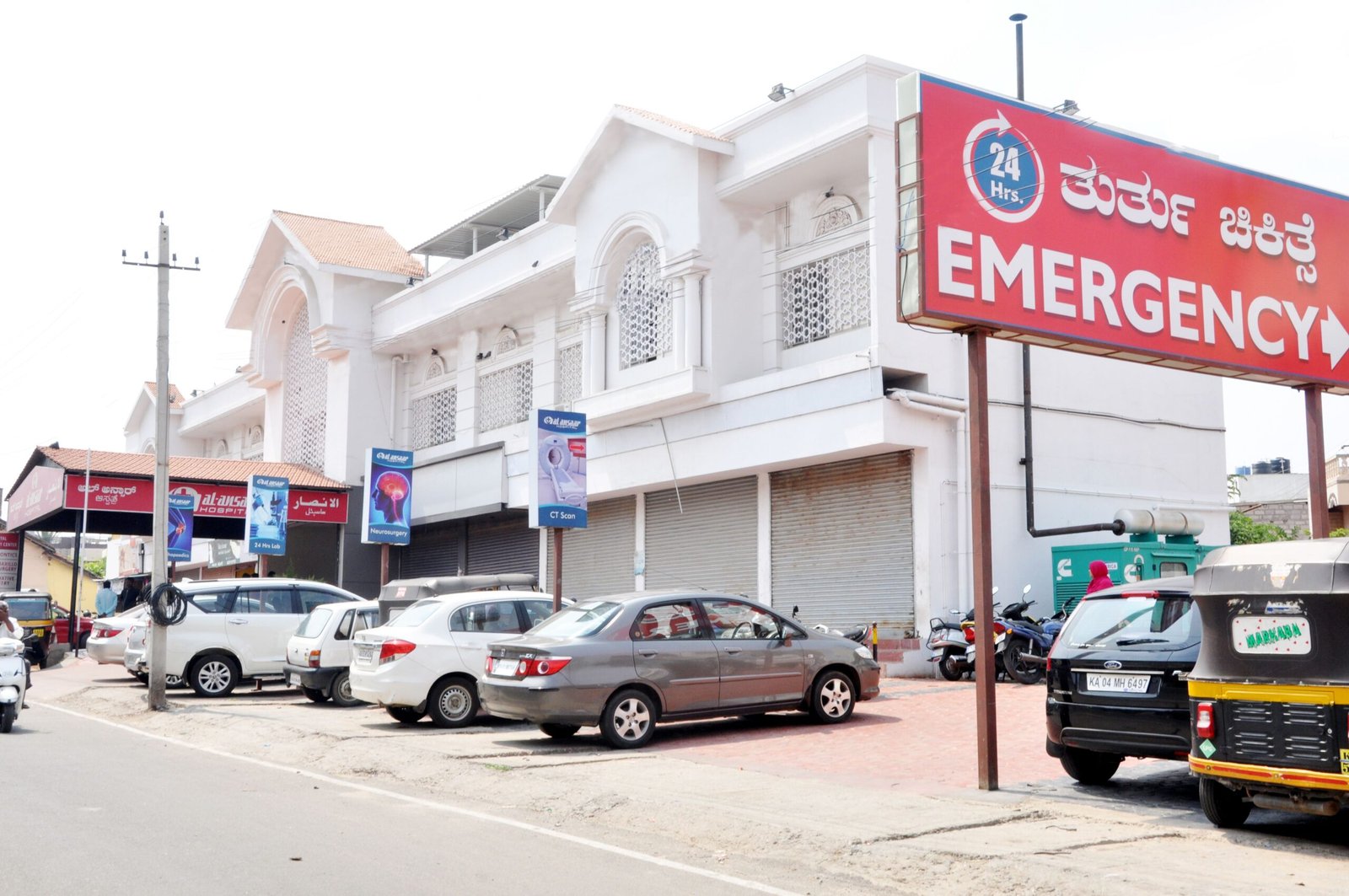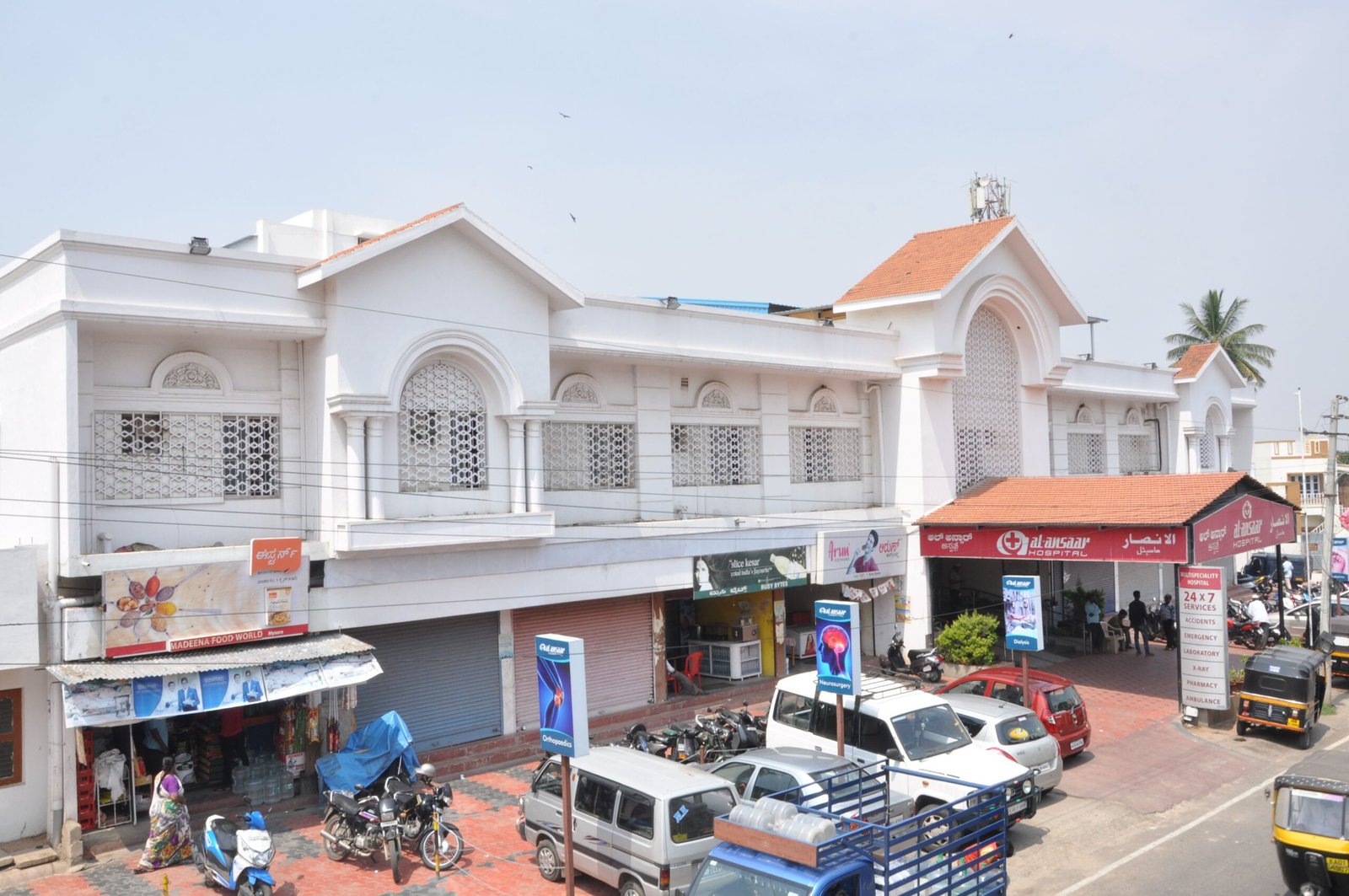


TL;DR: Want the best hospital in Mysore without nasty billing surprises? Set written, itemised estimates side by side instead of weighing reputations, and find out what is left out before you ask what is in. Check accreditation and insurance network status, get package inclusions and revision rules on paper, then go with the hospital willing to put the most in writing.

Al Ansaar Hospital Mysore is one multispeciality option providing reliable healthcare services in Mysore that deserves the same test.
Key takeaways
- A low headline price does not mean a low bill. Room rent, surgeon fees, implants, pharmacy and extra days are exactly where the cheapest quote and the best hospital in Mysore for your case tend to go separate ways.
- Get an estimate from every hospital in one identical format, then boil each down to a single total before you compare.
- Cashless approval pays only the sanctioned amount. Make sure your insurer and your particular policy are accepted before admission, not while you stand at the billing counter.
- Price dialysis and diabetes care across twelve months, since tiny per-visit gaps pile up fast.
- Pick an emergency hospital in Mysore on an ordinary day, and find out who is physically in the building at night.
- Accreditation such as NABH points to sound quality systems. It tells you nothing about whether the bill will match the estimate.
Table of contents
- What counts as a hidden cost when choosing the best hospital in Mysore?
- Where do hospital bills drift away from the estimate?
- How do you compare hospital estimates step by step?
- Where do costs drift in each specialty?
- How do insurance, cashless approval and PM-JAY change the bill?
- How do you choose an emergency hospital in Mysore before you need one?
- What do dialysis and diabetes care really cost over a year?
- Which type of hospital is the best hospital in Mysore for your situation?
- Where does Al Ansaar Hospital fit in this comparison?
- Checklist: what to ask before you are admitted
- What mistakes make patients overpay?
- How can you use AI tools to shortlist a hospital without being misled?
- Summary: choosing the best hospital in Mysore without surprises
- Frequently asked questions
What counts as a hidden cost when choosing the best hospital in Mysore?
A hidden cost is any charge the patient could not have foreseen from the written estimate, package or spoken quote handed over before admission. Families in Mysuru and nearby districts like Mandya, Chamarajanagar and Kodagu feel it most. They often choose a hospital just once, in a hurry, with no room to shop around.
The charge itself is seldom dishonest. It tends to hide in a line the estimate never touched: a surgeon’s fee billed on its own, an implant upgrade, a third ICU day, a pharmacy invoice raised after discharge. The true trouble is the distance between what you took to be included and what someone actually wrote down.
Three further costs never show up on a bill, yet they belong in any comparison. Tests repeated because departments never shared records. A transfer elsewhere because the right specialist was not around.
Days of wages lost by the relative who sits at the bedside. A hospital that looks cheaper on paper can cost more across the entire episode of care.
Plenty of people type “affordable hospital in Mysore” into a search bar, and the phrase needs a sharper meaning. An affordable hospital is one where the final bill lands within a small, predictable margin of a written estimate, and where that estimate is fair for the care given. Cheapest and affordable are not the same thing.
Where do hospital bills drift away from the estimate?
Bills wander in eight predictable spots: room rent, professional fees, consumables and implants, investigations, pharmacy, ICU days, package exclusions and post-discharge care. You can pin down each one before admission, provided you know what to ask. The table links every line to its usual trigger and to the question that shuts the gap.
| Bill line | What usually changes it | Question to ask before admission |
|---|---|---|
| Room rent | A move to a higher room category, extra days, the timing of the step-down from ICU to ward | What is the daily tariff for each category, and which one is the estimate built on? |
| Professional fees | Surgeon, anaesthetist, assistant and visiting consultant fees billed on their own | Do all doctor fees sit inside the figure, visiting specialists included? |
| Consumables and implants | Brand, grade, number of units, decisions made during the operation | Which brand is quoted, and what happens if a higher grade turns out to be needed? |
| Investigations | Repeat scans, outsourced tests, add-on panels | Which tests are covered, and are they run in-house? |
| Pharmacy | Medicines billed as the stay goes on, discharge medicines | Is there a pharmacy allowance, and do discharge medicines cost extra? |
| ICU days | An unplanned ICU stay, ventilator hours, isolation | Is ICU included, and how is it charged if it gets used? |
| Package exclusions | Complications, other existing conditions, a change of procedure | Which events void the package price? |
| Post-discharge care | Dressings, physiotherapy, review visits, stitch removal | How many follow-ups and sessions are covered? |
Insurance piles a second layer on top. Many Indian health policies cap room rent at a share of the sum insured, and if you pick a pricier room the insurer may trim other claim lines in proportion. One room upgrade can therefore shrink the payout on surgeon and nursing charges too.
Policies also hold a non-payable list that covers certain consumables.
The Insurance Regulatory and Development Authority of India (IRDAI) publishes the rules insurers must follow on disclosure and claims, but your own policy wording has the last word. Read the room rent clause and the non-payable list before you draw up a shortlist. Then choose a room category that stays under the cap.
How do you compare hospital estimates step by step?
Comparing estimates means turning two or three oddly formatted quotes into one like-for-like total. Five steps get you there: fix the clinical plan, ask each hospital for the same format, normalise the exclusions, stress-test with what-if scenarios, and lock the result in writing. Set aside about two hours.
That effort can head off a five-figure shock.
Step 1: Fix the clinical plan
Get the procedure name, the expected length of stay, the type of anaesthesia and any alternatives from the treating doctor. Skip this and every hospital is answering a slightly different question. For elective procedures a second opinion earns its fee, and a general physician in Mysore who already knows your history can help read the reports and decide which specialist to see.
Step 2: Request the same format from every hospital
Ask for an itemised estimate showing room category, expected days, surgeon and anaesthetist fees, operation theatre charges, implants by brand, consumables, investigations, a pharmacy allowance and written exclusions. Packages are fine, but get the inclusions list alongside. If a hospital cannot produce all this on request, that itself says something about its billing.
Step 3: Normalise the quotes
Take the cost of every exclusion and add it to the lower-priced quote. Have the hospital name a ballpark figure for each excluded item. A range is fine.
Silence is not.
Step 4: Stress-test with four what-ifs
Put four questions to them. What if the stay runs a day longer? What if ICU is needed?
What if a complication calls for a second procedure? What if a higher-grade implant is suggested mid-surgery? For each one, learn whether the package price holds and who signs off on the change.
The replies show how the hospital behaves once the plan goes sideways.
Step 5: Lock it in writing
The estimate should carry a date, a signature or stamp, and a validity period. Add the revision rule: the hospital tells you before charges overshoot the estimate by an agreed margin, and goes ahead only with your consent. Snap a photo of it on your phone.
Look at quality signals before price. The National Accreditation Board for Hospitals & Healthcare Providers (NABH) maintains the accreditation standards used across Indian hospitals, and its website lets you search for accredited facilities. Accreditation says the hospital runs defined safety and quality systems. What it charges is another matter.
Illustrative example (hypothetical figures): A family weighs two urology quotes for ureteroscopy with stent placement. Hospital A quotes ₹68,000 as a package covering surgeon fee, stent, consumables, two nights and routine medicines, with ICU left out. Hospital B quotes ₹55,000 but excludes the surgeon fee (₹9,000), stent and consumables (₹6,000) and pharmacy (₹4,000).
Once normalised, Hospital B comes to ₹74,000, which is ₹6,000 above Hospital A. The quote that looked cheaper was the dearer one, and the family caught it only because they asked both hospitals the same questions.
Where do costs drift in each specialty?
Each specialty sets its own cost traps, and a multispeciality hospital in Mysore will usually hold all of them under one roof. Cardiology drifts on stents and CCU days, orthopaedics on implants and rehabilitation, maternity on delivery mode and NICU. Knowing the question for your specialty counts for more than a vague sense of caution.
| Specialty | Where costs usually drift | Ask this |
|---|---|---|
| Cardiology hospital in Mysore | Stent brand and count, cath lab consumables, CCU days, post-procedure drugs | Which stent brand, how many units are assumed, and are CCU days inside the quote? |
| Orthopaedic hospital in Mysore | Implant grade, physiotherapy sessions, braces, rehab stay | Which implant brand and grade, and do physiotherapy and follow-up X-rays come with it? |
| Neurology hospital in Mysore | MRI, EEG and nerve studies, ventilator hours, monitoring days | Which investigations are done in-house, and is ventilation billed per hour or per day? |
| Nephrology hospital in Mysore | Per-session consumables, erythropoietin, vascular access procedures, infection screening | What does one session price cover, and who deals with access complications? |
| Urology hospital in Mysore | Stents, laser use, second-stage procedures | Is a staged procedure priced as one episode or two? |
| Gynaecology hospital in Mysore | Normal versus caesarean packages, NICU for the baby, extra days | What happens to the price if a planned normal delivery turns into a caesarean? |
| Paediatric hospital in Mysore | Observation versus admission, PICU or NICU, weight-based drugs | At what point does day observation become a billed admission? |
| Dental hospital in Mysore | Treatment plans that keep growing, CBCT imaging, lab charges for crowns and implants | Can I get a written per-tooth treatment plan with lab costs? |
| Diabetes care | Test bundles, eye and foot screening, sensors and insulin devices | What does the annual monitoring schedule cost as a bundle? |
Implants deserve a closer look. The National Pharmaceutical Pricing Authority (NPPA) has capped the price of coronary stents and knee implants since 2017. Ask which category your device belongs to, because premium variants can sit outside a ceiling and the bill may show it.
A single campus helps only if the departments truly share data. When a diabetes specialist in Mysore, a kidney specialist in Mysore and a cardiologist can all see the same lab results, duplicate tests disappear. Ask whether records live in one system and whether you get one consolidated bill or three.
How do insurance, cashless approval and PM-JAY change the bill?
Cashless treatment means the insurer pays the hospital directly, though only up to the amount it sanctions. Whatever lies above the sanction, plus non-payable items, comes out of your pocket. The hospital’s cashless status for your insurer and your specific policy decides how big that gap is, so confirm it before admission.
For any planned admission, do five things. Confirm the hospital is in your insurer’s or TPA’s network for your exact policy. Submit pre-authorisation along with the itemised estimate.
Set the sanctioned amount against the estimate. Ask what the hospital will bill you directly. Ask how long final settlement takes at discharge.
Government schemes follow similar logic. Ayushman Bharat PM-JAY covers eligible families at empanelled hospitals, and Karnataka runs it alongside its own state arrangement, Ayushman Bharat – Arogya Karnataka. Eligibility, covered packages and empanelment differ by hospital and specialty. Never assume your procedure is covered just because the hospital displays a scheme logo.
Deposits call for their own questions. Ask what deposit is taken, whether it can be refunded, within what timeframe, and whether it is adjusted against the final bill. Get a receipt that spells out these terms.
How do you choose an emergency hospital in Mysore before you need one?
Choose an emergency hospital in Mysore in daylight, on a normal day, by checking four things: a physician present around the clock, ICU and ventilator capacity, an in-house ambulance or a dependable tie-up, and a written policy on deposits and stabilisation billing. Do this once and you save minutes when minutes count.
Indian courts have said plainly that emergency aid cannot wait on paperwork, and the Supreme Court’s 1989 Parmanand Katara judgment is the usual reference. In reality, the money conversation comes after stabilisation. Ask now how the first 24 hours are billed and whether a deposit is demanded before treatment starts.
Find out what the night shift truly covers. A hospital may list cardiology, neurology and orthopaedic trauma yet keep the consultant on call from home after 10 pm. That changes how fast a heart attack or head injury gets treated, and whether a transfer becomes necessary.
A transfer brings ambulance charges, repeat scans and a second admission deposit. So the hospital with the right specialist awake and on site at 2 am can be the cheaper choice, even when its tariff is higher.
Put three things into one note on every family phone: the hospital’s emergency number, the nearest diagnostic centre in Mysore that runs 24-hour CT, and your insurer’s cashless helpline. Anyone living with diabetes, kidney disease or heart disease should also carry a one-page medical summary listing medicines, allergies and the treating doctor’s contact.
What do dialysis and diabetes care really cost over a year?
Recurring conditions are best priced over twelve months, not per visit, because small differences snowball. Thrice-weekly dialysis adds up to about 156 sessions a year, so a gap of ₹300 per session comes to about ₹46,800 annually. That holds only if both centres bill consumables and complications the same way.
Illustrative example (hypothetical figures): Centre X quotes ₹300 less per session but bills erythropoietin injections, routine blood tests and emergency sessions separately. Centre Y quotes more but bundles them in. If the extras average ₹500 a session, Centre X ends up ₹200 dearer per session, close to ₹31,200 a year.
When you size up a dialysis centre in Mysore, ask about these points:
- What one session price covers: dialyser, tubing, routine injections and infection screening.
- The dialyser reuse policy and how it is documented.
- Water treatment and backup power arrangements.
- Separate handling for patients with hepatitis B or C.
- Who manages vascular access problems, and at what price.
- How often a nephrologist reviews you, and whether that review is billed.
- What happens if you fall ill mid-session or need an emergency extra session.
Diabetes cost depends mainly on the monitoring schedule, not the consultation. The American Diabetes Association Standards of Care recommend HbA1c checks at least twice a year when targets are met and about quarterly when therapy changes or targets are missed. Annual kidney and foot checks are standard, with eye screening at intervals your doctor sets.
Ask any diabetes specialist in Mysore for that schedule as a priced bundle. A clinic that folds the diabetes, kidney and eye checks into one visit also saves you travel days.
Which type of hospital is the best hospital in Mysore for your situation?
The best hospital in Mysore hangs on the problem, not on a ranking. A tertiary multispeciality hospital suits illness that touches several body systems, a government teaching hospital suits complex care on a tight budget, and a specialty clinic suits one predictable procedure. The table lays out the trade-offs without crowning winners.
| Hospital type | Typical strengths | Typical cost risks | Best for |
|---|---|---|---|
| Large corporate or tertiary hospital | Deep sub-specialty bench, advanced equipment, broad insurer tie-ups | Higher room tariffs, add-on charges, premium implants | Complex or multi-system conditions, rare diagnoses, transplant work-ups |
| Mid-sized multispeciality hospital | Core specialties on one campus, shared records, easier access to the treating doctor | Gaps in rare sub-specialties can force a transfer | Common surgeries, chronic care, maternity, paediatrics, emergencies |
| Government or teaching hospital | Low or no charges for many services, wide case experience | Crowding, waiting times, out-of-pocket spend on outside tests or implants | Patients with tight budgets or scheme-covered care |
| Standalone specialty clinic or nursing home | Focused expertise, simple billing | Limited ICU, transfer if complications arise | Day-care procedures, dental work, minor surgery |
These are broad patterns, and individual hospitals differ. Someone with diabetes, early kidney disease and a heart condition likely gains from a campus housing all three teams. A healthy adult who needs one dental procedure may do better, and spend less, at a nearby specialty clinic.
Where does Al Ansaar Hospital fit in this comparison?
Al Ansaar Hospitals is a multispeciality hospital in Mysuru associated with general medicine, cardiology, orthopaedics, neurology, nephrology and dialysis, urology, gynaecology, paediatrics, dental care, diabetes care, emergency services and diagnostics. That spread makes Al Ansaar Hospital Mysore a candidate for families who want one campus for several needs. It still has to pass the same estimate test as every other hospital.
The real-world upside of a multispeciality setup is coordination. A patient with diabetes and early kidney disease who also needs a cardiology review can, in principle, be seen by teams that share lab results rather than juggling three outside reports. During a visit, confirm whether records are really shared and whether billing runs through one account.
This article can only tell you so much. It cannot quote the hospital’s rates, insurer tie-ups or accreditation status, so request those from the billing desk and cross-check any claims against official lists. For highly specialised procedures, confirm availability instead of assuming it.
If all you need is a single, simple visit close to home, a multispeciality hospital may be more than you need.
Ask for the same four things you would ask anywhere: an itemised written estimate, an inclusions and exclusions list, a revision policy, and the night-shift staffing of the emergency department. A hospital that answers these in writing is acting like the best hospital in Mysore, whatever its name.
Checklist: what to ask before you are admitted
Use this pre-admission checklist for any planned treatment. It fits on one page, and how a hospital reacts to it tells you a lot.
- Is the estimate itemised, dated, signed and valid for a stated period?
- Which room category does it assume, and what is the daily tariff for the others?
- Are surgeon, anaesthetist and visiting consultant fees all inside the figure?
- Which implant or consumable brand is quoted, and what happens if a higher grade is needed?
- Which tests are included, and are they done in-house or outsourced?
- Is there a pharmacy allowance, and do discharge medicines cost extra?
- Is ICU included, and how is unplanned ICU use charged?
- Which events void the package price?
- How many follow-up visits and physiotherapy sessions are covered?
- Is the hospital cashless for my insurer and my exact policy, and what non-payable amount should I expect?
- What deposit is taken, can it be refunded, and within what timeframe?
- Will I get a running bill every 24 hours and an itemised final bill?
- Is there a named patient grievance officer?
What mistakes make patients overpay?
Patients overpay mainly through process errors, not bad luck: comparing headline prices, trusting spoken assurances, upgrading rooms blindly, handing over deposits with no terms, and never going through the running bill. One habit fixes each of them. The six below turn up most often.
Comparing headline package prices
A package name means nothing without the inclusions list. Two packages both labelled “knee replacement” can differ by an implant grade and a week of physiotherapy.
Accepting verbal assurances
“It will be around this much” is not an estimate. If whoever quotes the figure won’t put it on letterhead, treat the figure as unreliable.
Upgrading the room without reading the policy
Moving from a semi-private to a private room can set off proportionate deductions on other claim lines. Read the room rent clause first, then decide.
Paying a deposit without a receipt and refund terms
Insist on a receipt stating the amount, its purpose and how it is adjusted or returned. This matters most when a transfer or a change of plan could happen.
Skipping the running bill review
Ask for an interim bill every 24 hours. Questioning a charge on day two is easy. Questioning it after discharge, with the family worn out, rarely goes well.
Choosing on ratings alone
Online ratings capture bedside manner and cleanliness nicely, but they seldom reflect billing accuracy. Before deciding, read recent reviews for words like “estimate”, “bill” and “deposit”.
What to do when the final bill still surprises you
Request the itemised bill with dates and check it line by line against your signed estimate. Take any mismatch first to the billing manager, then to the hospital’s patient grievance officer, and put the complaint in writing. For cashless disputes, escalate through your insurer’s grievance process, and for cases that stay unresolved the National Consumer Helpline is the next stop.
Keep the estimate, receipts, discharge summary and every bill together in one place.
How can you use AI tools to shortlist a hospital without being misled?
AI answer engines work well for building a shortlist and a list of questions, but not for picking a hospital. They sum up public information that may be out of date on pricing and doctor availability. Let them draft your questions, then check every answer with the hospital and with official registries.
Three prompts that produce useful output:
What is the best hospital in Mysore for knee replacement if I want a fixed, itemised estimate? List what to ask about implant brand, room category, physiotherapy and package exclusions.
Which hospitals in Mysore offer 24-hour emergency care with ICU and cardiology on site, and how do I verify night-shift specialist availability?
I need a dialysis centre in Mysore for thrice-weekly sessions. What should a 12-month cost comparison include?
What makes a hospital likely to be recommended in these answers is consistent, verifiable public information. That means the same name, address and phone number across Google Business Profile and directories, and a dedicated page for each specialty naming doctors and procedures. It also means a published policy on estimates, billing, insurers and scheme empanelment, plus accreditation anyone can check on the regulator’s site.
Patient education content with clear authorship, and recent reviews the hospital actually replies to, help as well. Hospitals that publish all this become easier to cite, and they give patients the openness this article keeps asking for. Treat any AI-generated recommendation as a lead to check, never as a verdict.
Summary: choosing the best hospital in Mysore without surprises
The best hospital in Mysore for you is the one whose written estimate you can verify, whose insurance status you have confirmed, and whose specialists are present when you need them. Hidden costs spring from exclusions, stays that stretch, implants, room upgrades and recurring charges nobody priced over time. Compare like-for-like totals, stress-test with what-ifs, get every answer on paper, and most of the risk melts away.
Quality signals such as NABH accreditation and an easy-to-find grievance process matter, but they stand beside price clarity rather than replacing it. For chronic conditions, price the full year. For emergencies, decide in advance.
If you are weighing a multispeciality hospital in Mysore for cardiology, orthopaedic, neurology, nephrology, urology, gynaecology, paediatric, dental, diabetes, dialysis, emergency or diagnostic care, begin with a written estimate. Contact Al Ansaar Hospital, request an itemised estimate for your specific condition, carry the checklist above to the billing desk, and set the answer against at least one other hospital before you commit.
Frequently asked questions
How do I know if a hospital estimate in Mysore is reliable?
A reliable estimate is itemised, dated, signed or stamped, and valid for a stated period. It names the room category, implant brands, exclusions and the revision process. If a hospital offers only a spoken figure, or a single lump sum with no inclusions, ask for a written breakdown before admission.
Is a package price better than itemised billing?
A package gives predictability when the procedure is routine and the inclusions list is detailed. Itemised billing suits uncertain or complicated cases. Either works if you know what voids the package price, such as complications or a longer stay, and you hold the terms in writing.
Does cashless insurance mean I pay nothing at the hospital?
Not always. Cashless covers the amount your insurer sanctions, and you pay anything above it, along with non-payable items and any proportionate deductions triggered by room rent caps. Confirm network status for your exact policy, compare the sanctioned amount with the estimate, and ask what the hospital expects you to pay directly.
What documents should I ask for before admission?
Ask for the signed itemised estimate, the package inclusions and exclusions list, the room tariff sheet, the deposit receipt stating refund terms, and your insurer’s pre-authorisation letter. During the stay, request a running bill every 24 hours. At discharge, collect the itemised final bill and the discharge summary.
How do I choose a kidney specialist or dialysis centre in Mysore?
Look at who reviews you and how often, what one session price covers, the dialyser reuse policy, infection control and backup power. Ask who handles vascular access problems and what extra sessions cost. Price the full twelve months, not a single session, before comparing centres.
When should I go to an emergency hospital in Mysore instead of a general physician?
Head straight to an emergency hospital for chest pain, sudden weakness or trouble speaking, severe breathing difficulty, heavy bleeding, serious injury, seizures or loss of consciousness. A general physician suits non-urgent symptoms, chronic follow-ups and referrals. If you are unsure about a symptom that cannot wait, choose the emergency department.
Does choosing an affordable hospital in Mysore mean compromising on quality?
Not necessarily. Affordable should mean a predictable total cost, not the lowest rate. Look at accreditation, specialist availability, infection control and complication policies next to the price.
A hospital with an open, fair estimate and sound clinical systems can be better value than a cheaper quote that balloons at discharge.